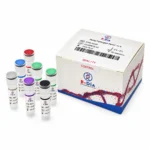
MSK-ACCESS® powered with SOPHiA DDM™

In-house liquid biopsy solution based on hybrid-capture next-generation sequencing (NGS) technology for the ultrasensitive detection of somatic alterations in circulating cell-free DNA from plasma. Developed in collaboration with Memorial Sloan Kettering Cancer Center (MSK), it implements a robust matched tumor-normal sequencing approach (plasma cfDNA + white blood cell DNA) to filter germline variants and mutations arising from clonal hematopoiesis (CHIP).

Detailed description

Operating principle

The decentralized MSK-ACCESS® powered with SOPHiA DDM™ solution enables laboratories to implement locally the globally recognized clinical liquid biopsy assay developed by MSK, while retaining full control over their samples, data and turnaround times.

The fundamental analytical pillar of this assay is its matched tumor-normal approach: circulating cell-free DNA (cfDNA) extracted from the patient’s plasma and normal DNA obtained from peripheral blood white blood cells (WBCs, from the buffy coat) are processed jointly and simultaneously.

The protocol integrates specific adapters with CUMIN® molecular barcodes and unique dual index (UDI) primers. Molecular tagging technology enables the generation of single-read consensus sequences to correct technical PCR errors and sequencing artefacts, allowing ultrasensitive detection with a limit of detection (LOD) of 0.5% variant allele frequency (VAF).
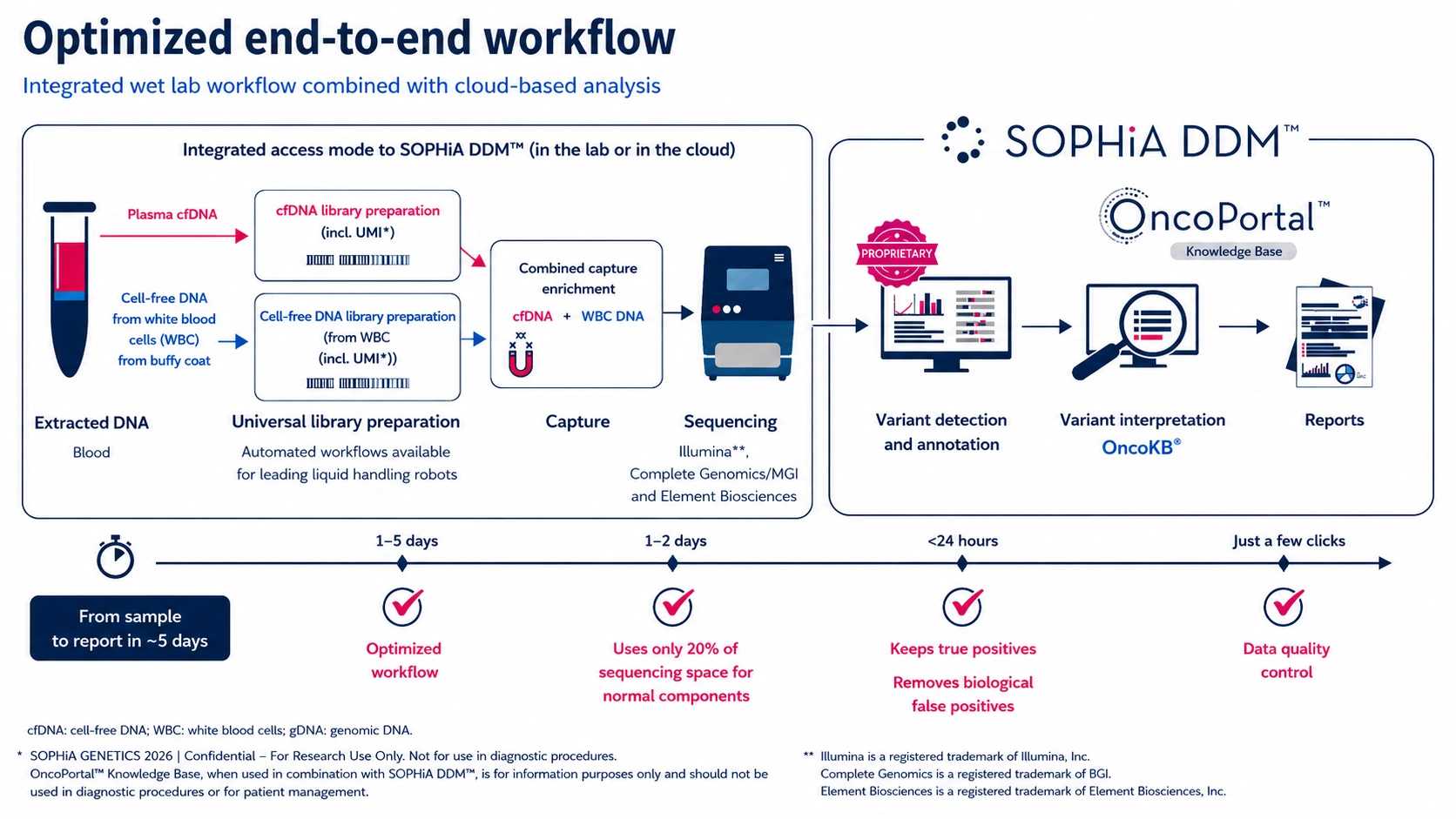
MSK-ACCESS powered with SOPHiA DDM workflow

Following targeted hybrid-capture enrichment for 147 cancer-associated genes, the libraries are sequenced at high depth on Illumina, Complete Genomics or Element Biosciences platforms. Secondary and tertiary analyses are performed on the cloud-based SOPHiA DDM™ platform, which automates molecular quality control and variant filtering. The platform connects directly to OncoKB™—MSK’s precision oncology knowledge base—and the integrated OncoPortal™ for clinical matching with targeted therapies and clinical trials.

Complete gene list

Category Gene list / details
Gene lista AKT1 (3, 6, 7, 8, 9, 10, 11, 12), ALK (5, 9, 20, 21, 22, 23, 24, 25, 26, 27, 28, 29), APC (complete CDS), AR (complete CDS), ARAF (7, 10, 11, 12, 13, 14, 15, 16), ARID1A (complete CDS), ARID2 (8), ASXL1 (complete CDS), ATM (complete CDS), B2M (1), BAP1 (complete CDS), BCL2 (2), BCOR (10), BRAF (11, 12, 13, 14, 15, 16, 17, 18), BRCA1 (complete CDS), BRCA2 (complete CDS), CARD11 (13), CBFB (2), CBL (9), CCND1 (5), CD79B (5), CDH1 (complete CDS), CDK12 (complete CDS), CDK4 (complete CDS), CDKN2A (complete CDS), CHEK2 (complete CDS), CIC (5), CREBBP (26, 27, 30), CTCF (6), CTNNB1 (3, 7, 8), DICER1 (27), DIS3 (10), DNMT3A (complete CDS), EGFR (3, 6, 7, 15, 18, 19, 20, 21, 22, 23, 24), EIF1AX (1, 2), EP300 (26, 27), ERBB2 (3, 6, 7, 8, 12, 16, 17, 18, 19, 20, 21, 22, 23, 24, 25, 27), ERBB3 (3, 6, 7, 8, 9, 18, 19, 20, 21, 22, 23, 24), ERCC2 (complete CDS), ESR1 (5, 6, 7, 8b), EZH2 (16), FBXW7 (complete CDS), FGFR1 (12, 13, 14, 15, 16, 17, 18, 19), FGFR2 (3, 5, 7, 8, 9, 11, 12, 13, 14, 15, 16, 17, 18), FGFR3 (7, 9, 11, 12, 13, 14, 15, 16, 17, 18), FGFR4 (13), FLT3 (14, 20), FOXA1 (2), FOXL2 (complete CDS), FOXO1 (1), FOXP1 (14), FUBP1 (14), GATA3 (complete CDS), GNA11 (5), GNAQ (5), GNAS (6, 8, 9), H3F3A (2), HIST1H3B (complete CDS), HRAS (2, 3, 4), IDH1 (4, 5), IDH2 (4), IKZF1 (8), INPPL1 (2), JAK1 (19), JAK2 (14), KDM6A (complete CDS), KEAP1 (complete CDS), KIT (8, 9, 10, 11, 12, 13, 14, 15, 16, 17, 18, 19, 20, 21), KNSTRN (1), KRAS (complete CDS), MAP2K1 (2, 3, 4, 5, 6, 7, 8, 9, 10, 11), MAP2K2 (2, 3, 4, 5, 6, 7, 8, 9, 10, 11), MAPK1 (7), MAX (2, 4), MED12 (2, 26), MET (13, 14, 15, 16, 17, 18, 19, 20, 21), MLH1 (complete CDS), MSH2 (complete CDS), MSH3 (7), MSH6 (complete CDS), MTOR (29, 30, 31, 39, 40, 43, 44, 46, 47, 48, 49, 50, 53, 56, 57), MYC (2), MYCN (2), MYD88 (5), MYOD1 (1), NF1 (complete CDS), NFE2L2 (2), NOTCH1 (6, 8), NPM1 (11), NRAS (2, 3, 4), NTRK1 (13, 14, 15, 16, 17), NTRK2 (15, 16, 17, 18, 19), NTRK3 (15, 16, 17, 18, 19, 20), NUP93 (2), PAK5 (4), PALB2 (complete CDS), PDGFRA (5, 6, 7, 9, 10, 11, 12, 13, 14, 15, 16, 17, 18, 19, 20, 21), PHF6 (5, 9), PIK3CA (2, 3, 5, 6, 8, 9, 10, 11, 12, 14, 19, 20, 21), PIK3CB (24), PIK3R1 (10, 11, 13, 14), PIK3R2 (10), PIM1 (1), PMS2 (complete CDS), POLE (1, 9, 13), POT1 (6), PPM1D (complete CDS), PPP2R1A (5, 6), PPP6C (7), PRKCI (15), PTCH1 (complete CDS), PTEN (complete CDS), PTPN11 (3, 13), RAC1 (2), RAD54L (10), RAF1 (7, 10, 11, 12, 13, 14, 15, 16, 17), RB1 (complete CDS), RET (8, 10, 11, 12, 13, 14, 15, 16, 17, 18, 19), RHOA (2, 3), RIT1 (5), ROS1 (36, 37, 38, 39, 40, 41, 42), RRAS2 (1, 3), RXRA (10), SETD2 (7), SF3B1 (14, 15, 18), SMAD3 (6), SMAD4 (complete CDS), SMARCA4 (19, 25, 26), SMARCB1 (9), SOS1 (5), SPOP (4, 5), SRSF2 (1), STAT3 (20), STK11 (complete CDS), STK19 (1), TCF7L2 (14), TET2 (complete CDS), TGFBR1 (4, 9), TGFBR2 (8), TP53 (complete CDS), TP63 (9, 14), TSC1 (complete CDS), TSC2 (complete CDS), U2AF1 (2, 6), VHL (complete CDS), XPO1 (15).
Fusions ALK, BRAF, EGFR, ETV6, FGFR2, FGFR3, MET, NTRK1, RET, ROS1.
CNVs (copy number variations) AKT1, ALK, APC, AR, ARAF, ARID1A, ASXL1, ATM, BAP1, BRAF, BRCA1, BRCA2, CDH1, CDK12, CDK4, CDKN2A, CHEK2, CREBBP, DNMT3A, EGFR, EP300, ERBB2, ERBB3, ERCC2, ESR1, FBXW7, FGFR1, FGFR2, FGFR3, FOXA1, FOXL2, GATA3, KDM6A, KEAP1, KIT, KRAS, MAP2K1, MAP2K2, MET, MLH1, MSH2, MSH6, MTOR, MYC, MYCN, NF1, NTRK1, NTRK2, NTRK3, PAK5, PALB2, PDGFRA, PIK3CA, PIK3R1, PMS2, PPM1D, PTCH1, PTEN, RAF1, RB1, RET, ROS1, SF3B1, SMAD4, SMARCA4, STK11, TET2, TP53, TSC1, TSC2, VHL.
Additional alterations MET exon skipping and the TERT promoter.

Clinical applications

Molecular profiling of solid tumors using liquid biopsy: comprehensive and ultrasensitive characterization of advanced or metastatic solid tumors when tumor tissue is unavailable, insufficient or highly invasive to obtain. Dynamic longitudinal monitoring: real-time monitoring of tumor evolution, tumor burden and measurable residual disease (MRD). Identification of resistance mechanisms: early detection of resistant clones and mutations acquired during targeted therapy, such as emerging ESR1 mutations in breast cancer treated with aromatase inhibitors. Advanced somatic-germline-CHIP filtering: robust exclusion of clonal hematopoiesis (CHIP) mutations in oncogenes and tumor suppressor genes, such as TP53 or DNMT3A, which are frequently mistaken for true tumor mutations in assays without a matched WBC normal control.

Benefits

Integrated tumor-normal approach: accurately filters germline variants and clonal hematopoiesis (CHIP) mutations. Without this control, up to 23.9% of variants reported in plasma from cancer patients may actually correspond to CHIP or germline variants and may be misclassified as somatic or pathogenic by external tumor-only databases. Validated analytical ultrasensitivity: achieves 99.3% concordance (PPA) with the centralized version of MSK-ACCESS at MSKCC, operating at an LOD of 0.5% VAF. CUMIN® molecular barcodes: maximum accuracy and false-positive suppression through consensus reads in ultra-deep sequencing data (~20,000x).

Intended users

High-technology molecular diagnostic laboratories, hospital medical oncology departments, precision medicine centers and institutions conducting translational clinical research and clinical trials that require ultrasensitive liquid biopsy testing with Memorial Sloan Kettering Cancer Center’s rigorous CHIP exclusion approach.

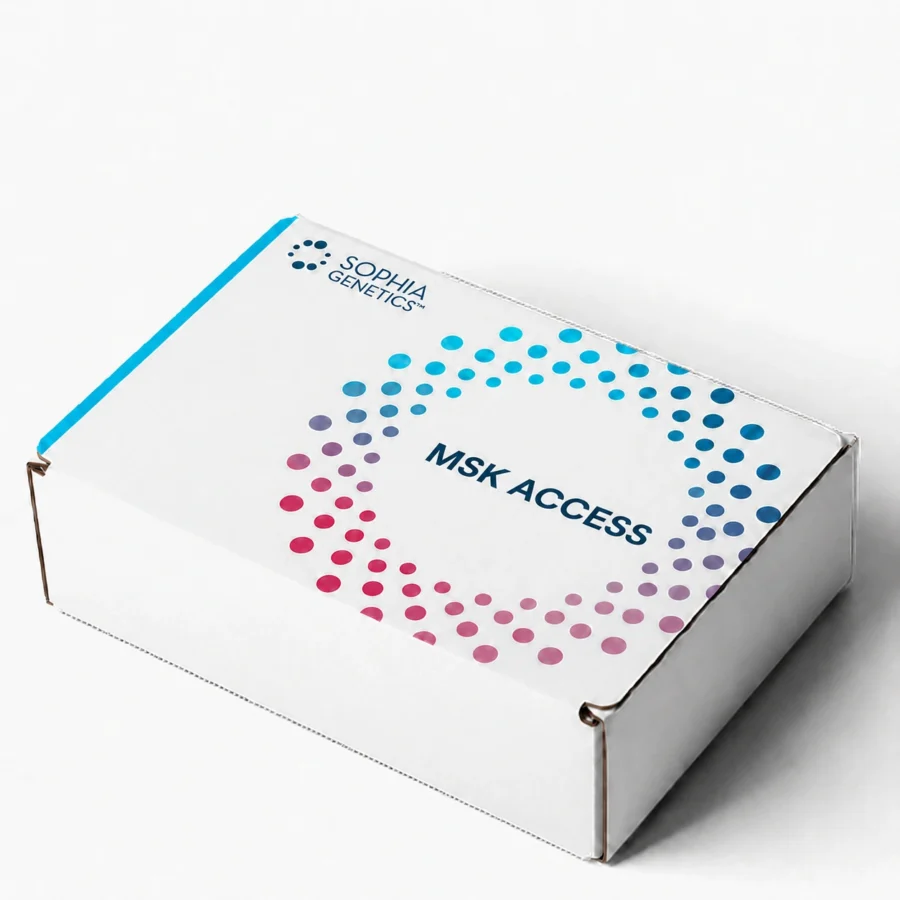
Key features

Ultrasensitive molecular profiling focused on an optimized panel of 147 key cancer-associated genes, designed using the genomic map generated from more than 25,000 tumors analyzed by MSKCC. DNA-level detection of SNVs/Indels (147 genes), CNVs (71 genes), intron-based fusions (10 genes), the TERT promoter and MET exon 14 skipping. Matched tumor-normal approach: standardized requirements of >20 ng of plasma cfDNA and >50 ng of normal WBC gDNA, with the normal sample consuming only 10% of the sequencing capacity. SOPHiA DDM™-exclusive CUMIN® molecular barcode technology providing high analytical specificity (99.999%) and an analytical LOD of 0.5% VAF. High interlaboratory and intralaboratory reproducibility, with an overall concordance of R2 = 0.97. Robust sequencing metrics: median duplex molecular coverage above 1,200x, on-target read rates of 89.5% for cfDNA and 89.0% for WBC, and molecular coverage uniformity of 95%. Validated compatibility with Illumina sequencers (NovaSeq 6000, NovaSeq X and NextSeq 2000), Complete Genomics DNBSEQ-T7 and Element Biosciences AVITI. Direct bioinformatics access from the viewer to OncoKB™ and SOPHiA DDM™ OncoPortal™ for automated preclassification and support in therapeutic matching.

Product details

Commercial name
MSK-ACCESS® powered with SOPHiA DDM™.
Product type
Bundle solution (wet-lab reagents + analytical credits for the cloud-based SOPHiA DDM™ platform).
Product family
Decentralized NGS liquid biopsy solution.
Product code
BS2549ILLRSDY14-32.
Sample type
cfDNA from blood plasma and gDNA from white blood cells obtained from the buffy coat.

What does the solution include?

SOPHiA GENETICS Universal Library Prep reagents for fragmented DNA library preparation. Specific indexed adapters compatible with CUMIN® molecular barcodes. Hybridization and targeted-capture probes based on the 147-gene MSK-ACCESS design. Full access and analytical credits for secondary and tertiary analysis on the SOPHiA DDM™ platform.

Required reagents and materials not included in the kit

Specialized blood collection and preservation tubes (Streck Cell-Free DNA BCT®). Specific cfDNA extraction and purification kits. Genomic DNA extraction kits for WBC samples. Fluorometric quantification equipment and reagents, and nucleic acid quality-control systems such as Qubit™ or TapeStation™. Platform-specific Illumina sequencing reagents and Illumina PhiX v3 control.

Area:

Digestive System, Endocrine System, HRD, Liquid Biopsy, Nervous System, Pan-Cancer, Reproductive System, Respiratory System, Skin, Soft Tissues, Solid tumor, Tumor Types
Consult our experts

Google reCaptcha: Invalid site key.

Related products

MSK-IMPACT® / MSK-IMPACT® FLEX

Decentralised, in-house comprehensive genomic profiling (CGP) solution for solid tumours, based on hybrid capture next-generation sequencing (NGS). Developed in collaboration with Memorial Sloan Kettering Cancer Center (MSK), it features a robust matched tumour-normal sequencing approach for filtering germline variants and clonal haematopoiesis. Detailed description Operating principle The decentralised MSK-IMPACT® powered with SOPHiA DDM™ solution enables…
SOPHIA Genetics
Next Generation Sequencing (NGS)

Homologous Recombination Solutions (HRS)

Portfolio of hybrid capture-based NGS solutions for the analysis of genes involved in homologous recombination repair (HRR) and the study of alterations associated with the homologous recombination pathway in different types of cancer. The range includes three scalable panels designed to meet different analytical needs: mini HRS, HRS and Extended HRS (ExtHRS). Detailed description Operating…
SOPHIA Genetics
Next Generation Sequencing (NGS)

Homologous Recombination Deficiency (HRD) Solution

Homologous Recombination Deficiency (HRD) Solution NGS- and low-pass whole-genome sequencing (low-pass WGS)-based solution for determining homologous recombination deficiency (HRD) status in ovarian cancer. Operating Principle This comprehensive solution, available as CE-IVD and for Research Use Only (RUO), is designed to support the determination of tumour HRD status in patients with ovarian cancer. It integrates two…
SOPHIA Genetics
Next Generation Sequencing (NGS)

Community Solutions for Solid Tumors

A portfolio of pre-designed and optimised NGS solutions based on hybrid-capture technology for comprehensive analysis of biomarkers associated with solid tumours from DNA and RNA. Designed by genomic experts to simplify in-house implementation and accelerate cancer research, these applications integrate natively with the analytical and interpretative capabilities of the cloud-based SOPHiA DDM™ platform. They provide…
SOPHIA Genetics
Next Generation Sequencing (NGS)