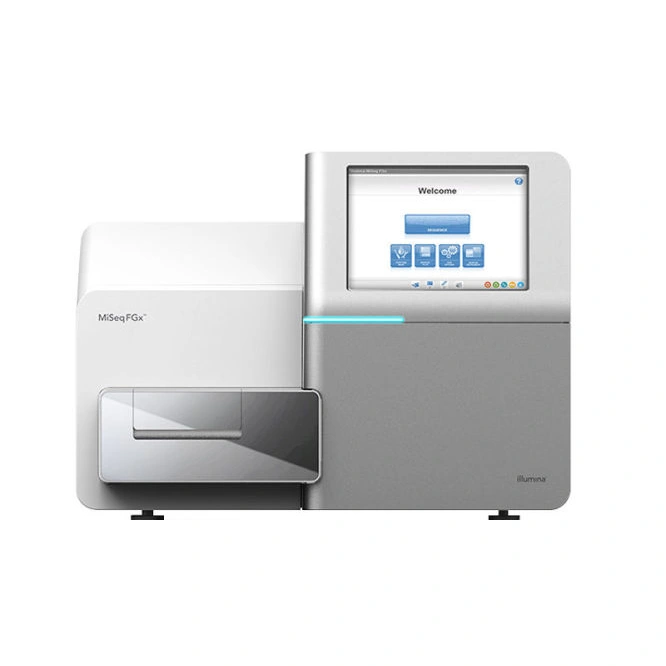
nCounter Analysis System

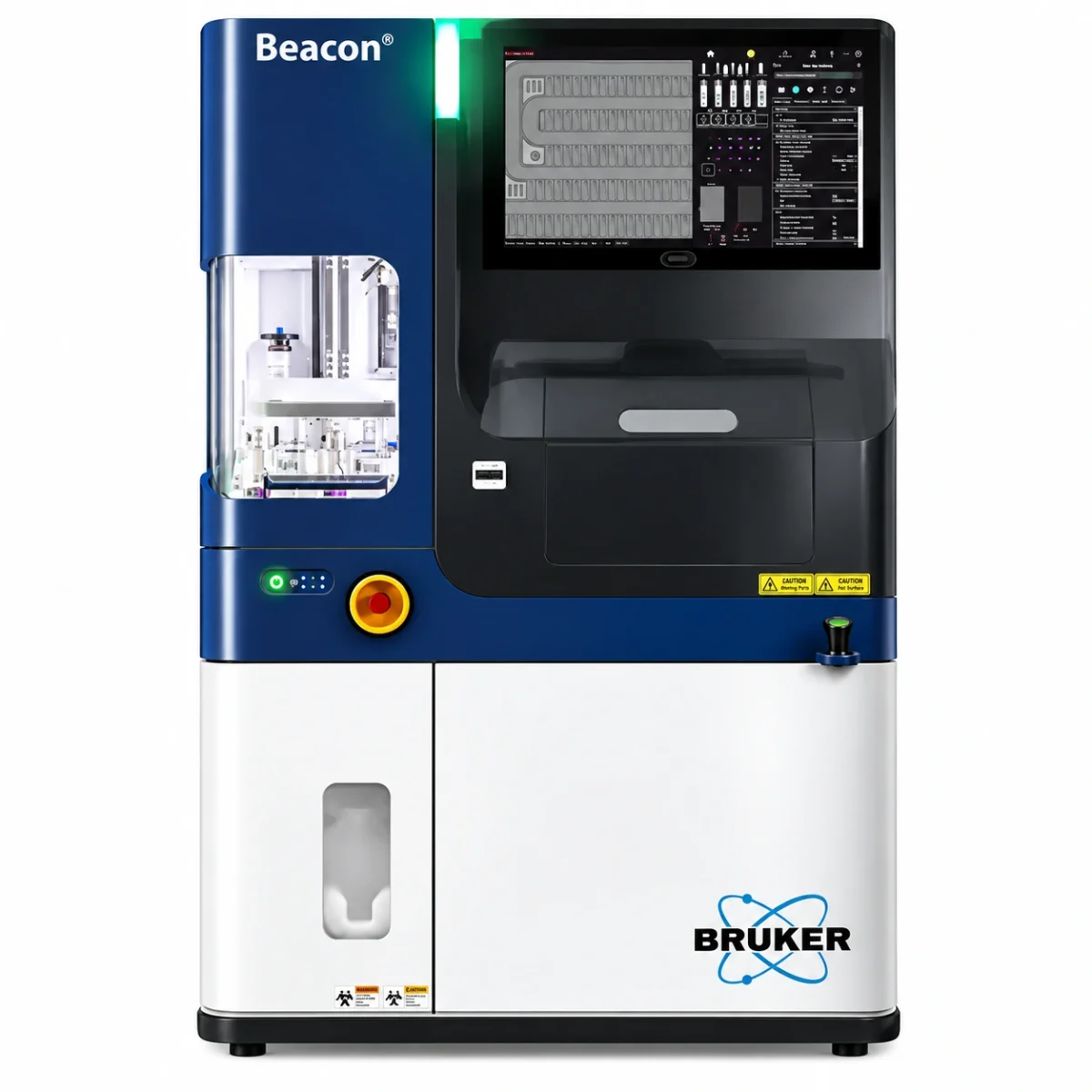
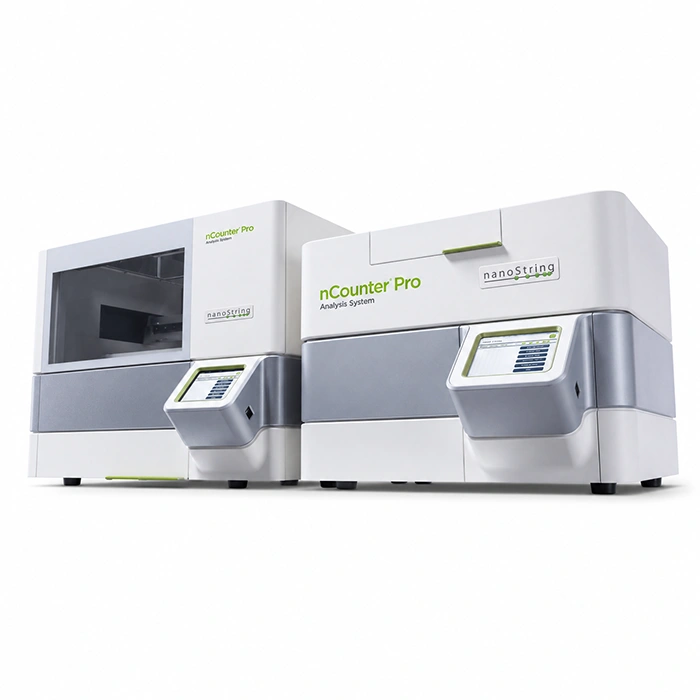
Bruker’s nCounter® is a molecular analysis platform that enables the direct, multiplexed quantification of up to ~800 targets (RNA or proteins) in a single reaction, without the need for PCR amplification or cDNA conversion.

Key Features

Molecular barcode technology: Each probe is labeled with a unique fluorescent barcode that identifies the target sequence.
No amplification: Reduces biases and errors associated with PCR.
High multiplexing: Analyzes hundreds of genes or proteins simultaneously.
Compatibility: Works with total RNA, miRNAs, and proteins from formalin-fixed paraffin-embedded (FFPE) tissue samples, whole blood, cell lysates, biofluids, and purified nucleic acids, among others, standing out for its ability to analyze highly degraded material.
Reproducibility: High precision and low technical variability.

How does it work?

The nCounter assay directly quantifies RNA, miRNA, or protein molecules by hybridizing two specific probes: a capture probe that immobilizes the sample in a cartridge and a reporter probe with a unique fluorescent barcode for each target, allowing for individual digital counting of the complexes without the need for amplification.

Subsequently, the probe-target complexes are purified, immobilized, and aligned for signal scanning using an automated fluorescence microscope. The generated data (CSV files) is then analyzed using Bruker’s free nSolver™ analysis software.
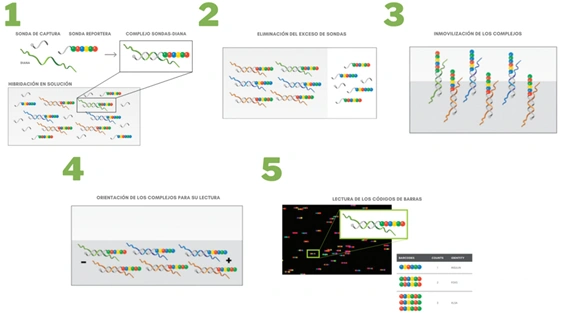
How nCounter works

The nCounter workflow incorporates walk-away automation and requires less than 15 minutes of hands-on time. Most protocols require only 4 pipetting steps and generate results in less than 24 hours.
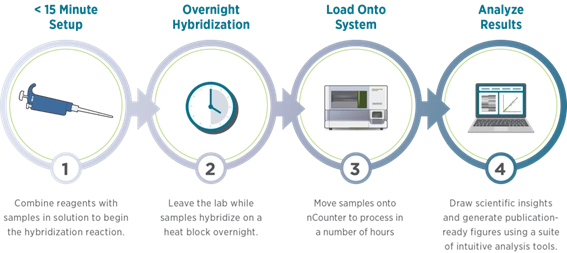
nCounter Workflow

Applications:

Gene expression (mRNA, miRNA). Immune profiling and biomarkers. Oncology and molecular classification of tumors. Translational research and biomarker development/validation. Proteomics (with the nCounter Protein module).

Available panels

nCounter offers gene (gray) and protein (orange) expression panels carefully designed by experts across a wide variety of research areas. All panels are created in collaboration with specialists in each field and are regularly updated. Click on each icon for more information about these panels:
Data analysis

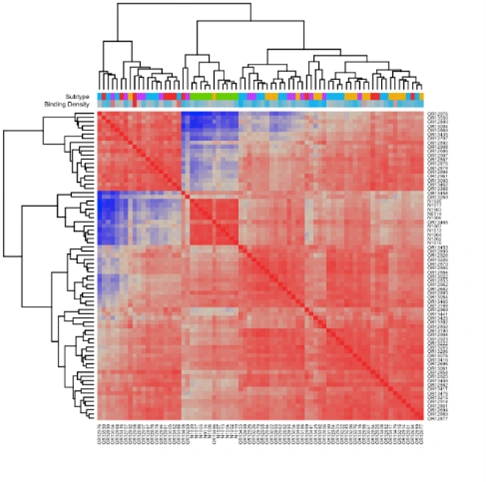
nSolver with the Advanced Analysis plugin allows for deep analysis of cell populations and biological pathways. In addition, it can quantify individual cell types using gene signatures, currently identifying 14 immune cell types as well as neuroscience signatures. For more information, please refer to the following link: nSolver Data Analysis Support | NanoString
nSolver Data Analysis

Gene list

To view the list of genes included in each panel, please click on the following link: nCounter RLFs, Probe Annotation Files, and Gene Lists | NanoString

Area:

Multiomics, Omics, Proteomics, Transcriptomics

Technology:

Brand:

Consult our experts

Google reCaptcha: Invalid site key.

Related products

GeoMx™ Digital Spatial Profiler (DSP)

Bruker's GeoMx™ Digital Spatial Profiler (DSP) is an advanced platform for multi-omic spatial analysis that enables simultaneous quantification of RNA and proteins in tissue sections, preserving tissue architecture. GeoMx DSP combines fluorescent imaging with photo-cleavable oligonucleotide barcodes, offering digitally quantified molecular profiles in defined regions of interest (ROI). This technology supports FFPE and fresh frozen…
Bruker
Spatial Biology

CellScape™ Precise Spatial Proteomics

The CellScape™ Precise Spatial Proteomics platform is an optimized multiplexed immunofluorescence (mIF) solution for high-plex spatial protein detection and quantitative phenotyping. By combining an advanced imaging system with integrated microfluidics for "walk-away" automation, and an open ecosystem based on simple chemistry and robust throughput, the CellScape platform accelerates biological discovery and translational research across multiple…
Bruker
Spatial Biology

Tissue dissociation – PythoN Junior™ y PythoNi®

Singleron's dissociation instruments are designed to effortlessly integrate into your workflow, moving from tissue to a viable cell suspension quickly and easily. They automate the entire process, allowing you to work more comfortably and obtain reliable, consistent, and highly efficient results. These automated dissociation systems transform solid tissues into high-quality suspensions (viable cells) through a…
Singleron
Single cell Sequencing

Preservation buffer

The sCelLiVE® Tissue Preservation Buffer is designed to maintain the integrity of fresh tissues without the need for chemical fixation, offering stable preservation for up to 72 hours and effectively simulating the natural physiological environment. This allows for high cell viability to be maintained even in sensitive samples. This sCelLiVE® Tissue Preservation Buffer enables gentle,…
Singleron
Single cell Sequencing