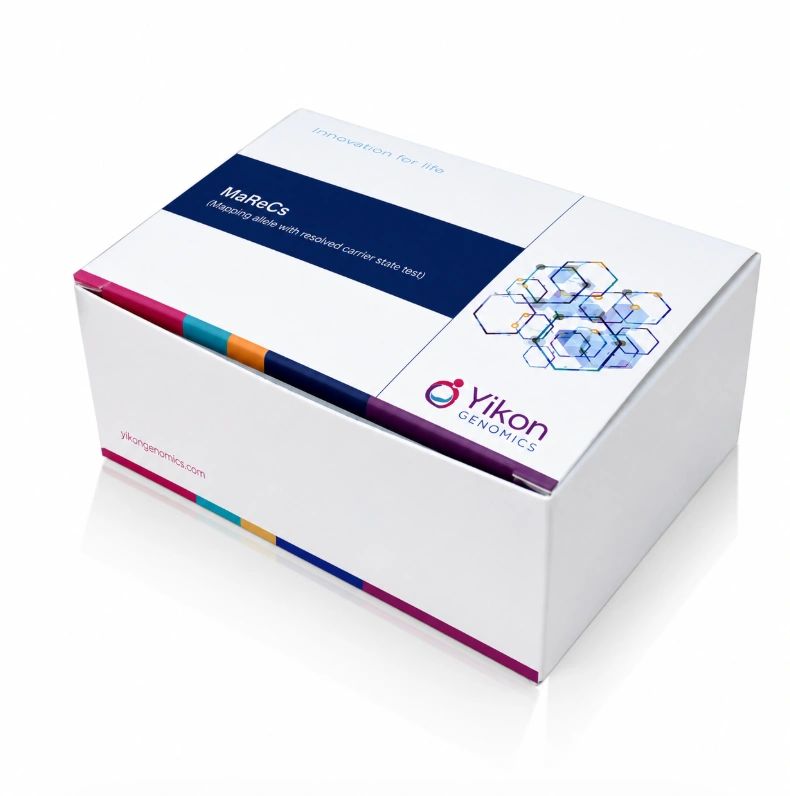
MaReCs® (Allelic Mapping with Resolved Carrier Status) is a PGT‑SR technology that first identifies aneuploid or euploid embryos and then analyses translocation breakpoints and SNP linkage to differentiate carrier from non‑carrier euploid embryos.
Detailed Description
Principle of operation
MaReCs® combines ChromSwift® technology with NGS sequencing to perform a CNV analysis and subsequently an SNP linkage analysis. The workflow is divided into two steps:
Step 1: Embryonic CNV analysis using embryo sequencing data.
Step 2: SNP linkage analysis using embryo and family sequencing data.
This approach allows the identification of translocation breakpoints and distinguishes whether a euploid embryo is a carrier or normal/non‑carrier.
Clinical applications
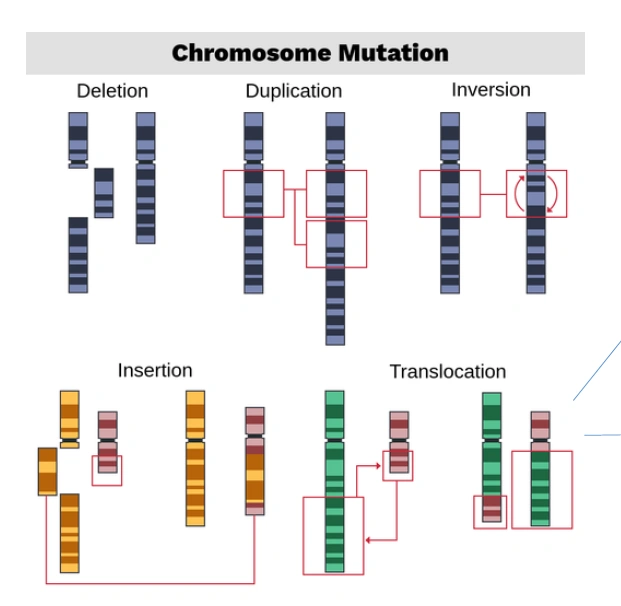
This technology is positioned for PGT‑SR cases and includes the analysis of chromosomal structural rearrangements, being especially relevant in:
Reciprocal translocations (t)
Robertsonian translocations (rob)
Inversions (inv)
Furthermore, it is important to highlight that it allows discrimination between normal embryos and embryos with balanced translocations, while embryos with duplications/deletions are discarded for implantation.
Benefits
Allows differentiation of carrier euploid embryos from non‑carriers through breakpoint analysis and SNP linkage.
Includes the analytical content of PGT‑SR and adds a layer of resolution to optimise the selection of non‑carrier embryos.
Designed to resolve in a single analytical approach aneuploidy, fragmentary duplications/deletions, and the distinction between carrier and normal.
Intended user / audience
PGT‑SR cases in families with structural chromosomal rearrangements. Validation schemes and use cases include families with inherited translocations and carriers with available relatives for study.
Considerations or limitations
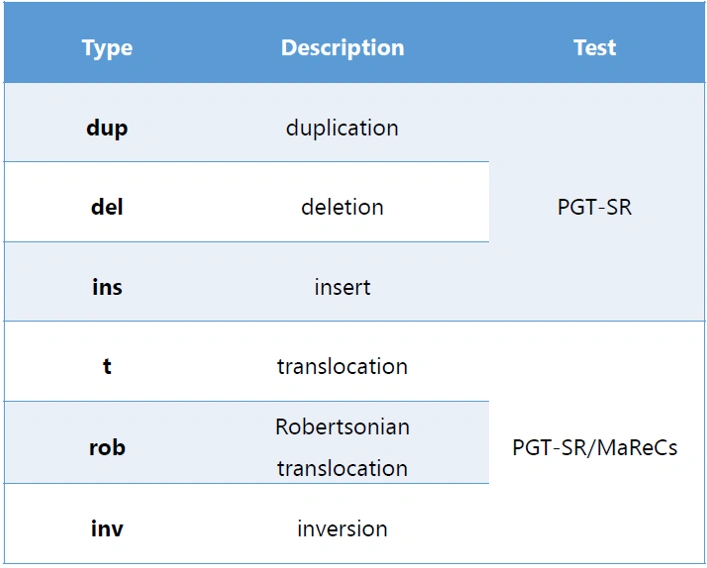
MaReCs® is documented for translocations, Robertsonian translocations and inversions.
For translocation fragments, the documentation indicates size >1M.
Three scenarios are considered in the validation cases:
couple + carrier’s parents, no limit on the number of embryos;
couple + affected child, no limit on the number of embryos;
couple alone, with more than 3 embryos.
For Robertsonian translocations, it is indicated that it must be a whole‑arm translocation of known length.
In families with a de novo mutation, MaReCs® is not applicable.
Carrier distinction requires reference embryos with informative CNV profiles; the document explains that at least one abnormal embryo and one euploid CNV embryo allow the distinction in the translocation context, and that for Robertsonian translocations it is recommended to have 2 abnormal CNV embryos in addition to at least one euploid CNV embryo.
Key Features
Based on CNV analysis and SNP linkage.
Applicable to reciprocal translocations, Robertsonian translocations and inversions.
Includes the analytical content of PGT‑SR and adds breakpoint resolution to differentiate carrier status.
Integration with ChromGo® software for data interpretation.
Greater efficiency in each sequencing run thanks to the ability to multiplex with other Yikon product line products.
Presentation Details
Library kit: XK-038 / XK-048
Sequencing requirements: PE, 20M–30M reads
×
 6")