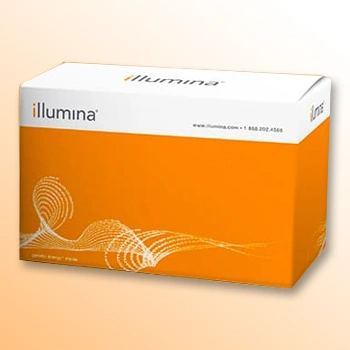
Directed amplification and sequencing assay to recover and characterize the complete genome of respiratory syncytial virus (RSV) A and B from RNA extracted from positive respiratory samples, using reagents from the Illumina COVIDSeq assay. The provided documentation positions it as a solution oriented to viral surveillance, rapid genomic characterization, and analysis of respiratory samples with Illumina workflows and RSV‑specific bioinformatic analysis.
Detailed Description
Principle of operation
The assay is based on amplification of RSV RNA by two parallel RT‑PCR reactions per sample, followed by library preparation, tagmentation, indexing, clean‑up, quantification, normalization, equimolar pooling, and sequencing. The documentation describes a panel of 39 primers distributed in two pools, designed to amplify RSV‑A and RSV‑B without the need for prior subtyping, since both subtypes are covered within the same reaction scheme. For samples with low viral load, an additional option with extra pools focused on the G and F genes is also contemplated. Optional Bioanalyzer control shows amplification peaks around 2000 bp and, after library preparation, an expected peak around 330 bp.
Clinical applications
This assay is intended for the detection and genomic characterization of RSV‑A and RSV‑B directly from primary samples, especially positive nasopharyngeal swabs, for viral surveillance, monitoring of variant circulation, and support for outbreak investigations.
Benefits
Compared to historical culture‑based approaches, the described targeted sequencing allows results to be obtained more quickly and directly from the sample, avoiding delays and possible biases due to culture adaptation. The amplicon‑based assay is simple, standardizable, and adaptable to new targets; moreover, in the case of the RSV protocol, it allows covering the complete genome with only two parallel PCRs and without needing to replace primers to distinguish between RSV‑A and RSV‑B beforehand.
Key results or indicators
This RSV assay has demonstrated solid and consistent performance in the detection and characterization of RSV‑A and RSV‑B, both in artificial samples and in positive nasopharyngeal swabs. Its targeted approach allows recovering high‑quality genomic information directly from respiratory samples, with robust coverage across different viral load contexts and the possibility of adapting the strategy to key regions of the virus when a more focused approach is required. Overall, it is an especially valuable solution for molecular surveillance of RSV and for genomic characterization studies of this type of respiratory virus.
Technology used
This RSV assay relies on an integrated and standardized workflow that facilitates not only the amplification and characterization of the virus but also a bioinformatic interpretation specific for RSV‑A and RSV‑B using the DRAGEN Microbial Amplicon tool available on BaseSpace Sequence Hub. Its approach allows obtaining consensus sequences and useful molecular characterization for viral surveillance, lineage tracking, and generation of actionable information from respiratory samples. Altogether, it offers a robust, adaptable solution that is especially interesting for laboratories seeking a complete approach to the genomic study of RSV.
Considerations or limitations
The product is for research use only and must not be used in diagnostic procedures. For this RSV assay, good results have been documented with a wide diversity of extraction protocols (QIAamp Viral RNA Mini Kit, QIAsymphony DSP Virus/Pathogen Mini or Midi Kit, Magnapure, eMag, EasyMag, EZ1 DSP Virus kit, and MagLead Virus extraction).
Key Features
Complete genome amplification and sequencing of RSV‑A and RSV‑B using Illumina COVIDSeq reagents.
Coverage of both subtypes without the need for prior subtyping.
Panel of 39 primers distributed in two pools, with an additional option for G and F genes in low viral load samples.
Documented workflow with RT‑PCR, library preparation, tagmentation, indexing, normalization, and 2 × 151 bp paired‑end sequencing.
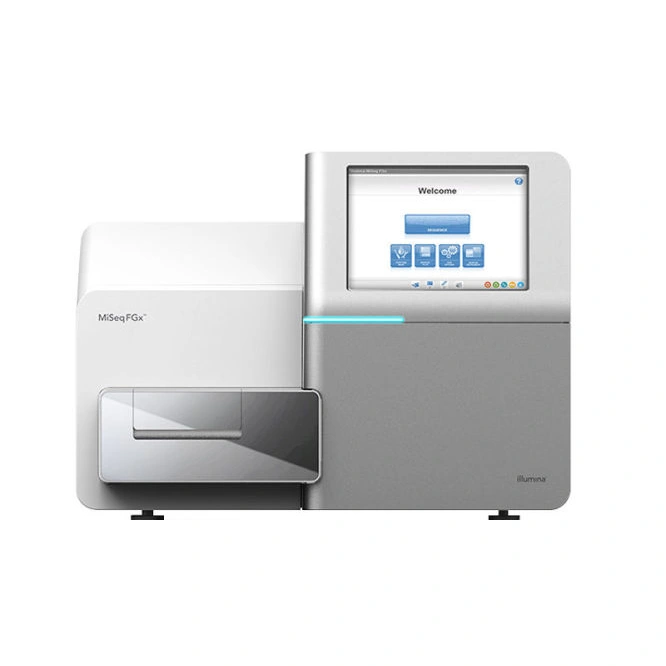
High‑quality results on MiSeq i100 Plus, with >93% PF, Q30 >84%, and combined run and analysis times under 10 hours.
Analysis compatible with DRAGEN and with an RSV‑specific pipeline producing typing output, FASTA consensi, and a bioinformatic report.
Presentation Details
Format
RSV targeted sequencing protocol based on Illumina COVIDSeq reagents. Includes 39 primers in 2 pools for complete genome; optional 2 additional pools for G and F regions in low viral load samples.
Kit Contents
The content is distributed across several boxes including reagents such as Illumina Tune Beads (ITB), Stop Tagment Buffer 2 (ST2), Enrichment BLT (EBLTS), Elution Buffer (ELB), Resuspension Buffer (RSB), Tagmentation Wash Buffer (TWB), COVIDSeq Primer Pool 1 (CPP1), COVIDSeq Primer Pool 2 (CPP2), Elution Prime Fragment 3HC Mix (EPH3), Enhanced PCR Mix (EPM), First Strand Mix (FSM), Illumina PCR Mix (IPM), Reverse Transcriptase (RVT) and Tagmentation Buffer 1 (TB1), as well as IDT for Illumina-PCR Indexes.
References
| Illumina COVIDSeq Assay (96 Samples) | — |
| Illumina COVIDSeq Assay Box 1 – 96 Samples | Part # 20051272 |
| Illumina COVIDSeq Assay Box 2 – 96 Samples | Part # 20051273 |
| Illumina COVIDSeq Assay Box 3 – 96 Samples | Part # 20051274 |
| Illumina COVIDSeq Assay Box 4 – 96 Samples, Indexes | — |
| Illumina COVIDSeq Positive Control HT | Part # 20051775 |
| Illumina COVIDSeq Test (RUO) Kit Contents (3072 Samples) | — |
| Illumina COVIDSeq Test Box 1 – 3072 Samples | Part # 20044405 |
| Illumina COVIDSeq Test Box 2 – 3072 Samples | Part # 20044406 |
| Illumina COVIDSeq Test Box 3 – 3072 Samples | Part # 20044407 |
| Illumina COVIDSeq Positive Control HT | Part # 20043401 |
| IDT for Illumina-PCR Indexes | — |
| IDT for Illumina-PCR Indexes Set 1 (96 Indexes) | Part # 20043132 |
| IDT for Illumina-PCR Indexes Set 2 (96 Indexes) | Part # 20043132 |
| IDT for Illumina-PCR Indexes Set 3 (96 Indexes) | Part # 20043132 |
| IDT for Illumina-PCR Indexes Set 4 (96 Indexes) | Part # 20043132 |
×