Detailed description
Operating principle
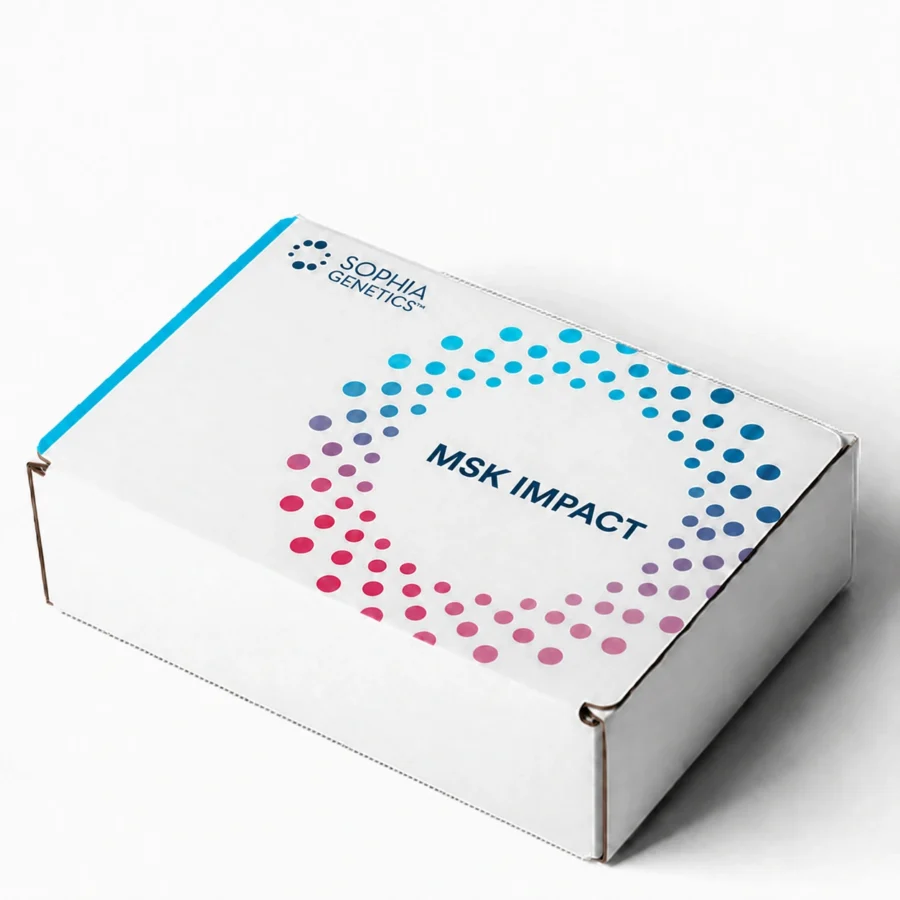
The decentralised MSK-IMPACT® powered with SOPHiA DDM™ solution enables laboratories to implement locally the renowned genomic profiling assay developed by MSKCC, while retaining full control over their samples and data.
The assay is built around its matched tumour-normal sequencing approach. It jointly processes tumour DNA from FFPE tissue and the patient’s own normal DNA, obtained from peripheral blood leukocytes (WBC). This dual analytical strategy enables accurate discrimination between true somatic variants and germline variants —identifying hereditary cancer predisposition— while excluding biological noise caused by clonal haematopoiesis of indeterminate potential (CHIP). Sequencing of the normal component is highly efficient, requiring only 25% of the total sequencing-run read capacity.
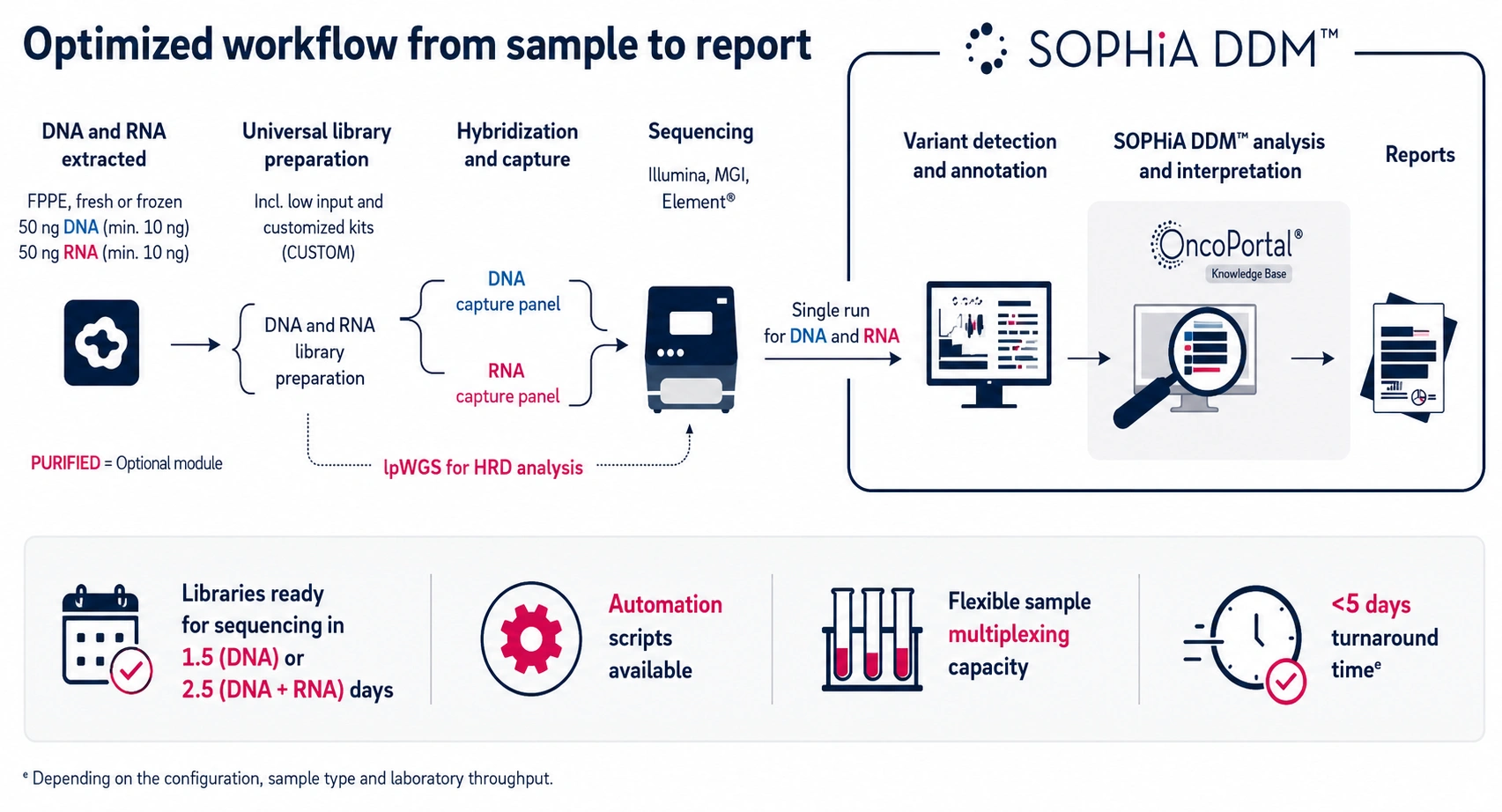
The assay chemistry uses targeted hybrid capture enrichment. Library preparation incorporates CUMIN® molecular labelling technology —molecular barcodes— to maximise detection sensitivity and mitigate sequencing artefacts. Secondary and tertiary bioinformatic analysis is fully integrated into the SOPHiA DDM™ platform, which implements high-precision proprietary algorithms including:
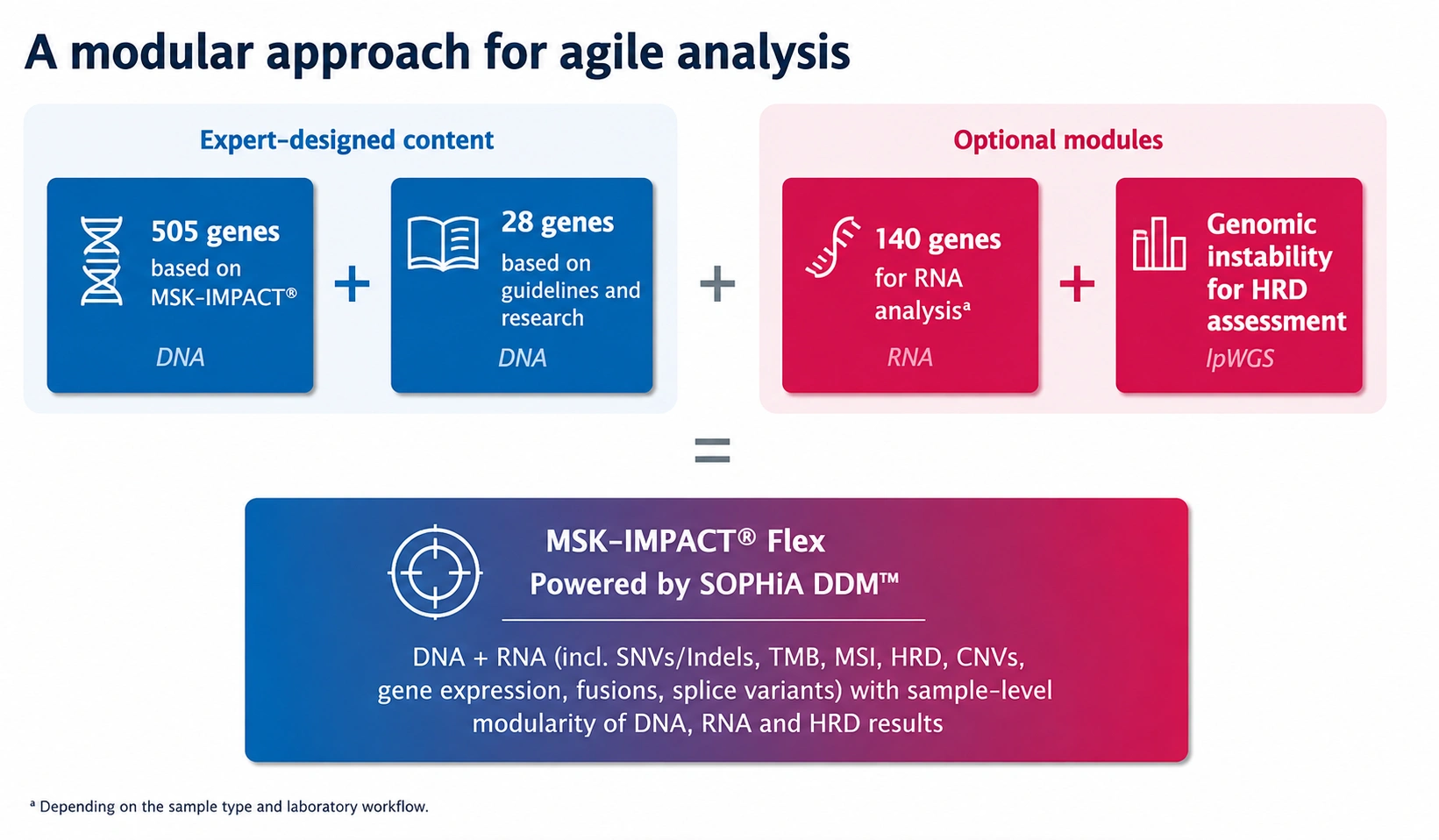
MSK-IMPACT® Standard vs. MSK-IMPACT® FLEX
The solution is available in two configurations to meet the structure and requirements of each laboratory:
| Feature | MSK-IMPACT® Standard | MSK-IMPACT® FLEX |
|---|---|---|
| Analytical strategy | Matched tumour-normal Requires a control sample from the same patient. |
Tumour-only Does not require a normal blood sample or matched control. |
| Required sample types | Tumour tissue (FFPE) + whole blood/leukocytes (WBC). | Tumour tissue only (FFPE or fresh-frozen). |
| Genomic content (DNA) | 505 cancer-associated genes. | 533 genes: 505 genes from the core panel + 28 additional genes based on clinical guidelines and trials. |
| RNA module | Not available. Fusion detection is limited to DNA targets in 23 genes. | 140 genes for partner-agnostic fusion, expression and exon-skipping analysis. |
| HRD assessment | Not available. | Genomic instability analysis using lpWGS and the GIInger™ algorithm. |
| Somatic-germline differentiation | Physical and patient-specific: direct exclusion by subtracting DNA from the patient’s normal WBC sample. | Bioinformatic: filtering using advanced population databases —gnomAD, etc.— and platform algorithms. |
| Clonal haematopoiesis (CHIP) filtering | Physical and highly accurate: completely removes CHIP false positives by directly sequencing the patient’s leukocytes (WBC). | Bioinformatic modelling: relies on database filtering and noise-modelling algorithms without a direct haematological control. |
Complete gene list
| Panel / source | Category | Gene list / extracted details |
|---|---|---|
| IMPACT | SNVs/indels in 505 genes —original MSK-IMPACT® panel— | ABL1, ABRAXAS1, ACVR1, AGO1, AGO2, AKT1, AKT2, AKT3, ALB, ALK, ALOX12B, AMER1, ANKRD11, APC, APLNR, AR, ARAF, ARHGAP35, ARID1A, ARID1B, ARID2, ARID5B, ASXL1, ASXL2, ATM, ATR, ATRX, ATXN7, AURKA, AURKB, AXIN1, AXIN2, AXL, B2M, BABAM1, BAP1, BARD1, BBC3, BCL10, BCL2, BCL2L1, BCL2L11, BCL6, BCOR, BIRC3, BLM, BMPR1A, BRAF, BRCA1, BRCA2, BRD4, BRIP1, BTK, CALR, CARD11, CARM1, CASP8, CBFB, CBL, CCND1, CCND2, CCND3, CCNE1, CCNQ, CD274, CD276, CD79A, CD79B, CDC42, CDC73, CDH1, CDK12, CDK4, CDK6, CDK8, CDKN1A, CDKN1B, CDKN2A, CDKN2B, CDKN2C, CEBPA, CENPA, CHEK1, CHEK2, CIC, CMTR2, COP1, CREBBP, CRKL, CRLF2, CSDE1, CSF1R, CSF3R, CTCF, CTLA4, CTNNB1, CTR9, CUL3, CXCR4, CXorf67, CYLD, CYP19A1, CYSLTR2, DAXX, DCUN1D1, DDR2, DICER1, DIS3, DNAJB1, DNMT1, DNMT3A, DNMT3B, DOT1L, DROSHA, DUSP4, E2F3, EED, EGFL7, EGFR, EIF1AX, EIF4A2, EIF4E, ELF3, ELOC, EP300, EPAS1, EPCAM, EPHA3, EPHA5, EPHA7, EPHB1, ERBB2, ERBB3, ERBB4, ERCC2, ERCC3, ERCC4, ERCC5, ERF, ERG, ERRFI1, ESR1, ETAA1, ETV1, ETV6, EZH1, EZH2, FANCA, FANCC, FAT1, FBXW7, FGF19, FGF3, FGF4, FGFR1, FGFR2, FGFR3, FGFR4, FH, FLCN, FLT1, FLT3, FLT4, FOXA1, FOXF1, FOXL2, FOXO1, FOXP1, FUBP1, FYN, GAB1, GAB2, GATA1, GATA2, GATA3, GLI1, GNA11, GNAQ, GNAS, GNB1, GPS2, GREM1, GRIN2A, GSK3B, H3F3A, H3F3B, H3F3C, HGF, HIST1H1C, HIST1H2BD, HIST1H3A, HIST1H3B, HIST1H3C, HIST1H3D, HIST1H3E, HIST1H3F, HIST1H3G, HIST1H3H, HIST1H3I, HIST1H3J, HIST2H3C, HIST2H3D, HIST3H3, HLA-A, HLA-B, HLA-C, HNF1A, HOXB13, HRAS, ICOSLG, ID3, IDH1, IDH2, IFNGR1, IGF1, IGF1R, IGF2, IKBKE, IKZF1, IL10, IL7R, INHA, INHBA, INPP4A, INPP4B, INPPL1, INSR, IRF4, IRS1, IRS2, JAK1, JAK2, JAK3, JUN, KBTBD4, KDM5A, KDM5C, KDM6A, KDR, KEAP1, KIT, KLF4, KLF5, KMT2A, KMT2B, KMT2C, KMT2D, KMT5A, KNSTRN, KRAS, LATS1, LATS2, LMO1, LYN, LZTR1, MAD2L2, MALT1, MAP2K1, MAP2K2, MAP2K4, MAP3K1, MAP3K13, MAP3K14, MAPK1, MAPK3, MAPKAP1, MAX, MCL1, MDC1, MDM2, MDM4, MED12, MEF2B, MEN1, MET, MGA, MITF, MLH1, MLLT1, MPL, MRE11, MSH2, MSH3, MSH6, MSI1, MSI2, MST1, MST1R, MTAP, MTOR, MUTYH, MYC, MYCL, MYCN, MYD88, MYOD1, NADK, NBN, NCOA3, NCOR1, NEGR1, NF1, NF2, NFE2L2, NFKBIA, NKX2-1, NKX3-1, NOTCH1, NOTCH2, NOTCH3, NOTCH4, NPM1, NRAS, NSD1, NSD2, NSD3, NTHL1, NTRK1, NTRK2, NTRK3, NUF2, NUP93, PAK1, PAK5, PALB2, PARP1, PAX5, PBRM1, PDCD1, PDCD1LG2, PDGFRA, PDGFRB, PDPK1, PGBD5, PGR, PHF6, PHOX2B, PIK3C2G, PIK3C3, PIK3CA, PIK3CB, PIK3CD, PIK3CG, PIK3R1, PIK3R2, PIK3R3, PIM1, PLCG2, PLK2, PMAIP1, PMS1, PMS2, PNRC1, POLD1, POLE, POT1, PPARG, PPM1D, PPP2R1A, PPP4R2, PPP6C, PRDM1, PRDM14, PREX2, PRKAR1A, PRKCI, PRKD1, PRKN, PTCH1, PTEN, PTP4A1, PTPN11, PTPRD, PTPRS, PTPRT, RAB35, RAC1, RAC2, RAD21, RAD50, RAD51, RAD51B, RAD51C, RAD51D, RAD52, RAD54L, RAF1, RARA, RASA1, RB1, RBM10, RECQL, RECQL4, REL, REST, RET, RHEB, RHOA, RICTOR, RIT1, RNF43, ROS1, RPS6KA4, RPS6KB2, RPTOR, RRAGC, RRAS, RRAS2, RTEL1, RUNX1, RXRA, RYBP, SCG5, SDHA, SDHAF2, SDHB, SDHC, SDHD, SERPINB3, SERPINB4, SESN1, SESN2, SESN3, SETD2, SETDB1, SF3B1, SH2B3, SH2D1A, SHOC2, SHQ1, SLFN11, SLX4, SMAD2, SMAD3, SMAD4, SMARCA2, SMARCA4, SMARCB1, SMARCD1, SMARCE1, SMO, SMYD3, SOCS1, SOS1, SOX17, SOX2, SOX9, SPEN, SPOP, SPRED1, SPRTN, SRC, SRSF2, STAG2, STAT3, STAT5A, STAT5B, STK11, STK19, STK40, SUFU, SUZ12, SYK, TAP1, TAP2, TBX3, TCF3, TCF7L2, TEK, TENT5C, TERT, TET1, TET2, TGFBR1, TGFBR2, TMEM127, TMPRSS2, TNFAIP3, TNFRSF14, TOP1, TP53, TP53BP1, TP63, TRAF2, TRAF7, TRIP13, TSC1, TSC2, TSHR, U2AF1, UPF1, USP8, VEGFA, VHL, VTCN1, WT1, WWTR1, XIAP, XPO1, XRCC2, YAP1, YES1, ZFHX3, ZNRF3, ZRSR2 |
| IMPACT FLEX | SNVs/indels in 523 genes: 505 MSK-IMPACT genes + 28 additional FLEX genes | ASS1, BCORL1, C11orf95, CD58, DDR1, DPYD, FANCB, FANCD2, FANCE, FANCF, FANCG, FANCI, FANCL, FANCM, FAS, FGF23, GEN1, GNA13, HDAC2, IDO2, LDB1, PML, PPP2R2A, PRPF8, STAT6, TFE3, UGT1A1, USH2A |
| BOTH | Whole-gene amplifications and deletions in 491 genes | All panel genes EXCEPT: H3F3B, HIST1H3A, HIST1H3D, HIST1H3E, HIST1H3F, HIST1H3G, HIST1H3H, HIST1H3I, HIST1H3J, HIST2H3C, HIST2H3D, HLA-A, HLA-C, NOTCH2. Note: the initial 520-gene image excluded 13 genes; according to the updated Fact Sheet, 14 genes are excluded. |
| BOTH | Gene- and exon-level copy number variations (CNVs) in 49 genes | APC, ARID1A, ATM, BAP1, BARD1, BRCA1, BRCA2, BRIP1, CDH1, CDK12, CHEK1, CHEK2, DICER1, EGFR, EPCAM, FANCA, FANCD2, FANCL, FH, FLCN, MET, MLH1, MRE11, MSH2, MSH6, NBN, NF1, NF2, PALB2, PMS2, PPP2R2A, PTCH1, PTEN, RAD51B, RAD51C, RAD51D, RAD54L, RB1, SDHA, SDHB, SDHC, SMARCA4, SMARCB1, STK11, SUFU, TP53, TSC1, TSC2, WT1 |
| IMPACT FLEX RNA MODULE | Partner-agnostic fusions in 135 genes | ACVR2A, AKT1, AKT2, AKT3, ALK, ARHGA-P26, ARHGA-P6, AR, AXL, BCOR, BRAF, BRD3, BRD4, CAMTA1, CCNB3, CCND1, CHMP2A, CIC, CRTC1, CSF1, CSF1R, CTNNB1, DNAJB1, EGF, EGFR, EPC1, ERBB2, ERBB4, ERG, ESR1, ESRRA, ETV1, ETV4, ETV5, ETV6, EWSR1, FGF1, FGFR1, FGFR2, FGFR3, FGR, FOSB, FOS, FOXO1, FOXO4, FUS, GLI1, GRB7, GREB1, HMGA2, IGF1R, INSR, JAK2, JAK3, JAZF1, KANSL1, KIT, KRAS, MAML2, MAP2K1, MAP3K8, MAST1, MAST2, MBTD1, MDM2, MEAF6, MET, MGEA5, MKL2, MN1, MSMB, MUSK, MYBL1, MYB, MYC, MYOD1, NCOA1, NCOA2, NCOA3, NFATC2, NFE2L2, NFIB, NOTCH1, NOTCH2, NR4A3, NRG1, NTRK1, NTRK2, NTRK3, NUMBL, NUTM1, PAX3, PAX8, PDGFB, PDGFD, PDGFRA, PDGFRB, PHF1, PHKB, PIK3CA, PKN1, PLAG1, PPARG, PRDM10, PRKACA, PRKACB, PRKCA, PRKCB, PRKCD, PRKD1, PRKD2, PRKD3, RAD51B, RAF1, RELA, RET, ROS1, RSPO2, RSPO3, SS18L1, SS18, STAT6, TAF15, TCF12, TERT, TFE3, TFEB, TFG, THADA, TMPRSS2, USP6, VGLL2, WWTR1, YAP1, YWHAE |
| IMPACT FLEX RNA MODULE | Exon skipping in 9 genes | ALK (ex2-17, ex2-3), ARvII (ex4-8), BRAF (ex2-10, ex4-10, ex2-8, ex3-8, ex4-8), EGFRvIII (ex2-7), ERBB2 (ex16), MET (ex14, ex15), NFE2L2 (ex2, ex3), NOTCH1 (ex2-27, ex3-27, ex3-28, ex21-27), PDGFRA (ex8-9). Kinase-domain ITD —internal tandem duplication—: BRAF (ex10-18), EGFRvIII (ex18-25). |
| IMPACT FLEX RNA MODULE | Gene expression in 56 genes | AKT1, AKT3, ALK, ALPK1, ARHGA-P26, BCOR, BRAF, CSF1, CTNNB1, DICER1, EGFR, ERBB2, ERG, ESR1, ETV1, ETV4, FGFR1, FGFR2, FGFR3, FUS, HMGA2, HRAS, JAK2, JAK3, KRAS, MAP2K1, MDM2, MET, MYBL1, MYOD1, NCOA1, NFE2L2, NFIB, NOTCH1, NRAS, NRG1, NTRK1, NTRK2, NTRK3, PDGFRA, PIK3CA, PKN1, PRKACA, PRKACB, PRKCD, RAD51B, RAF1, RET, ROS1, SS18L1, SS18, STAT6, TCF12, TFE3, THADA, YAP1 |
| IMPACT FLEX HRD MODULE | Genomic instability assessment | Low-pass genome sequencing + SOPHiA DDM™ GIInger™ pipeline. |
Clinical applications
Intended users
Molecular diagnostic laboratories, hospital pathology departments, translational oncology centres and oncology research institutions.