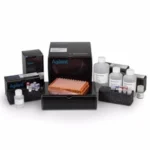
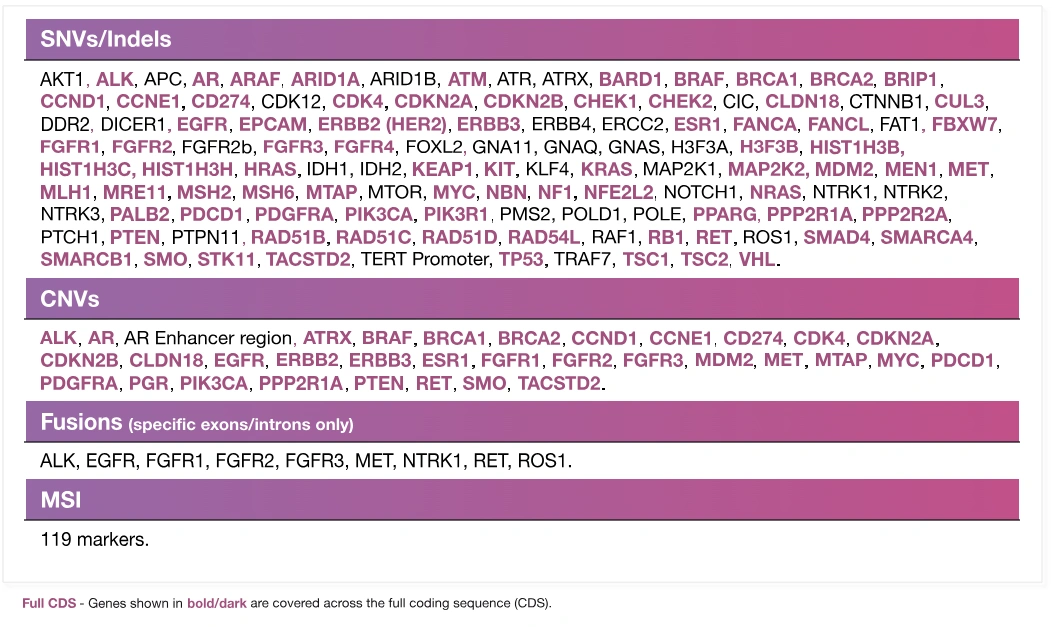
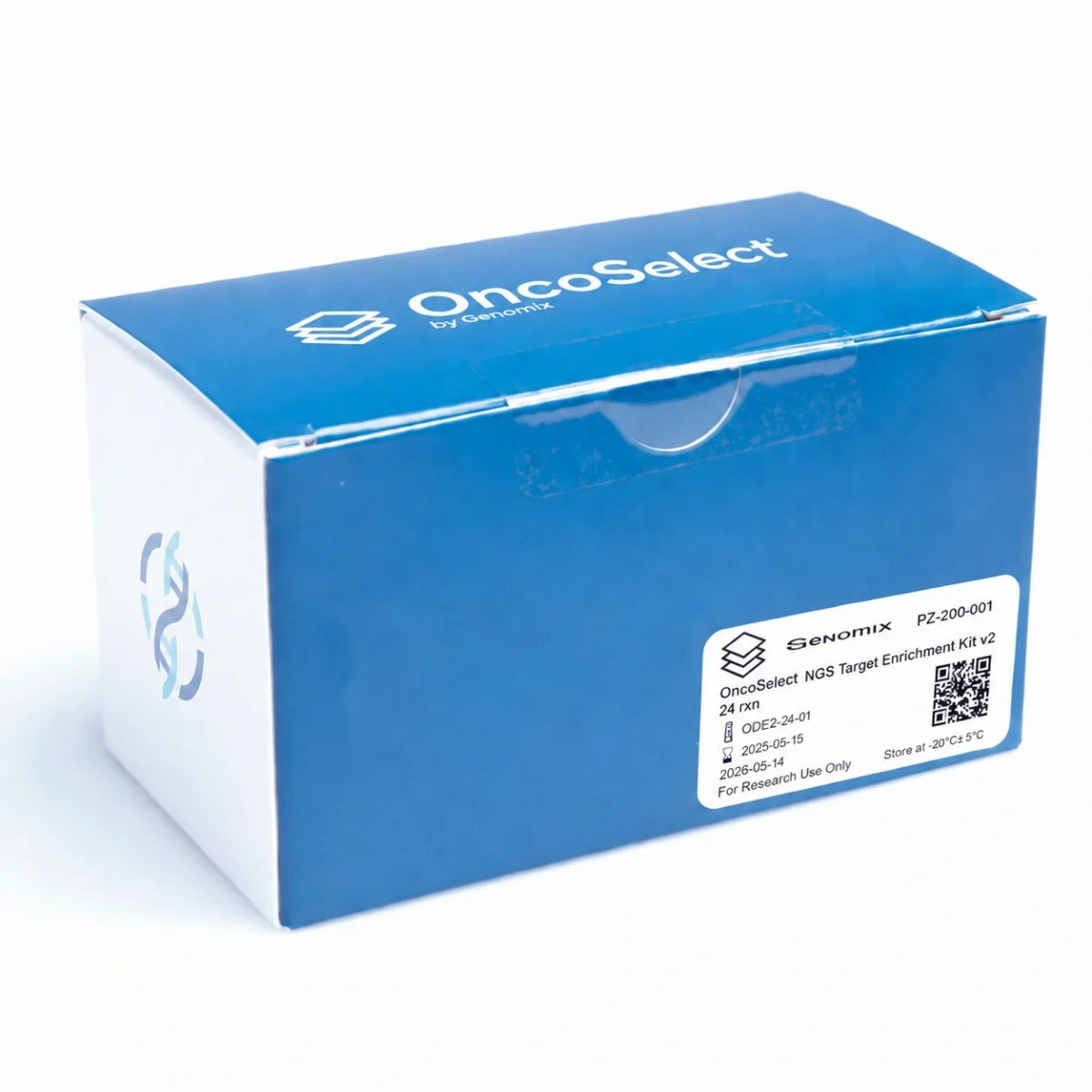
In‑house targeted enrichment NGS panel for pan‑cancer solid tumor profiling. It analyzes 115 genes (79 with complete CDS) with ESCAT I, II and III clinical evidence. Includes library preparation through a flexible workflow that allows processing FFPE and cfDNA samples together or separately. Detects SNVs, Indels, CNVs, fusions, structural variants and MSI.
Detailed Description
PRINCIPLE OF OPERATION
End‑to‑end solution based on hybridisation and capture enrichment chemistry for the analysis of 115 genes (79 with complete CDS). The assay consolidates processing into a single dual workflow: it applies initial enzymatic fragmentation for genomic DNA from FFPE tissue and proceeds directly with cfDNA samples. It stands out for requiring highly competitive minimum inputs of 30 ng and 10 ng, respectively.
The assay allows analysis of SNVs, Indels, copy number variations (CNVs), fusions, structural variants and 119 microsatellite instability (MSI) markers. In addition, it has incorporated specific tumour fraction estimation for cfDNA analyses.
Analytical Sensitivity:
• FFPE samples: Detects variants with allelic frequencies (VAF) up to 5%.
• cfDNA samples (Liquid Biopsy): Detects variants with allelic frequencies (VAF) down to 0.5%.
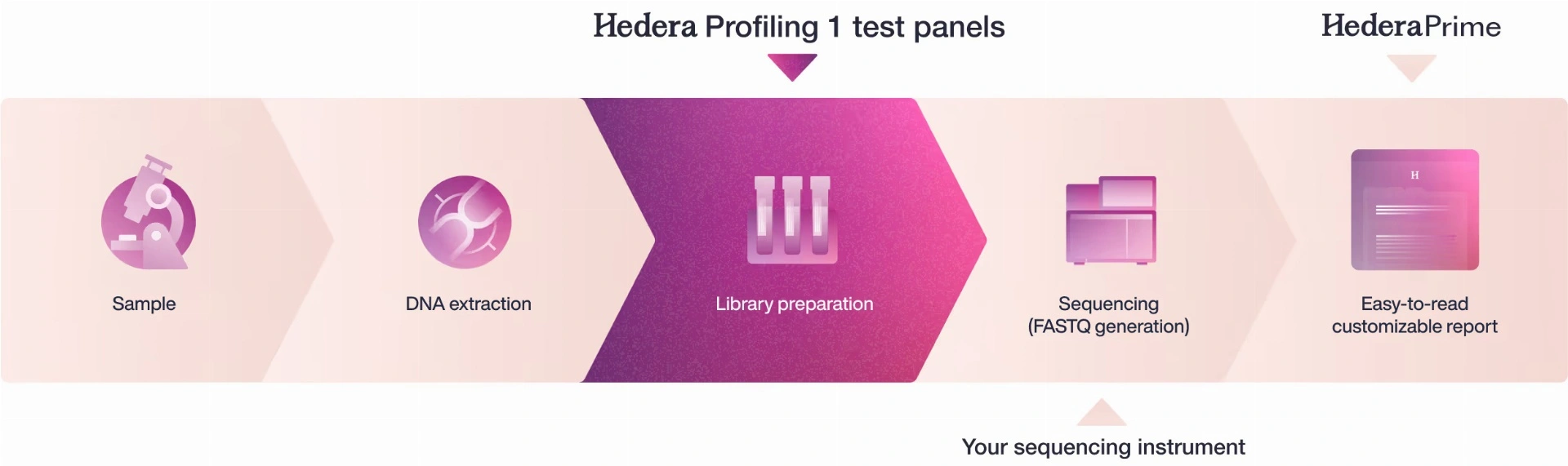
Library preparation integrates UMI adapters and UDI primers with duplex consensus reading to maximise data reliability, correcting errors and preventing index hopping. After an overnight 16‑hour hybridisation, the system delivers sequencing‑ready libraries for Illumina or Element Biosciences platforms in just 2 days, with less than 4 hours of hands‑on time and automation option.
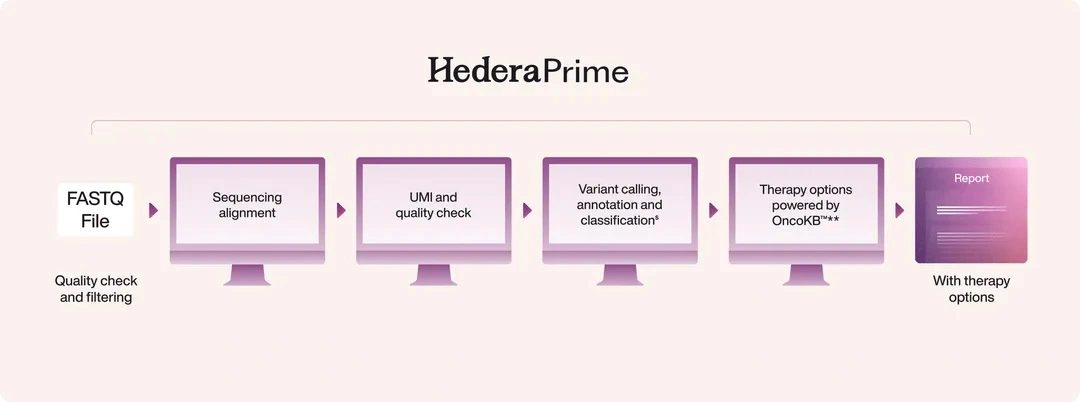
The analysis is comprehensively completed through Hedera Prime (CE‑IVDR), a secondary and tertiary analysis software that automates quality control and variant interpretation, presenting results through specific interfaces optimised for each type of genomic alteration.
CLINICAL APPLICATIONS
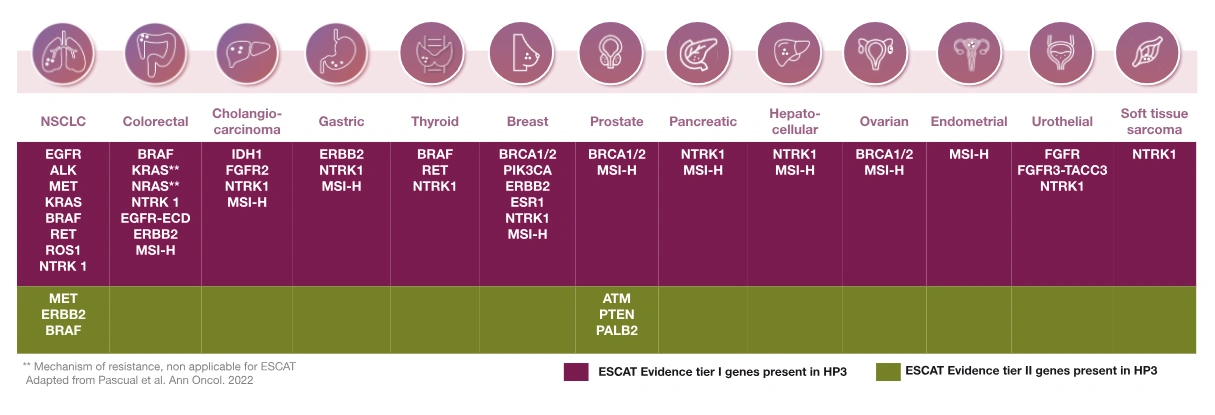
This tool has been designed for molecular profiling of solid tumours by NGS in oncology research workflows, covering tissue (FFPE) and liquid biopsy (cfDNA) samples. The assay has validated biomarkers in multiple tumour types (non‑small cell lung cancer [NSCLC], colorectal, cholangiocarcinoma, gastric, thyroid, breast, prostate, pancreatic, hepatocellular, ovarian, endometrial, urothelial and soft tissue sarcomas). The panel includes genes corresponding to ESCAT I, II and III evidence levels.
BENEFITS
Consolidated workflow for dual processing of FFPE and cfDNA samples.Comprehensive genomic coverage of SNVs, Indels, CNVs, fusions, structural variants and MSI markers.Integrated tumour fraction estimation in liquid biopsy samples.Incorporation of UMI technology and UDI primers for error correction and index hopping prevention.Performance optimisation with minimum sample inputs of 10 ng (cfDNA) and 30 ng (FFPE).Validated compatibility for sequencing runs on Illumina and Element Biosciences AVITI platforms.Integration of secondary and tertiary bioinformatic analysis through Hedera Prime software with CE‑IVDR marking.
INTENDED USER / AUDIENCE
Laboratories and research groups dedicated to the study, diagnosis and monitoring of solid tumours, regardless of whether the starting material is FFPE or Plasma.
Key Features
Genomic coverage of 115 unique genes (79 with complete CDS) with RUO marking.
Detection of single nucleotide variants (SNVs), insertions/deletions (Indels), copy number variations (CNVs), fusions, structural variants and 119 microsatellite instability (MSI) markers.
Design focused on pan‑cancer solid tumour studies, integrating biomarkers with ESCAT I, II and III clinical evidence levels for multiple indications.
Hybrid capture enrichment for tumour profile generation, integrating UMI adapters and duplex consensus UDI primers for read error correction.
Compatible with tissue (FFPE) and liquid biopsy (cfDNA) samples, offering the flexibility to process mixed pools of both sample types in the same workflow, with minimum input requirements of 30 ng and 10 ng, respectively.
Sequencing processing capability on Illumina and Element Biosciences AVITI systems.
Automated analysis through the Hedera Prime platform, CE‑IVDR marked software that centralises secondary quality control and tertiary variant interpretation.
Presentation Details
Product identification
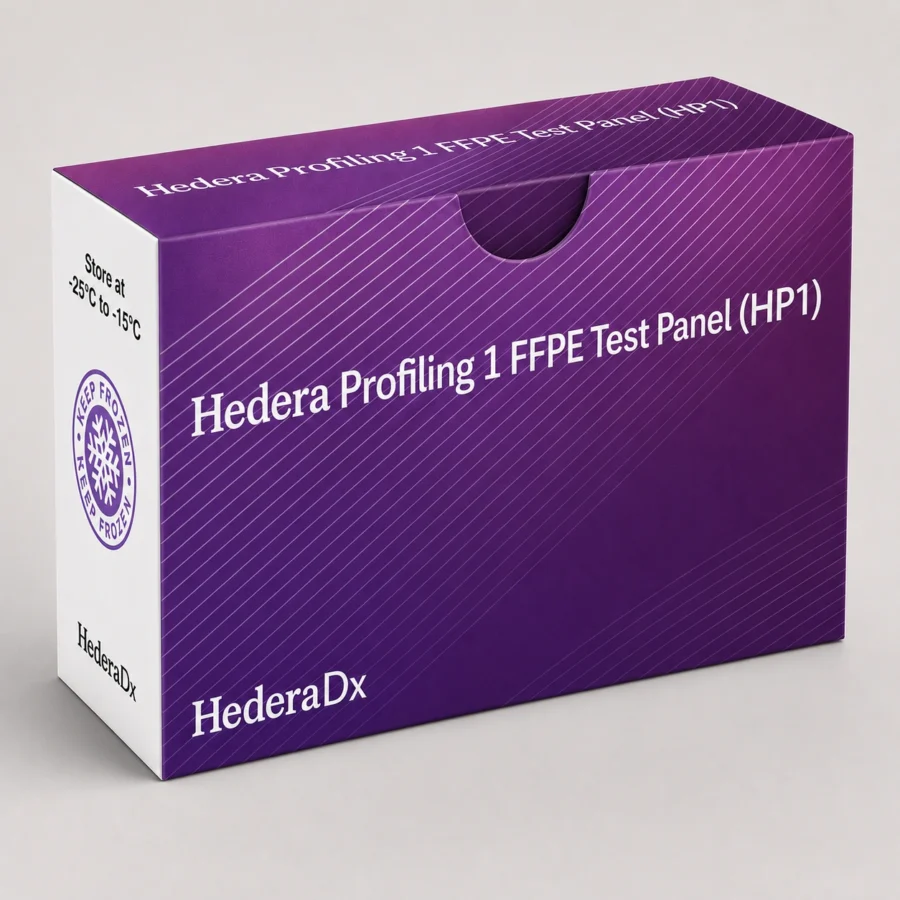
Commercial name: Hedera Profiling 1 FFPE Test Panel (HP1 FFPE), and Hedera Profiling 1 ctDNA Test Panel.Product type: Bundle solution.Product family: Assay Enrichment Kit + Hedera Prime Analytics.Product ID:
Library preparation, Indexing, Purification and isolation:
Reagents and materials for NGS library preparation.Reagents for sample indexing.Materials for library purification and isolation.
Required materials (Not included)
Quantification and Quality Control (QC): Fluorometric quantification kits and fragment size assessment kits.Sequencing: Reagents for sequencing runs on Illumina platforms and Illumina PhiX v3 control.