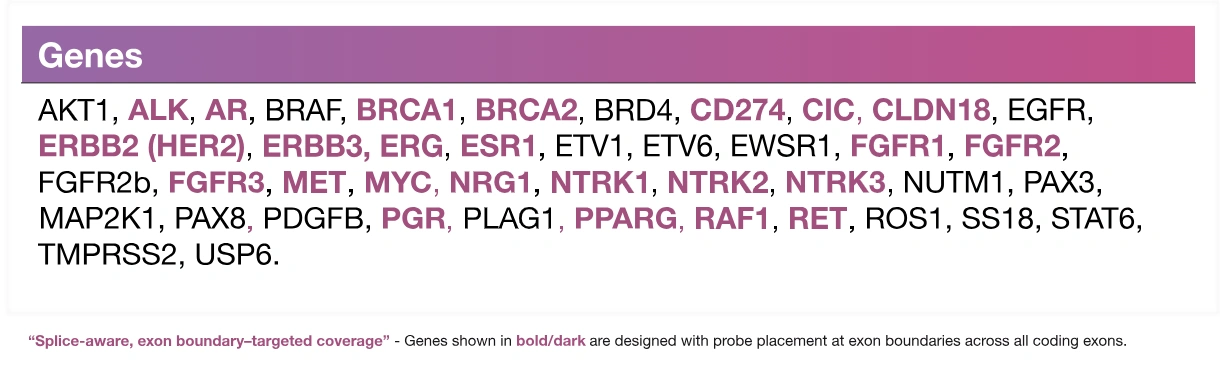
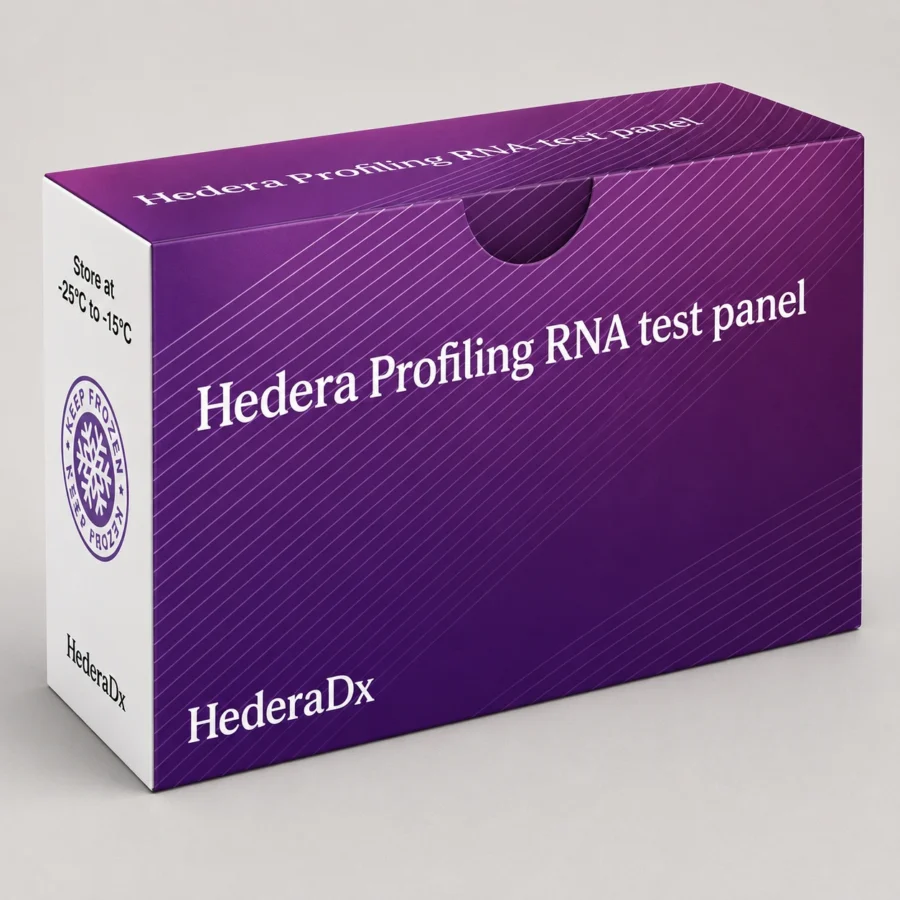
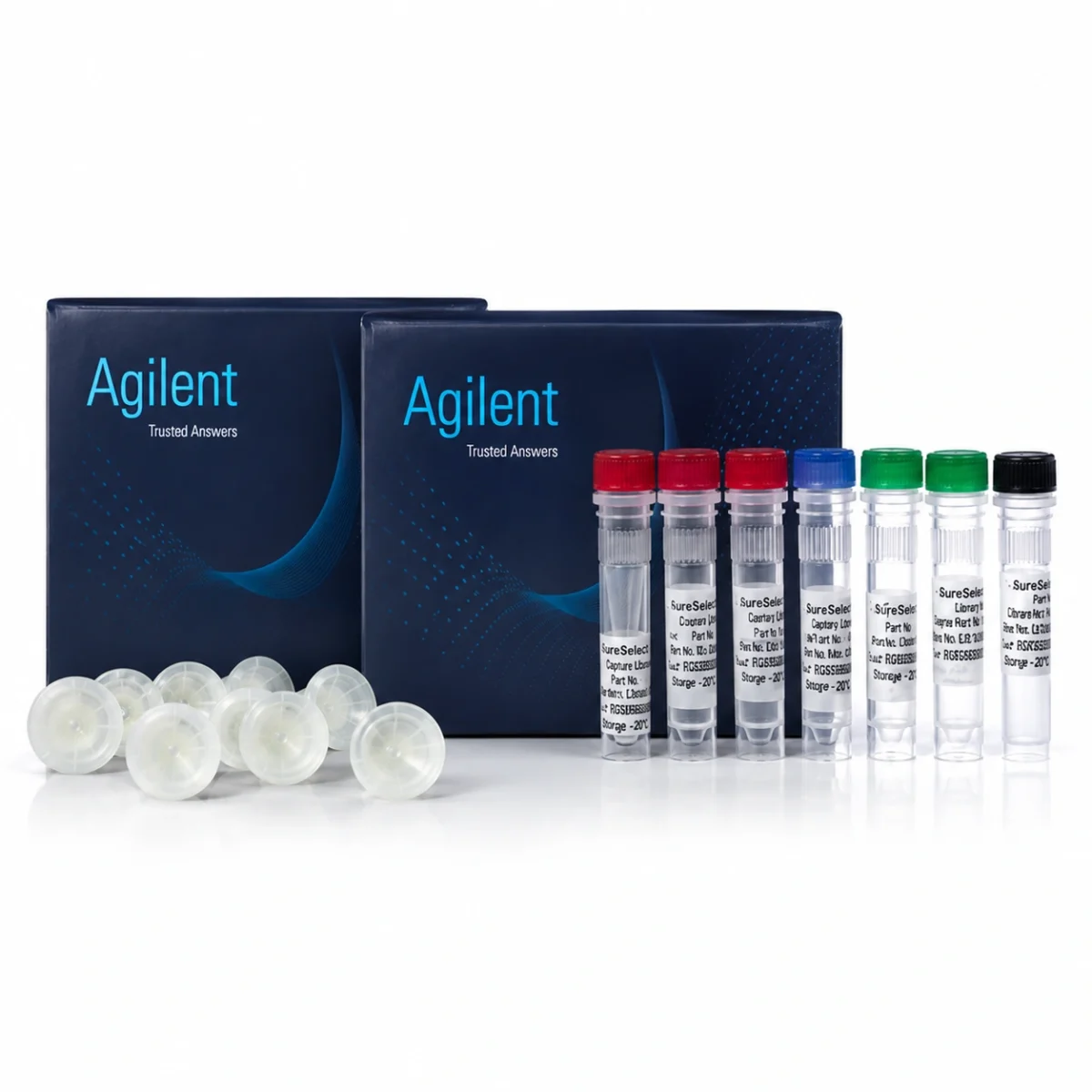
In‑house targeted enrichment NGS panel for RNA profiling from tissue samples (FFPE). It analyzes 43 genes using a splice‑aware probe design anchored to exon boundaries. Detects fusions in a partner-agnostic manner, complex splicing variants, and gene expression profiles in a single workflow.
Detailed Description
Principle of operation
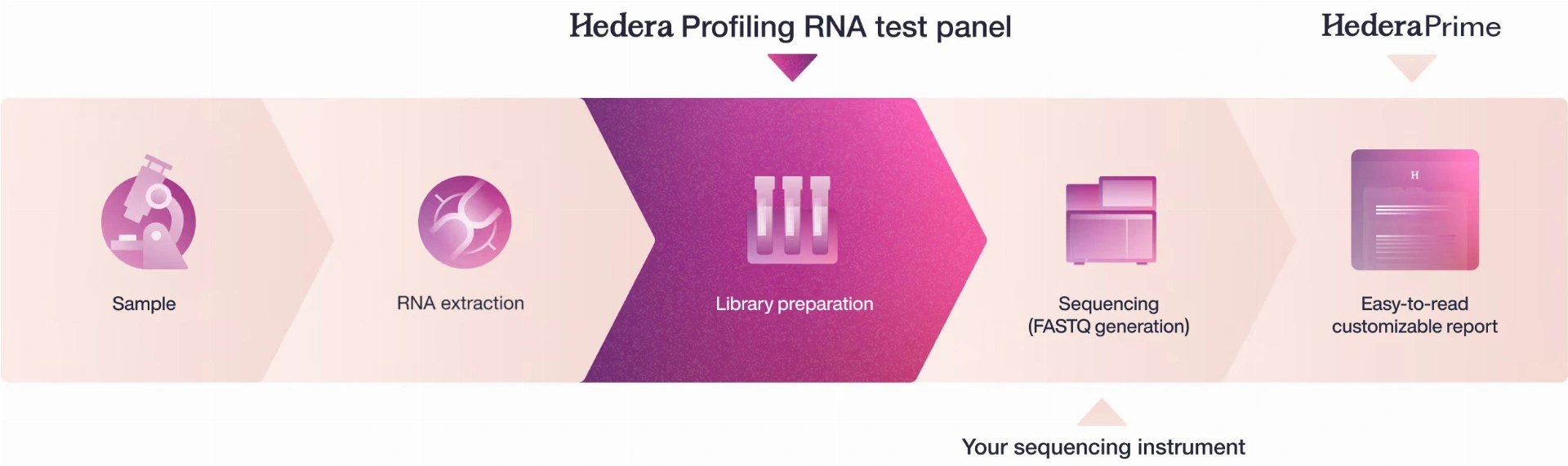
End‑to‑end solution based on hybrid capture enrichment chemistry for RNA analysis. The assay starts with a specific repair step for RNA derived from FFPE samples. Next, the workflow proceeds through fragmentation, cDNA synthesis (first and second strand), end repair, dA‑tailing, and adapter ligation. It stands out for requiring sample inputs of 30 ng of RNA (with 50 ng recommended for tissues with >30% tumor content).
The assay allows simultaneous detection of fusions without prior knowledge of the partner (e.g. ALK, ROS1, RET, NTRK1/2/3), characterized splicing variants (e.g. METex14 skipping, EGFR vII/vIII/vIVa/vIVb), and expression levels of selected genes (e.g. CD274, ERBB2).
Analytical Sensitivity:
• FFPE samples: Detects variants with >95% sensitivity at 4 copies/ng levels and >99% specificity.
• Shows >90% concordance against characterized orthogonal assays.
Library preparation integrates UMI adapters and UDI primers with duplex consensus reading to maximise data reliability, correcting errors and preventing index hopping. After an overnight 16‑hour hybridisation, the system delivers sequencing‑ready libraries for compatible platforms in just 2 days, allowing multiplexing of up to 8 samples per capture.
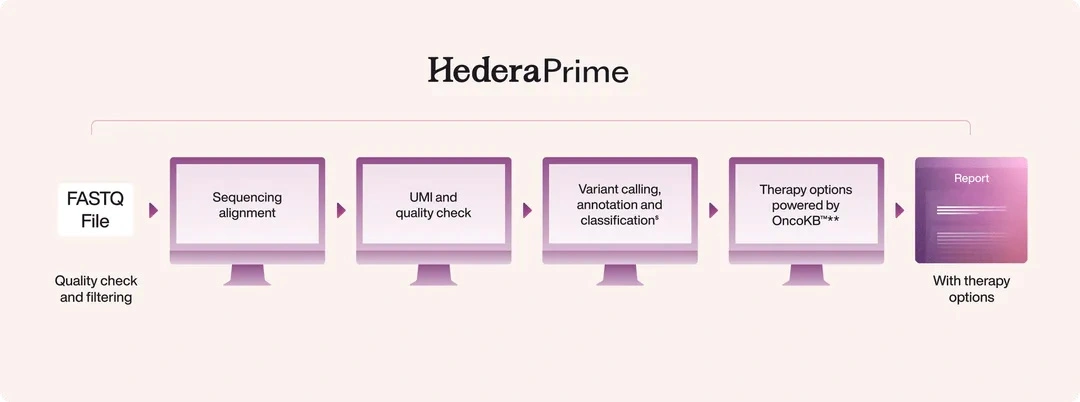
The analysis is comprehensively completed through Hedera Prime (CE‑IVDR), a secondary and tertiary analysis software that automates quality control and variant interpretation, presenting results through specific interfaces optimised for each type of genomic alteration.
Clinical applications
Tool designed exclusively for oncology research environments (RUO) focused on solid tumors. Its multiparametric capability allows laboratories to concurrently evaluate structural and expression evidence, investigating novel or known fusion events, complex splicing alterations, and critical gene expression signatures in the evaluation of tumor biomarkers.
Benefits
Simultaneous analysis of a targeted panel of 43 oncologically relevant genes in a single assay.Partner-agnostic discovery of relevant oncogenic fusions.High‑resolution detection of alternative splicing through a probe design anchored to exon boundaries.Low sequencing footprint: requires only 0.25 Gb (~1.6 M reads) per sample, allowing integration into DNA runs without the need for dedicated RNA flow cells.Consolidated workflow with integrated FFPE repair and minimum inputs of 30 ng of RNA.Incorporation of UMI technology and UDI primers for read error correction.Validated compatibility for sequencing runs on Illumina and Element Biosciences AVITI platforms.Integration of secondary and tertiary bioinformatic analysis through Hedera Prime software with CE‑IVDR marking.
Intended user / audience
Laboratories and research groups dedicated to the study, diagnosis, and monitoring of fusions in solid tumors.
Key Features
Coverage of 43 genes through a splice‑aware NGS panel for FFPE tissue RNA with RUO marking.
Simultaneous detection of fusions (partner-agnostic), splicing events (including METex14 skipping and EGFR variant vIII), and gene expression profiling.
Optimized as a high‑efficiency sequencing add‑on (0.25 Gb per sample).
Hybrid capture enrichment with UMI adapters and duplex consensus UDI primers.
Workflow that allows processing up to 8 samples per capture (24 reactions per kit).
Sample input requirements starting from a minimum of 30 ng of RNA, with a recommendation of 50 ng for tissues with more than 30% tumor content.
Processing capability for sequencing runs on Illumina (NextSeq, NovaSeq) and Element Biosciences AVITI systems.
Automated analysis through the Hedera Prime platform, CE‑IVDR marked software that centralises secondary quality control and tertiary variant interpretation.
Presentation Details
Product identification
Commercial name: Hedera Profiling RNA Test Panel.Product type: Full Solution.Product family: Assay Enrichment Kit + Hedera Prime Analytics.Product ID: T40-16SP125IF.Product version: 1.0.Sample type: Total RNA (FFPE tissue).
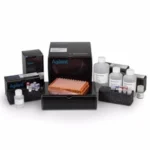
Kit contents
Library preparation, Indexing, Purification and isolation.
Required materials (Not included)
Quantification and Quality Control (QC): Fluorometric quantification kits and fragment size assessment kits.Sequencing: Reagents for sequencing runs on Illumina platforms and Illumina PhiX v3 control.