Hereditary cancer solutions by SOPHiA GENETICS™️

Solutions for the study of genetic alterations associated with different hereditary cancer predisposition syndromes, based on next-generation sequencing and automated analysis using the SOPHiA DDM™ software.

Detailed Description

SOPHiA GENETICS™️ solutions for hereditary cancer use capture-based NGS technology to achieve uniform coverage of target regions and high on-target rates. The analytical workflow relies on SOPHiA DDM and Alamut Visual Plus, enabling the detection of complex genomic variants and efficient data interpretation.

This combination achieves high-quality variant calling and annotation, pre-classification of pathogenicity based on ACMG guidelines, and filtering/prioritization tools leading up to the generation of the final report.

Available Panels

SOPHiA GENETICS™️ Comprehensive HCS_117 Community Panel

The panel analyzes a total of 117 genes associated with hereditary cancer predisposition:
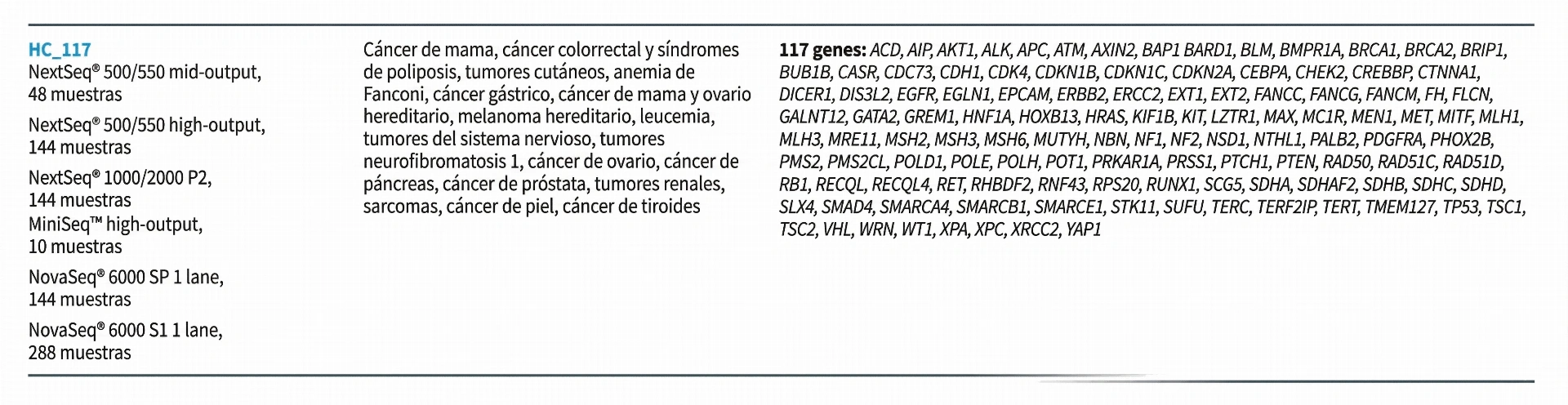
ACD, AIP, AKT1, ALK, APC, ATM, AXIN2, BAP1, BARD1, BLM, BMPR1A, BRCA1, BRCA2, BRIP1, BUB1B, CASR, CDC73, CDH1, CDK4, CDKN1B, CDKN1C, CDKN2A, CEBPA, CHEK2, CREBBP, CTNNA1, DICER1, DIS3L2, EGFR, EGLN1, EPCAM, ERBB2, ERCC2, EXT1, EXT2, FANCC, FANCG, FANCM, FH, FLCN, GALNT12, GATA2, GREM1, HNF1A, HOXB13, HRAS, KIF1B, KIT, LZTR1, MAX, MC1R, MEN1, MET, MITF, MLH1, MLH3, MRE11, MSH2, MSH3, MSH6, MUTYH, NBN, NF1, NF2, NSD1, NTHL1, PALB2, PDGFRA, PHOX2B, PMS2, PMS2CL, POLD1, POLE, POLH, POT1, PRKAR1A, PRSS1, PTCH1, PTEN, RAD50, RAD51C, RAD51D, RB1, RECQL, RECQL4, RET, RHBDF2, RNF43, RPS20, RUNX1, SCG5, SDHA, SDHAF2, SDHB, SDHC, SDHD, SLX4, SMAD4, SMARCA4, SMARCB1, SMARCE1, STK11, SUFU, TERC, TERF2IP, TERT, TMEM127, TP53, TSC1, TSC2, VHL, WRN, WT1, XPA, XPC, XRCC2, YAP1
SOPHiA Comprehensive HCS 117
SOPHiA DDM™ Hereditary Cancer Solution (HCS) v2.0

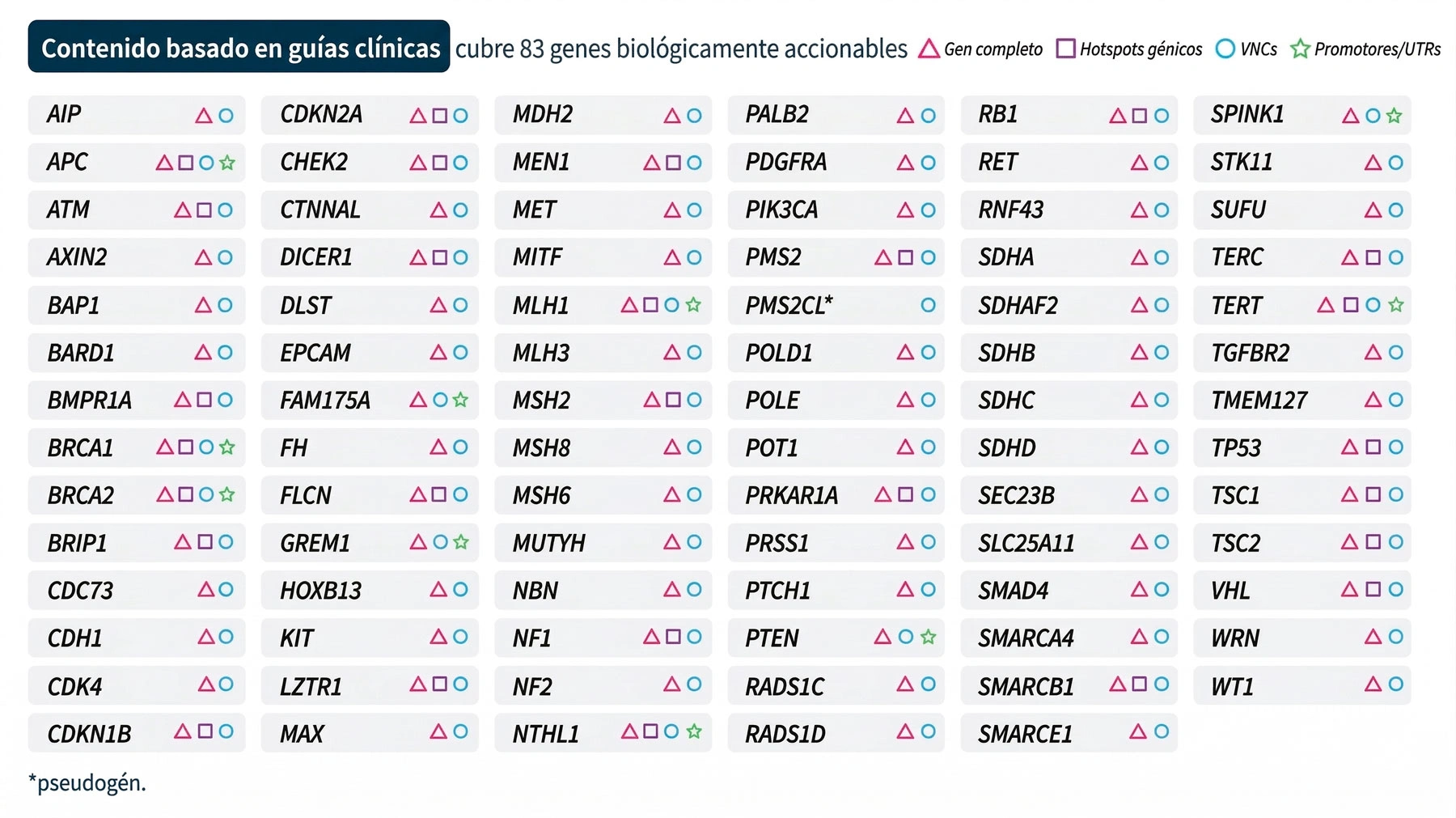
The panel includes a total of 83 biologically relevant genes associated with major cancer predisposition syndromes, along with reinforced areas to sequence promoter regions in the APC, BRCA1, BRCA2, FAM157A, GREM1, MLH1, NTHL1, PTEN, SPINK1, and TERT genes.

Additionally, the panel features specific probes to capture SNPs that enable sample traceability.

SOPHiA HCS v2.0
SOPHiA DDM™ Dx Hereditary Cancer Solution (HCS)

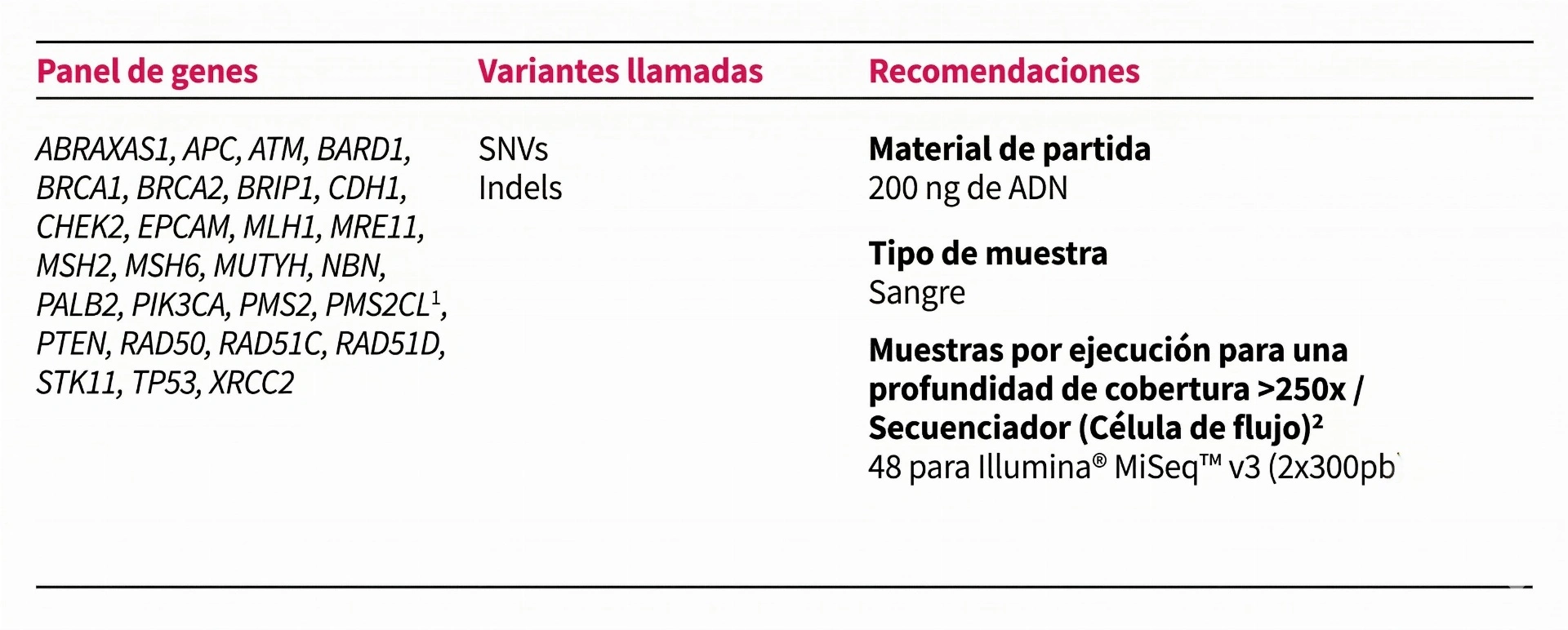
The CE-IVD marked panel includes 26 genes + 1 pseudogene:

ABRAXAS1, APC, ATM, BARD1, BRCA1, BRCA2, BRIP1, CDH1, CHEK2, EPCAM, MLH1, MRE11, MSH2, MSH6, MUTYH, NBN, PALB2, PIK3CA, PMS2, PMS2CL (pseudogene), PTEN, RAD50, RAD51C, RAD51D, STK11, TP53, XRCC2.
SOPHiA Dx HCS

Operating Principle

These kits are based on targeted capture enrichment techniques and subsequent sequencing on various NGS instruments. Secondary and tertiary analysis is performed on the SOPHiA DDM™ platform, which enables the detection of all types of genomic variants (SNVs, indels, and CNVs) with highly efficient clinical performance.
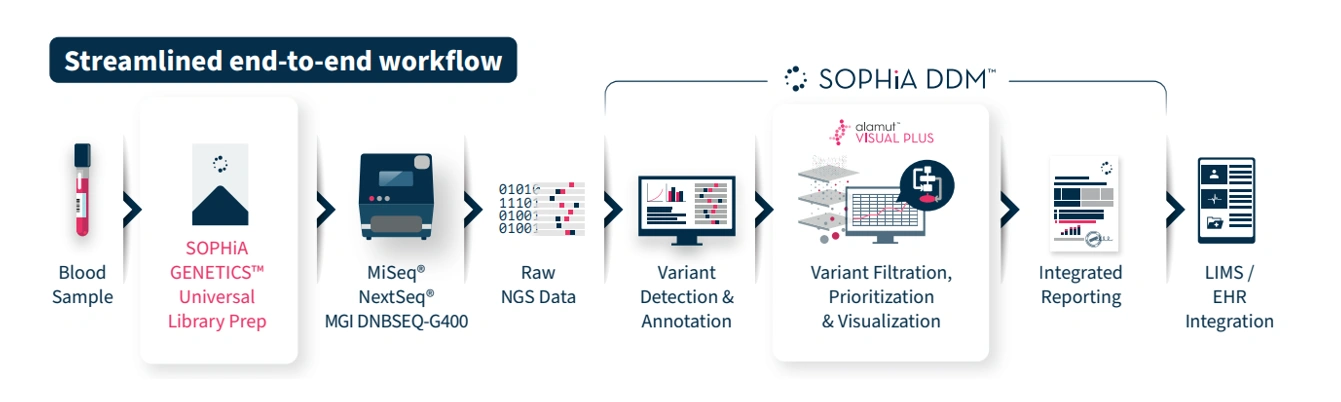
SOPHiA Hereditary Cancer Workflow

Clinical Applications

Hereditary cancer panel solutions are fundamental tools in clinical practice for identifying genetic alterations associated with oncology predisposition syndromes. These solutions enable efficient and precise detection of the most relevant variants, facilitating rapid diagnoses and informed therapeutic decision-making.

By focusing on key mutations related to various types of cancer, the panels offer a cost-effective and highly specific option to personalize patient prevention, monitoring, and treatment, thereby improving clinical outcomes.

Benefits

Evaluation and reporting of genomic variants: SNVs, Indels, CNVs, as well as more complex alterations such as Alu insertions, Boland inversion, and a PMS2/PMS2CL gene conversion module, to differentiate variants between these two highly homologous genes. Data storage: Unlimited data access on the SOPHiA DDM™ platform, complying with the highest encryption standards and data security policies. Support program with specialized guidance during implementation and follow-up for rapid issue resolution. Comprehensive analysis with an integrated workflow: from library preparation to report generation. Advanced analytical performance: Improves data interpretation through the application of cascade filters, pre-classification of variants according to ACMG guidelines, integration with major genomic databases, and additional tools like the Alamut™ Visual Plus browser for deeper genomic analysis.

Intended Audience / User

Professional use to support healthcare professionals in informing clinical decisions related to cancer predisposition syndromes, aiding in the diagnosis and genetic counseling of familial cases.

Key Features

Pre-designed panels validated by experts in cancer predisposition syndromes.
High coverage uniformity of the genomic regions included in each panel, ensuring advanced analytical performance.
Integrated detection of all variant types in a single experiment.
Efficient variant annotation using >55 databases, ACMG pre-classification, and machine-learning tools.
Agile interpretation limited to the genes of interest through the creation of virtual panels and cascade filters, up to the generation of a standardized clinical report.
Possibility of protocol automation for rapid clinical implementation and optimized sample management.

Area:

Hereditary cancer, Molecular Genetics, Targeted study of specific pathologies
Consult our experts

Google reCaptcha: Invalid site key.

Related products

Sepsis Pathogenic Microorganism Detection Kit (Digital PCR)

In vitro diagnostic kit based on droplet digital PCR (dPCR) for the detection of pathogenic microorganisms associated with sepsis from DNA extracted from clinical samples. The kit allows identification and quantification of pathogens without requiring blood culture, covering 21 frequent agents in bloodstream infections. Detailed Description Principle of operation The Sepsis Pathogenic Microorganism Detection Kit…
RainSure
Digital PCR

VIASURE 16S V1-V4 NGS Solution

NGS solution for library preparation aimed at the simultaneous identification and profiling of microbial species present in DNA extracted from original samples, through the analysis of the variable regions V1-V4 of the 16S rRNA gene. Product for research use only (RUO) and not intended for diagnostic procedures. Detailed Description Principle of operation VIASURE 16S V1-V4…
Certest
Next Generation Sequencing (NGS)

PN-900 CandidaGenius® C. auris screening assay

Real‑time PCR assay for the rapid and direct detection of Candida auris from non‑invasive swabs, without the need for prior culture. Detailed Description The PN-900 CandidaGenius® C. auris screening assay is a molecular tool designed for the qualitative detection of Candida auris DNA by real‑time PCR. This emerging fungus represents a growing challenge in the…
Pathonostics
Real Time PCR (qPCR)

Illumina Viral Surveillance Panel v2

Next‑generation sequencing (NGS) assay with hybrid capture enrichment for the detection and whole‑genome sequencing of approximately 200 RNA and DNA viruses relevant to public health. It integrates library preparation, enrichment, sequencing, and data analysis into an optimized workflow of about two days. Detailed Description Principle of operation The panel can start from RNA, DNA, or…
Illumina
Next Generation Sequencing (NGS)