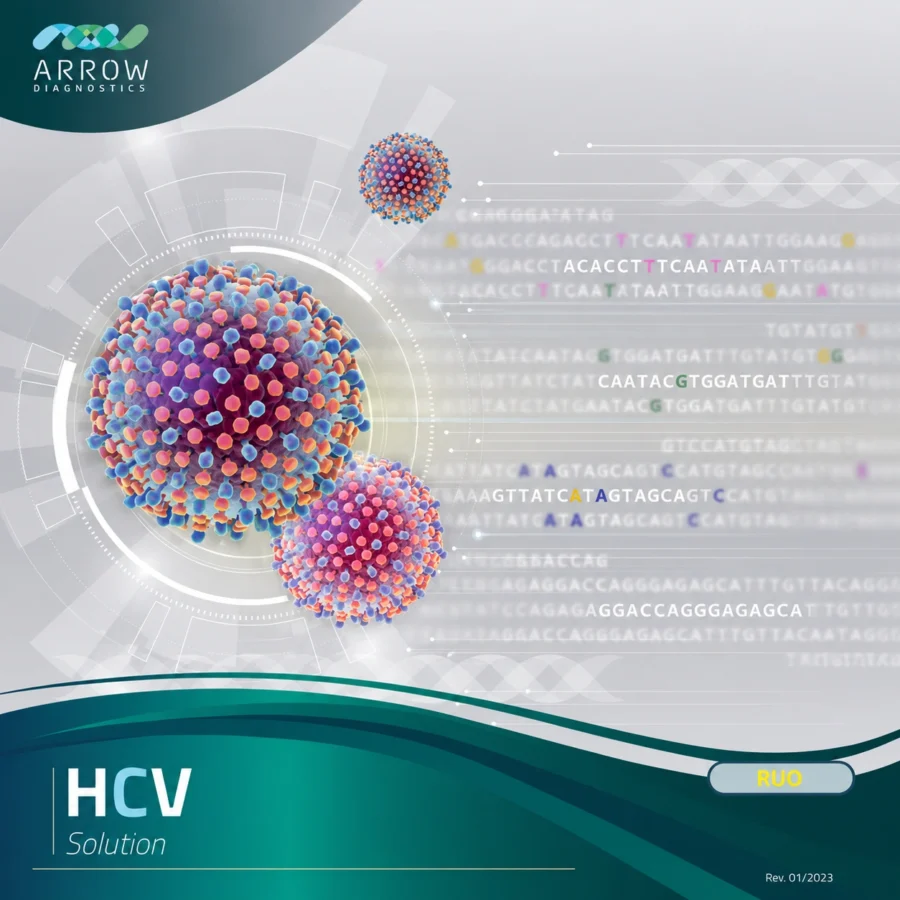
Standardized kit for the detection of Hepatitis C Virus (HCV) genotype and the determination of drug resistance through next-generation sequencing (NGS) of the viral genome. It is exclusively intended for HCV-positive plasma or serum samples and is complemented by dedicated software for data visualization and computational analysis.
3.- Detailed Description
Operating principle
The kit is based on an RT-PCR (Reverse Transcriptase-Polymerase Chain Reaction) strategy followed by NGS sequencing of the HCV viral genome from a biological sample. It uses pangenotypic and genotype-specific probes at different stages of the protocol to simultaneously amplify the main viral genotypes.
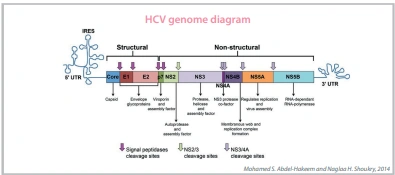
The WG amplification allows sequencing approximately 90% of the HCV genome, from the 5’UTR region to codon 346 of NS5B. The additional amplification of the MIDI region extends the coverage up to approximately 97% of the genome, from 5’UTR to 3’UTR.
Following sequencing, FASTQ files can be analyzed with dedicated software, with the express recommendation of SmartVir (developed by SmartSeq s.r.l.), to indicate the HCV genotype and identify mutated codons in the target regions.
Clinical applications
Its utility lies in the genotypic characterization of HCV and the evaluation of drug-associated resistance. It highlights the importance of defining the viral genotype before starting therapy, redefining it in patients with treatment failure to direct-acting antivirals (DAAs), and identifying associated pharmacological resistance.
Benefits
Integrates viral genome amplification, NGS sequencing, and downstream bioinformatics analysis into a single workflow.
Allows the identification of genotypes 1, 2, 3, 4, 5, 6, and 7, as well as subtypes, along with the evaluation of drug-associated resistance in the sequenced regions.
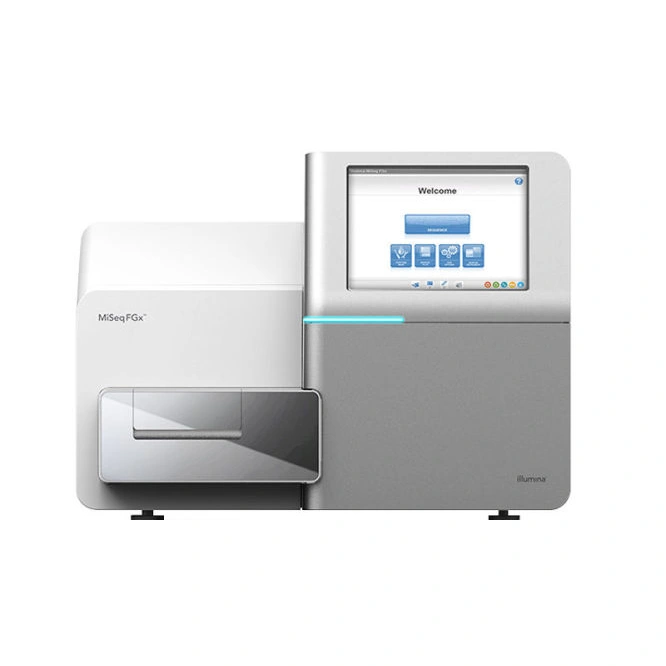
It is compatible with multiple Illumina platforms, facilitating its integration into different sequencing environments.
Key results or indicators
Coverage of up to 97% of the HCV genome with the complete WG + MIDI strategy.
Recommended LOD: ≥ 1000 IU/ml in plasma or serum. For samples with lower viremia, contact technical support.
To obtain good coverage of all amplified regions, approximately 200,000 reads per sample are recommended. The document indicates that it is possible to identify mutations at 1% with 3000x coverage.
The SmartVir software automatically sets a minimum threshold of 1000 reads; it also allows evaluating codons with lower coverage, with a configurable minimum of 30 reads.
Technology used
RT-PCR for reverse transcription and amplification, followed by Whole Genome Sequencing (WGS) using NGS.
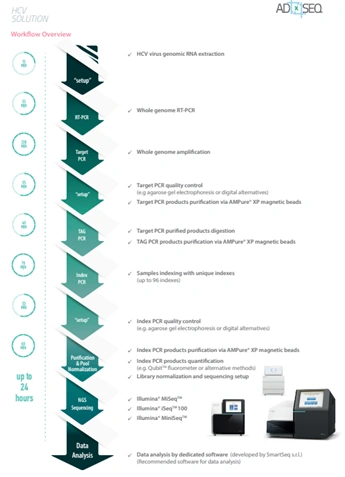
Purification with AMPure XP, sample indexing, and sequencing on Illumina MiSeq, MiniSeq, iSeq 100, or MiSeq i100.
Intended audience/user
Exclusive use in HCV-positive plasma or serum samples.
RUO kit, intended to be used by qualified and adequately trained personnel.
Considerations or limitations
It is an exclusively manual use kit; any automation must be validated by the user.
It does not include reagents for viral RNA extraction and requires additional reagents, consumables, and equipment to complete the workflow.
Reagents must be stored between -25 °C and -15 °C; they allow a maximum of 4 freeze/thaw cycles and, during use, must be kept on ice or between +2 °C and +8 °C.
The reliability of the results may be affected by sample collection, transport, storage, and processing. The extracted RNA should be stored below -65 °C, and avoiding freeze/thaw cycles is recommended. Furthermore, EDTA concentrations > 2 mM can inhibit amplification.
In samples with a viremia lower than 500,000 IU/ml, the WG band may not be visualized in the quality control, although the protocol recommends continuing with the subsequent phases.
Other relevant technical information
The analytical protocol comprises 11 stages: RNA handling/extraction, RT-PCR, Target PCR, intermediate purifications, TAG PCR, Index PCR, normalization and pool preparation, sequencing, and data analysis.
Depending on the platform and sequencing reagent used, the system accommodates from up to 10 samples on MiSeq Nano v2 (300 cycles) to 75 samples on MiniSeq Mid Output (300 cycles).
4.- Key Features
HCV genotyping and drug resistance determination through NGS.
Coverage of up to 97% of the viral genome with WG + MIDI strategy.
Identification of genotypes 1-7 and subtypes.
Exclusive use in HCV-positive plasma/serum, with recommended LOD ≥ 1000 IU/ml.
Compatible with Illumina MiSeq, MiniSeq, iSeq 100, and MiSeq i100 platforms.
Data analysis with recommended dedicated SmartVir software.
Manual use RUO presentation for 30 reactions.
5.- Ordering Information
Format and reference
| AD-006.030 | Presentation for 30 reactions |
Kit contents
Amp Mix RT (green insert): 80 µl
dNTPs Solution (orange cap): 40 µl
RT Mix (clear insert): 40 µl
RT Buffer (5X) (yellow cap): 160 µl
DTT Solution (white cap): 40 µl
Amp Mix WG (blue insert): 64 µl
Amp Mix MIDI (red insert): 400 µl
Target Mix HCV (brown cap): 1400 µl
TAG Mix (black insert): 33 µl
2X Reaction Buffer (purple insert): 300 µl
STB (blue cap): 1000 µl
Index Mix (black cap): 330 µl
iPlate_i129_i160_HCV: 1 x 32 indices for PCR product indexing
Required material not included
Reagents for viral RNA extraction, AMPure XP, compatible Illumina sequencing kits, PhiX Control v3, molecular biology grade water, ethanol, and specific laboratory equipment, including thermal cycler and compatible Illumina sequencer.
×
 6")