Homologous Recombination Deficiency (HRD) Solution
NGS- and low-pass whole-genome sequencing (low-pass WGS)-based solution for determining homologous recombination deficiency (HRD) status in ovarian cancer.
Operating Principle
This comprehensive solution, available as CE-IVD and for Research Use Only (RUO), is designed to support the determination of tumour HRD status in patients with ovarian cancer.
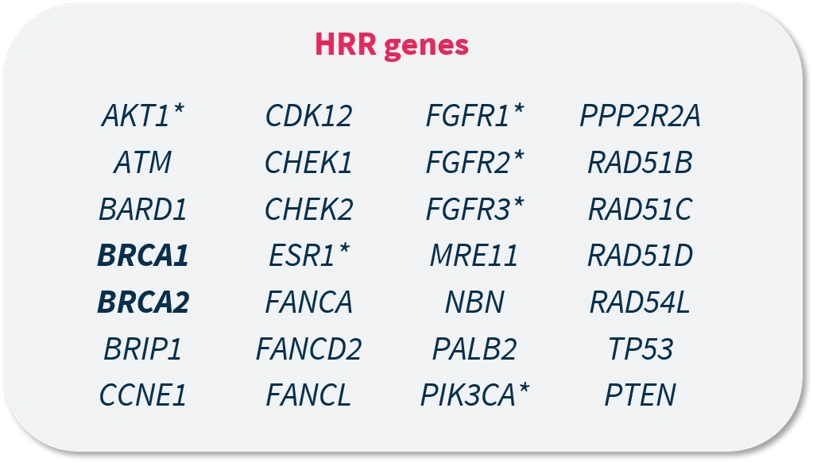
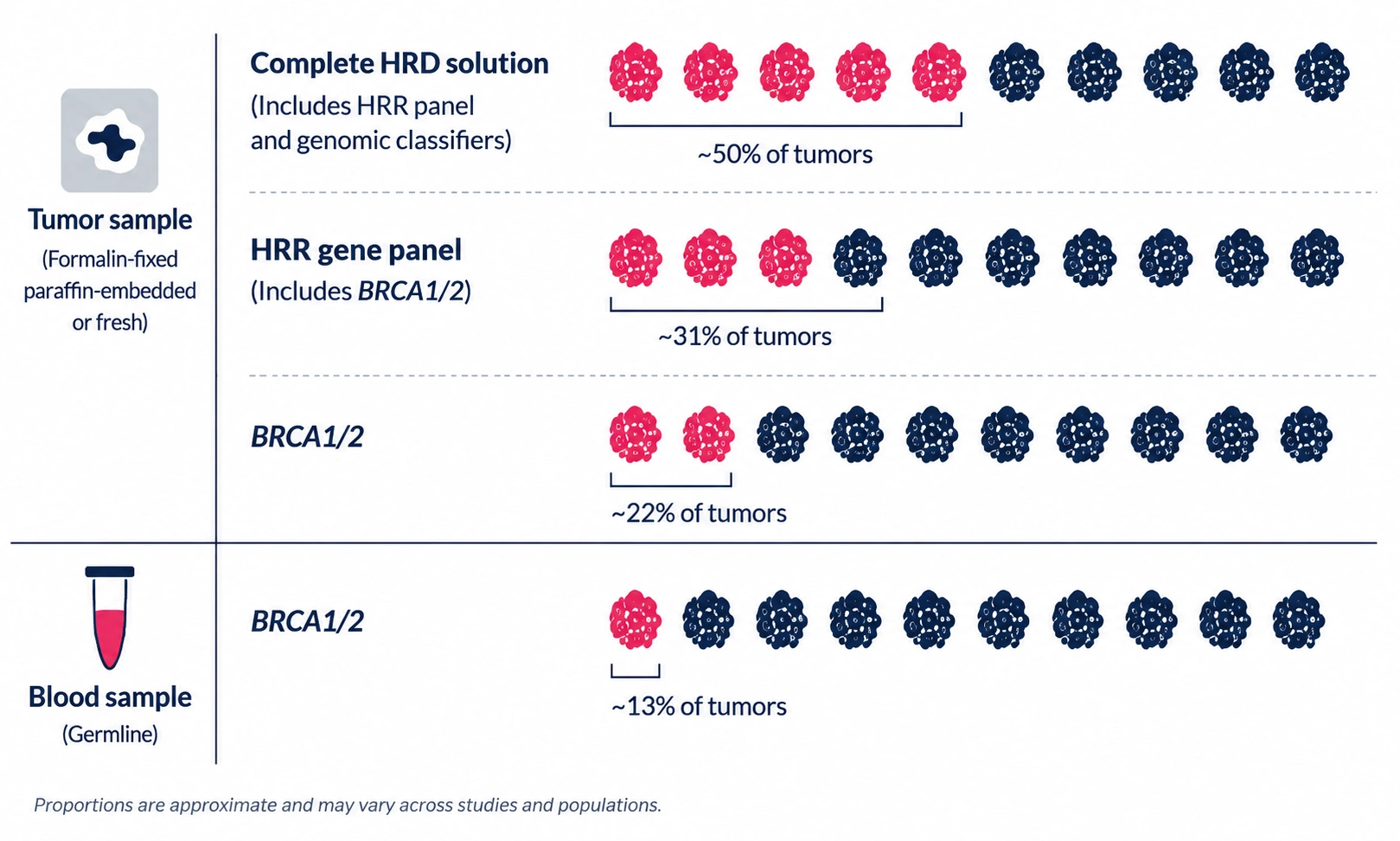
It integrates two complementary biological components: evaluation of alterations in 28 genes involved in the homologous recombination repair (HRR) pathway, including BRCA1 and BRCA2, and assessment of genomic instability (GI) based on low-coverage whole-genome profiles.
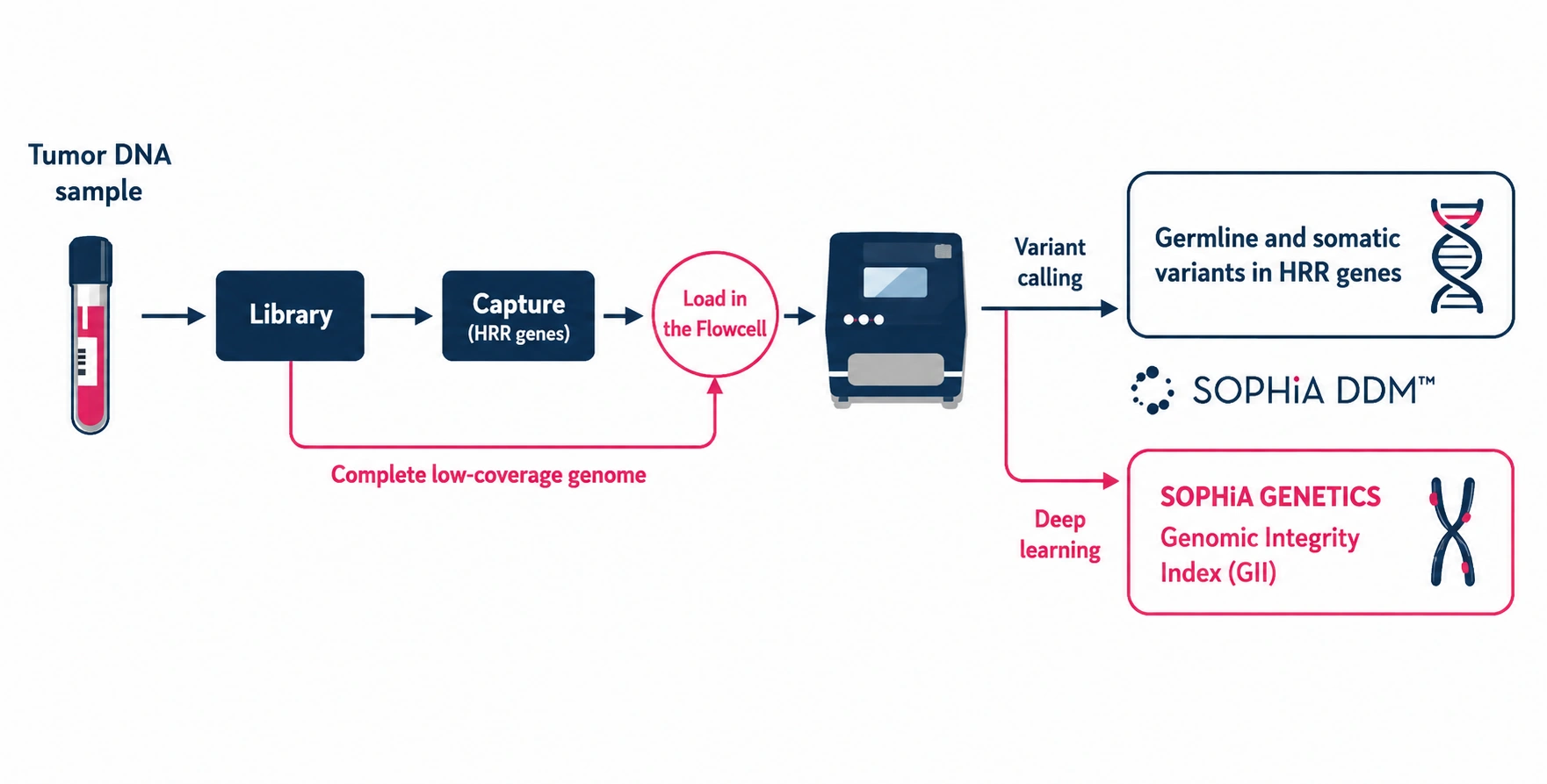
The workflow combines targeted capture and low-pass WGS using DNA extracted from FFPE tissue and a universal library preparation method (Universal Library Prep).
Bioinformatic analysis is performed on the decentralised SOPHiA DDM™ platform. Genomic profiles are analysed using GIInger™, a deep-learning algorithm trained to recognise genomic signatures characteristic of tumours with alterations in DNA repair mechanisms.
Based on these patterns, the system classifies the sample as HRD-positive or HRD-negative. At the same time, analysis of the 28-gene panel—provided as clinical decision support (CDS)—enables the detection of SNVs, Indels, amplifications such as the CCNE1 biomarker, whole-gene deletions, and gene- and exon-level CNVs.
The combined result supports the molecular characterisation of ovarian tumours and may help guide therapeutic decision-making, including the assessment of potential benefit from PARP inhibitor treatment.
Benefits
Decentralised solution that allows laboratories to perform the analysis locally.
Reliable, automated assessment of HRD status, reducing interpretation bias.
Intuitive web-based platform, SOPHiA DDM™, for rapid data upload, analysis and result review.
Reduced hands-on time through an optimised and automatable workflow.
Secure, unlimited cloud data storage, eliminating the need for additional local IT infrastructure.
Rapid generation of clear and interpretable clinical reports.
Specialised technical and bioinformatic support to ensure successful implementation and routine operation.
Intended Audience/User
Clinical genetics and molecular oncology laboratories involved in the diagnosis, management and therapeutic decision-making of patients with ovarian cancer.
Additional Considerations
Validated for DNA obtained from ovarian cancer samples.
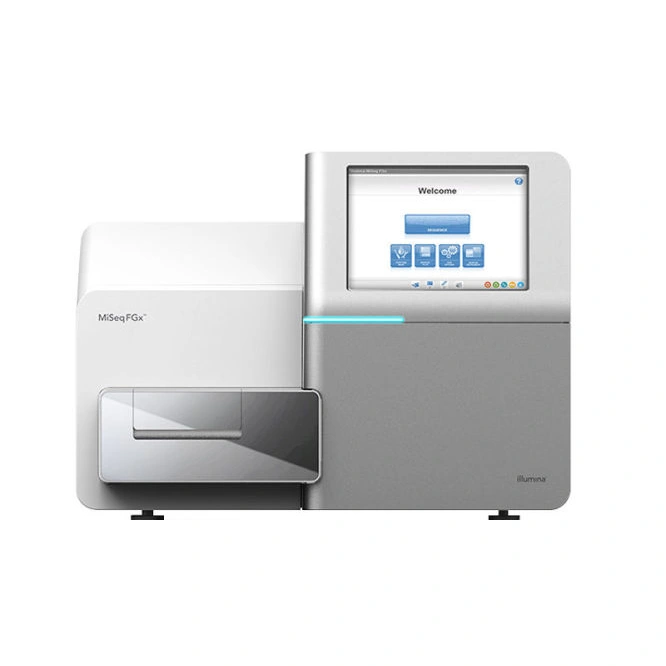
Analytical performance was verified using Illumina® NextSeq® 500/550 sequencers. Although the solution is compatible with data generated on NovaSeq™ X, analytical validation was performed using NextSeq® 500/550.
The quality of the HRD result depends on parameters such as coverage, tumour content and DNA quality.
Samples with a low signal-to-noise ratio, low coverage or insufficient tumour content may produce inconclusive or indeterminate results.
GI Negative results represent intermediate-confidence negative calls associated with a higher risk of false-negative results, generally due to low tumour content.
The solution enables evaluation of CCNE1 gene amplifications, a biomarker that may support the biological interpretation of HRD-negative tumours. The system calculates the gene copy number and considers a gene amplified when its estimated copy number is greater than 3.25.
Gene-panel analysis is provided as clinical decision support (CDS) and is not included in the product’s CE-IVD claim.
Analysis time may vary depending on the number of samples processed simultaneously and the system workload.
Regulatory availability depends on the country or region.
Key Features
Minimum input requirement of 50 ng of DNA from ovarian tumour tissue (FFPE).
Overall concordance of 94.4% compared with comparator NGS assays, with analytical repeatability and reproducibility of 100%.
Automatic quality-control metrics for performance monitoring: panel coverage >100×, BRCA1/BRCA2 coverage >100× and BRCA coverage uniformity.
Very rapid bioinformatic analysis: <8 hours from receipt of the FASTQ files.
Approximate end-to-end workflow from sample extraction to final report: 3.5 days.
Analytical compatibility verified with Illumina® NextSeq® 500/550 and Illumina® 1k/2k sequencers; also compatible with data generated on NovaSeq™ X.
Automatable protocol using liquid-handling systems such as Hamilton® NGS STAR and Hamilton® Clinical STARlet.
Officially recognised by ESMO as a validated method for HRD detection.
Presentation Details
| Commercial name |
Homologous Recombination Deficiency (HRD) Solution |
| Product ID (CE-IVD) |
BS0121ILLCSMY08-32 |
| Product IDs (RUO) |
BS0127ILLRSMY10-16
BS0127ILLRSMY10-32
BS0127ILLRSMY10-48
|
| Sample type |
DNA extracted from formalin-fixed, paraffin-embedded tumour tissue (FFPE). |
What does the solution include?
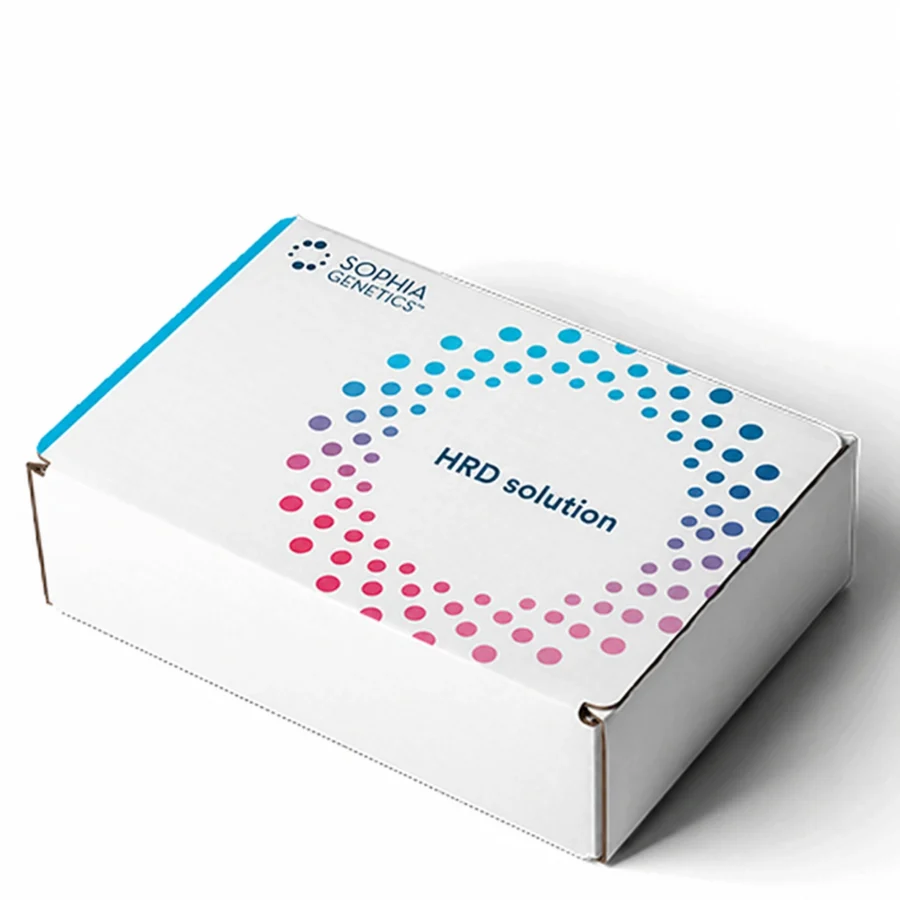
SOPHiA GENETICS Universal Library Prep reagents for fragmented DNA library preparation.
Hybridisation and targeted-capture probes.
Full access and credits for secondary and tertiary analysis on the SOPHiA DDM™ platform.
Required reagents and materials not included in the kit
FFPE DNA extraction kits.
Equipment and reagents for fluorometric quantification and nucleic-acid quality control, such as Qubit™, TapeStation™ or equivalent.
Platform-specific Illumina sequencing reagents and Illumina PhiX v3 control.
Product availability and regulatory status may vary by country or region. The gene-panel analysis is provided as clinical decision support and is not part of the product’s CE-IVD claim.