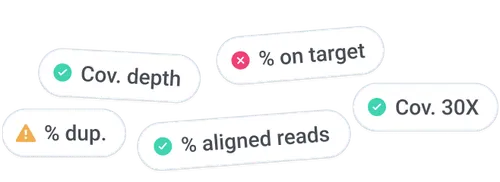
SeqOne is an in vitro diagnostic platform for genetic analysis, designed to help healthcare professionals interpret next-generation sequencing (NGS) and array CGH data. The platform provides qualitative and actionable results, functioning as a clinical decision support system.
Key features
It is an in vitro diagnostic medical device, Class C with CE-IVD marking and certified according to the IVDR Regulation, which ensures compliance with the highest quality and safety standards.
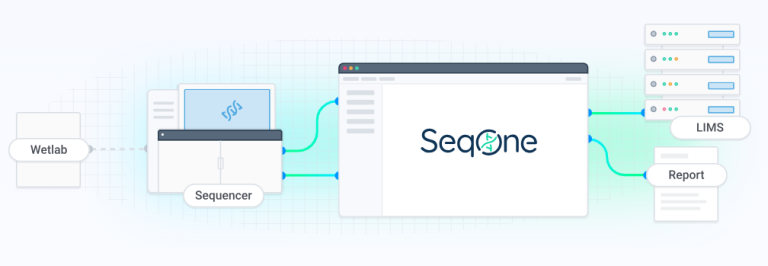
Its universal compatibility allows it to integrate seamlessly with any sequencer and laboratory process, advancedly optimizing the genomic workflow and improving efficiency at every stage of the analysis. With clinical validation and integration with recognized databases, SeqOne guarantees accurate and reliable diagnoses.
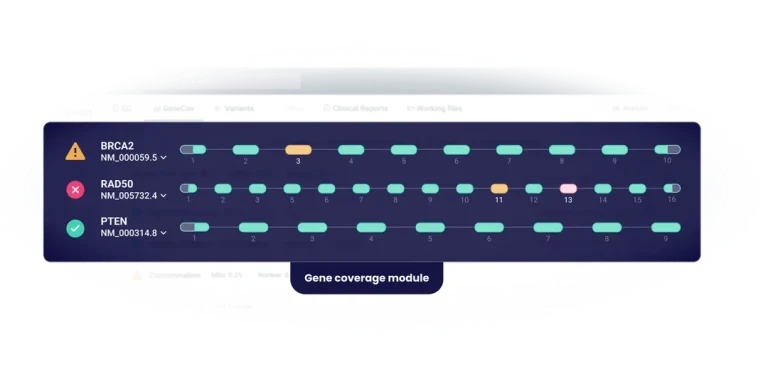
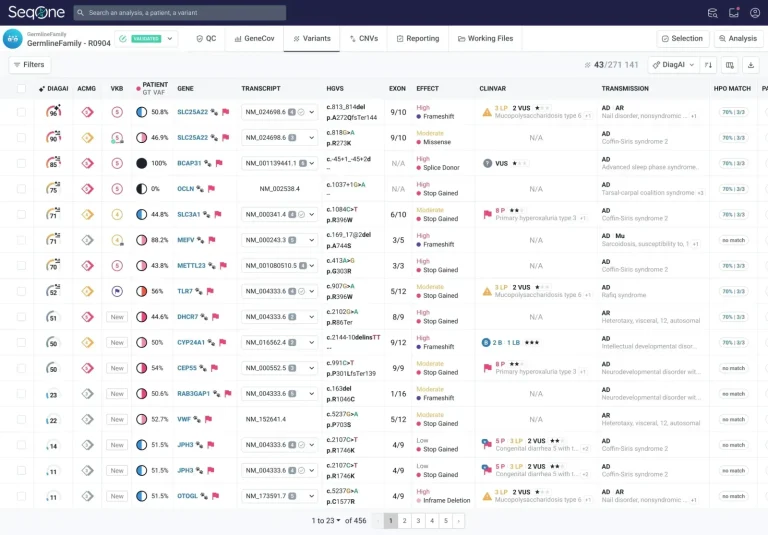
Furthermore, its powerful Artificial Intelligence (DiagAI) prioritizes genetic variants, facilitating the analysis and diagnosis of multiple genetic-based pathologies. Security is a priority, which is why it features a patented double encryption system and servers certified with ISO 27001 and HDS, ensuring maximum protection of patient data.
Clinical applications
The SeqOne genomic data tool allows healthcare professionals to have a solution that optimizes workflows and transforms complex data into clear, actionable results, with the security and confidence of having the highest standards of quality and data protection.
It facilitates informed clinical decision-making, improving efficiency in laboratories and optimizing patient care in medical areas as diverse as rare diseases, cardiology, neurology, psychiatry, carrier screening, and hereditary cancer, among many others.
Benefits
The platform stands out for its workflow automation: it offers the possibility to automate processes, enabling fast transfers, effortless exports, and unlimited computational power.
The true optimization of the analysis lies in its AI-driven tools, which drastically accelerate variant interpretation:
Intended audience/user
Software solution designed for healthcare professionals and diagnostic laboratories looking to optimize the interpretation of genetic data, especially in the areas of rare diseases, hereditary disorders, carrier screening, and hereditary cancer.