Tissue dissociation – PythoN Junior™ y PythoNi®

Singleron’s dissociation instruments are designed to effortlessly integrate into your workflow, moving from tissue to a viable cell suspension quickly and easily. They automate the entire process, allowing you to work more comfortably and obtain reliable, consistent, and highly efficient results.

Singleron dissociation instruments

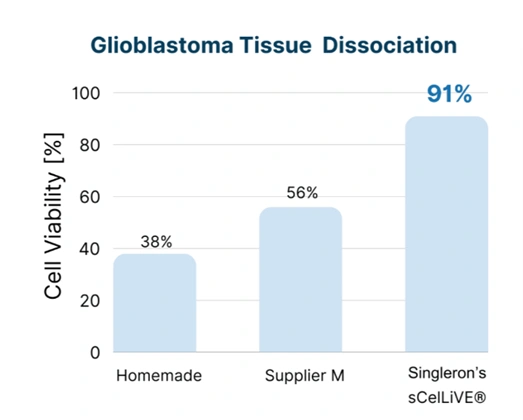
These automated dissociation systems transform solid tissues into high-quality suspensions (viable cells) through a combination of mechanical disruption, enzymatic digestion, and precise thermal control. They use predefined and customizable protocols optimized for different tissue types. For rapid and efficient dissociation of fresh tissue samples, in addition to one of the instruments, sCelLiVE® tissue dissociation buffers and disposable Dissociation Units are required.
PythoN Junior and PythoNi instruments

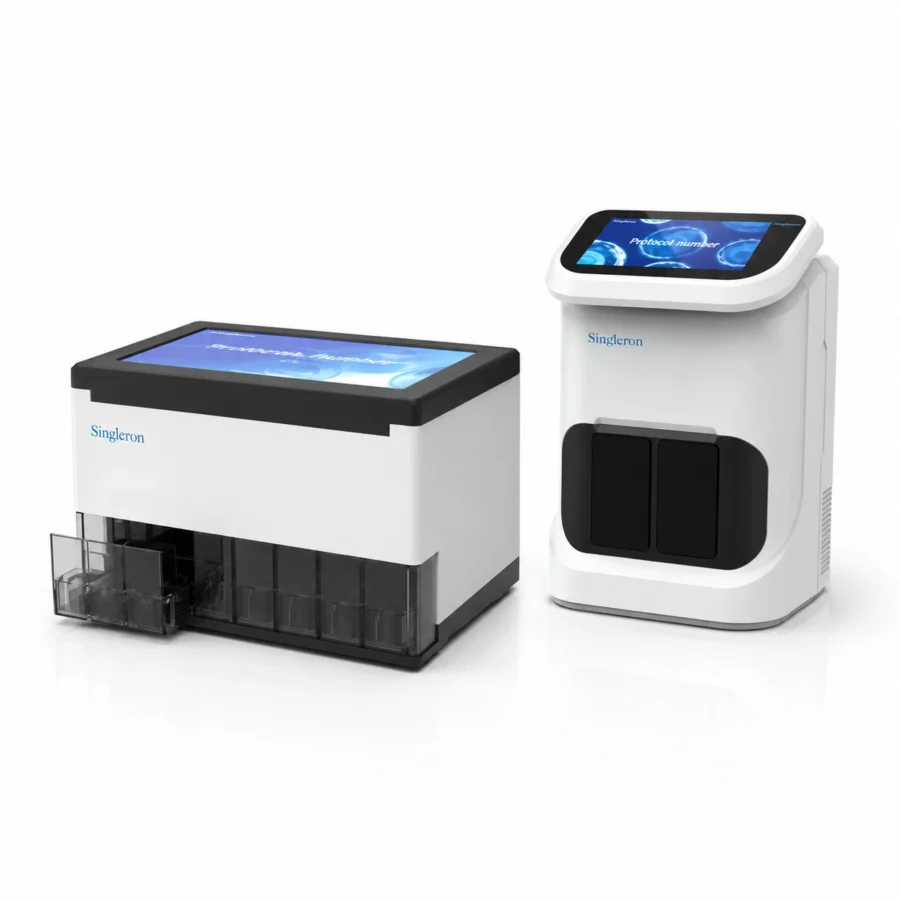
The PythoN Junior™ instrument is a compact device featuring two independent continuous-loading channels, maintaining high cell viability and consistent yield. Meanwhile, the PythoNi® instrument features eight independent channels, a foldable touch screen, and a user-friendly interface for fully programmable and reproducible workflows. Furthermore, PythoNi® offers advanced capabilities, including single-nuclei extraction.

How does it work?

1. Loading: Samples are placed into disposable dissociation units with specific sCelLiVE® buffers. Depending on the tissue size, the corresponding mL of buffer will be added.
2. Processing: The system applies controlled cutting, rotation, and agitation to maximize enzymatic penetration without compromising viability.
3. Completion: After filtering, the suspension is ready for use.

Note: Both systems guarantee reproducibility and eliminate the variability inherent in manual processing.

Area:

Omics, Single cell

Brand:

Consult our experts

Google reCaptcha: Invalid site key.

Related products

CellScape™ Precise Spatial Proteomics

The CellScape™ Precise Spatial Proteomics platform is an optimized multiplexed immunofluorescence (mIF) solution for high-plex spatial protein detection and quantitative phenotyping. By combining an advanced imaging system with integrated microfluidics for "walk-away" automation, and an open ecosystem based on simple chemistry and robust throughput, the CellScape platform accelerates biological discovery and translational research across multiple…
Bruker
Spatial Biology

Preservation buffer

The sCelLiVE® Tissue Preservation Buffer is designed to maintain the integrity of fresh tissues without the need for chemical fixation, offering stable preservation for up to 72 hours and effectively simulating the natural physiological environment. This allows for high cell viability to be maintained even in sensitive samples. This sCelLiVE® Tissue Preservation Buffer enables gentle,…
Singleron
Single cell Sequencing

Devyser LynchFAP

Devyser LynchFAP is a targeted NGS solution for the analysis of germline variants associated with hereditary colorectal cancer syndromes. The assay enables the detection of SNVs, indels, and CNVs in genes related to Lynch syndrome, familial adenomatous polyposis (FAP), and MUTYH-associated polyposis (MAP), also incorporating a specific LR-PCR for the correct localization of variants in…
Devyser
Next Generation Sequencing (NGS)

Devyser HBOC NGS

Devyser HBOC NGS is a fast and robust NGS solution aimed at the detection of germline variants in 12 genes associated with an increased risk of hereditary breast and ovarian cancer: ATM, BARD1, BRIP1, CDH1, CHEK2, NBN, PALB2, PTEN, RAD51C, RAD51D, STK11, TP53. It offers comprehensive and uniform coverage of all coding exons and exon/intron…
Devyser
Next Generation Sequencing (NGS)