Tissue dissociation – PythoN Junior™ y PythoNi®

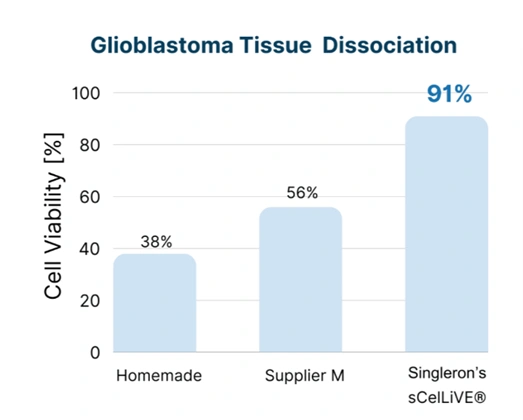
Singleron’s dissociation instruments are designed to effortlessly integrate into your workflow, moving from tissue to a viable cell suspension quickly and easily. They automate the entire process, allowing you to work more comfortably and obtain reliable, consistent, and highly efficient results.

Singleron dissociation instruments

These automated dissociation systems transform solid tissues into high-quality suspensions (viable cells) through a combination of mechanical disruption, enzymatic digestion, and precise thermal control. They use predefined and customizable protocols optimized for different tissue types. For rapid and efficient dissociation of fresh tissue samples, in addition to one of the instruments, sCelLiVE® tissue dissociation buffers and disposable Dissociation Units are required.
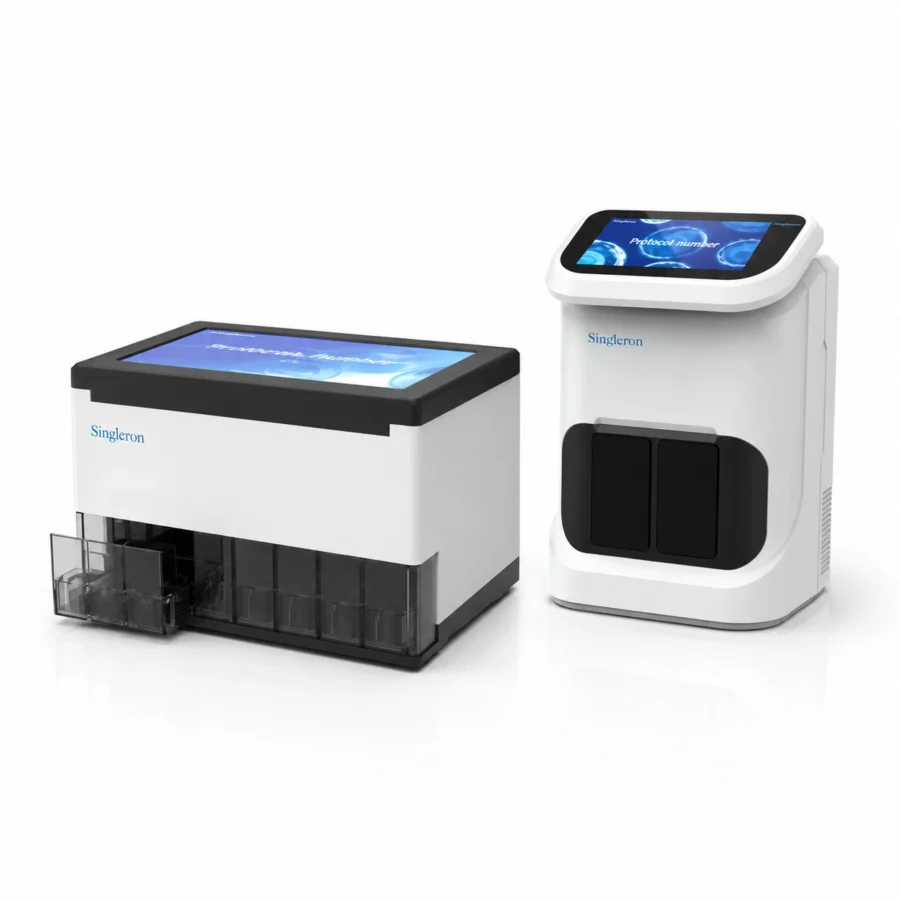
PythoN Junior and PythoNi instruments

The PythoN Junior™ instrument is a compact device featuring two independent continuous-loading channels, maintaining high cell viability and consistent yield. Meanwhile, the PythoNi® instrument features eight independent channels, a foldable touch screen, and a user-friendly interface for fully programmable and reproducible workflows. Furthermore, PythoNi® offers advanced capabilities, including single-nuclei extraction.

How does it work?

1. Loading: Samples are placed into disposable dissociation units with specific sCelLiVE® buffers. Depending on the tissue size, the corresponding mL of buffer will be added.
2. Processing: The system applies controlled cutting, rotation, and agitation to maximize enzymatic penetration without compromising viability.
3. Completion: After filtering, the suspension is ready for use.

Note: Both systems guarantee reproducibility and eliminate the variability inherent in manual processing.

Area:

Omics, Single cell, Transcriptomics

Brand:

Consult our experts

Google reCaptcha: Invalid site key.

Related products

Hedera Profiling RNA Test Panel

In‑house targeted enrichment NGS panel for RNA profiling from tissue samples (FFPE). It analyzes 43 genes using a splice‑aware probe design anchored to exon boundaries. Detects fusions in a partner-agnostic manner, complex splicing variants, and gene expression profiles in a single workflow. Detailed Description Principle of operation End‑to‑end solution based on hybrid capture enrichment chemistry…
HederaDx
Next Generation Sequencing (NGS)

Hedera Profiling ctDNA 3

In‑house targeted enrichment NGS panel exclusively for liquid biopsy (cfDNA). It analyzes 43 genes with ESCAT I and II clinical evidence. Includes library preparation through an optimized workflow (DNA‑only) for plasma samples. Detects SNVs, Indels, CNVs, fusions and 36 microsatellite instability (MSI) markers. Detailed Description Principle of operation End‑to‑end solution based on hybridisation and capture…
HederaDx
Next Generation Sequencing (NGS)

Hedera Profiling 1 FFPE Test Panel (HP1)

In‑house targeted enrichment NGS panel for pan‑cancer solid tumor profiling. It analyzes 115 genes (79 with complete CDS) with ESCAT I, II and III clinical evidence. Includes library preparation through a flexible workflow that allows processing FFPE and cfDNA samples together or separately. Detects SNVs, Indels, CNVs, fusions, structural variants and MSI. Detailed Description PRINCIPLE…
HederaDx
Next Generation Sequencing (NGS)

Sepsis Pathogenic Microorganism Detection Kit (Digital PCR)

In vitro diagnostic kit based on droplet digital PCR (dPCR) for the detection of pathogenic microorganisms associated with sepsis from DNA extracted from clinical samples. The kit allows identification and quantification of pathogens without requiring blood culture, covering 21 frequent agents in bloodstream infections. Detailed Description Principle of operation The Sepsis Pathogenic Microorganism Detection Kit…
RainSure
Digital PCR