Qualitative in vitro kit for the determination of the hepatitis B virus (HBV) genotype and the identification of drug resistance mutations through PCR amplification of two viral regions followed by NGS sequencing. It is intended for HBV-positive plasma or serum samples.
Detailed Description
Operating Principle
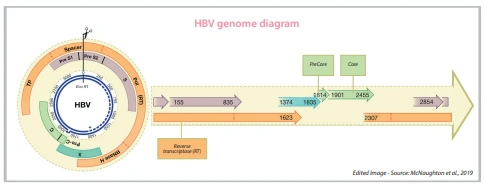
The kit is based on PCR amplification of two regions of the HBV viral DNA with a key role in genotyping and resistance development: Reverse Transcriptase (RT) and preCore (pC), followed by next-generation sequencing (NGS).
The amplified regions cover RT: codons 1 – end and preCore: codons 1 – end.
After sequencing, the data can be analyzed with dedicated software that queries reference databases to return a report with the viral genotype, identified mutations, and associated resistances.
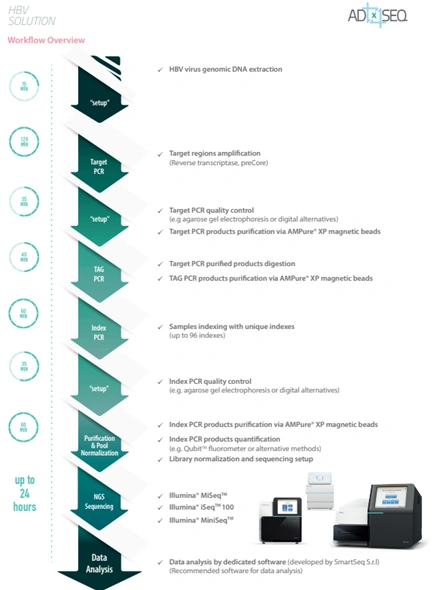
The flowchart on page 3 of the brochure summarizes the analytical process: viral genomic DNA extraction, Target PCR amplification, quality control, AMPure XP purification, TAG PCR, Index PCR, library normalization, NGS sequencing, and data analysis.
Clinical Applications
The product is aimed at determining the viral genotype and identifying HBV drug resistance mutations in positive samples.The background document indicates that NGS sequencing is an appropriate technique for HBV genotyping and resistance mutation screening.
Benefits
Analyzes in a single workflow two relevant regions of the viral genome associated with genotyping and therapeutic resistance: RT and preCore.Allows combining amplification, sequencing, and bioinformatics analysis in a standardized procedure.Can be sequenced on various Illumina platforms, facilitating its integration into different laboratory environments.The brochure indicates sequencing library preparation in approximately 6 hours and a complete workflow of up to 24 hours, according to the scheme on page 3.
Key Results or Indicators
Recommended samples: HBV-positive plasma and serum.LOD: ≥ 500 IU/ml. For samples with lower viremia, contact Customer Service.To obtain good coverage of all amplified regions, approximately 40,000 reads per sample are recommended.The document indicates that it is possible to identify mutations at 1% with 3000x coverage.In the quality control of Target PCR products, bands of approximately 1200 bp are expected for Amp Mix A and 1000 bp for Amp Mix B.In the quality control of Index PCR products, fragments of approximately 375 bp are expected.The recommended software automatically sets a minimum coverage threshold of 1000 reads; codons with lower coverage can also be evaluated, with a configurable minimum of 30 reads.
Technology Used
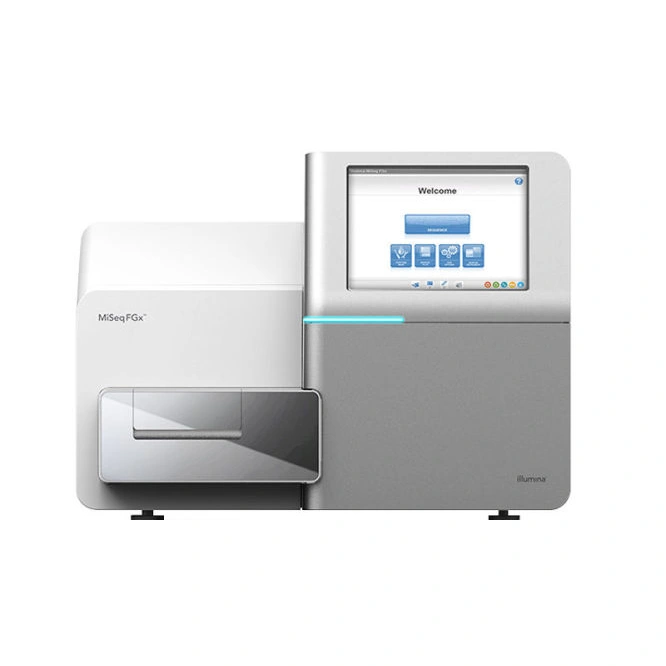
PCR amplification of genomic viral DNA and NGS sequencing.AMPure XP purification, sample indexing, and sequencing on Illumina MiSeq, MiniSeq, iSeq 100, or MiSeq i100 platforms.Analysis of FASTQ files is recommended with SmartVir, developed by SmartSeq s.r.l., or equivalent software capable of genotyping HBV and identifying mutations in the sequenced regions.
Intended Audience / User
For use in HBV-positive plasma or serum samples.RUO kit, for use by qualified and adequately trained personnel.
Considerations or Limitations
The kit is exclusively for manual use; any automation must be validated by the user.Does not include reagents for viral DNA extraction.Requires additional reagents and equipment, including AMPure XP, Illumina sequencing kits, PhiX, and corresponding laboratory instruments.Reagents must be stored between -25 °C and -15 °C, allow a maximum of 4 freeze/thaw cycles, and must be kept between +2 °C and +8 °C during use.For good extraction and NGS analysis performance, it is recommended to use samples stored below -65 °C and without freeze/thaw cycles.The presence of EDTA above 2 mM can inhibit subsequent amplification.Target PCR bands may not be clearly visible, especially in samples with very low viremia.
Other Relevant Technical Information
The analytical protocol comprises 10 stages: DNA extraction/handling, Target PCR, purification, TAG PCR, purification, Index PCR, purification, normalization and pooling, sequencing, and data analysis.Depending on the platform and sequencing kit, the system supports from up to 30 samples in MiSeq Nano Kit v2 to up to 96 samples in MiSeq Micro Kit v2, MiniSeq Mid Output, iSeq 100 i1, or MiSeq i100 Series 5M.For samples with low coverage, the document indicates that if a minimum coverage of 100X per region is reached, re-sequencing is not necessary; if some codons fall below 100 reads, whether to repeat sequencing or issue the report should be evaluated.
Key Features
HBV genotyping and identification of drug resistance mutations.
Amplification of two target regions: Reverse Transcriptase and preCore.
Use in HBV-positive plasma/serum samples.
LOD ≥ 500 IU/ml.
Compatible with Illumina MiSeq, MiniSeq, iSeq 100, and MiSeq i100.
Library preparation in approximately 6 hours and a total workflow of up to 24 hours, according to the brochure’s scheme.
Bioinformatics analysis with recommended SmartVir software.
RUO presentation for 30 reactions.
Ordering Information
Format and Reference
AD-004.030
Kit for 30 reactions
Kit Contents
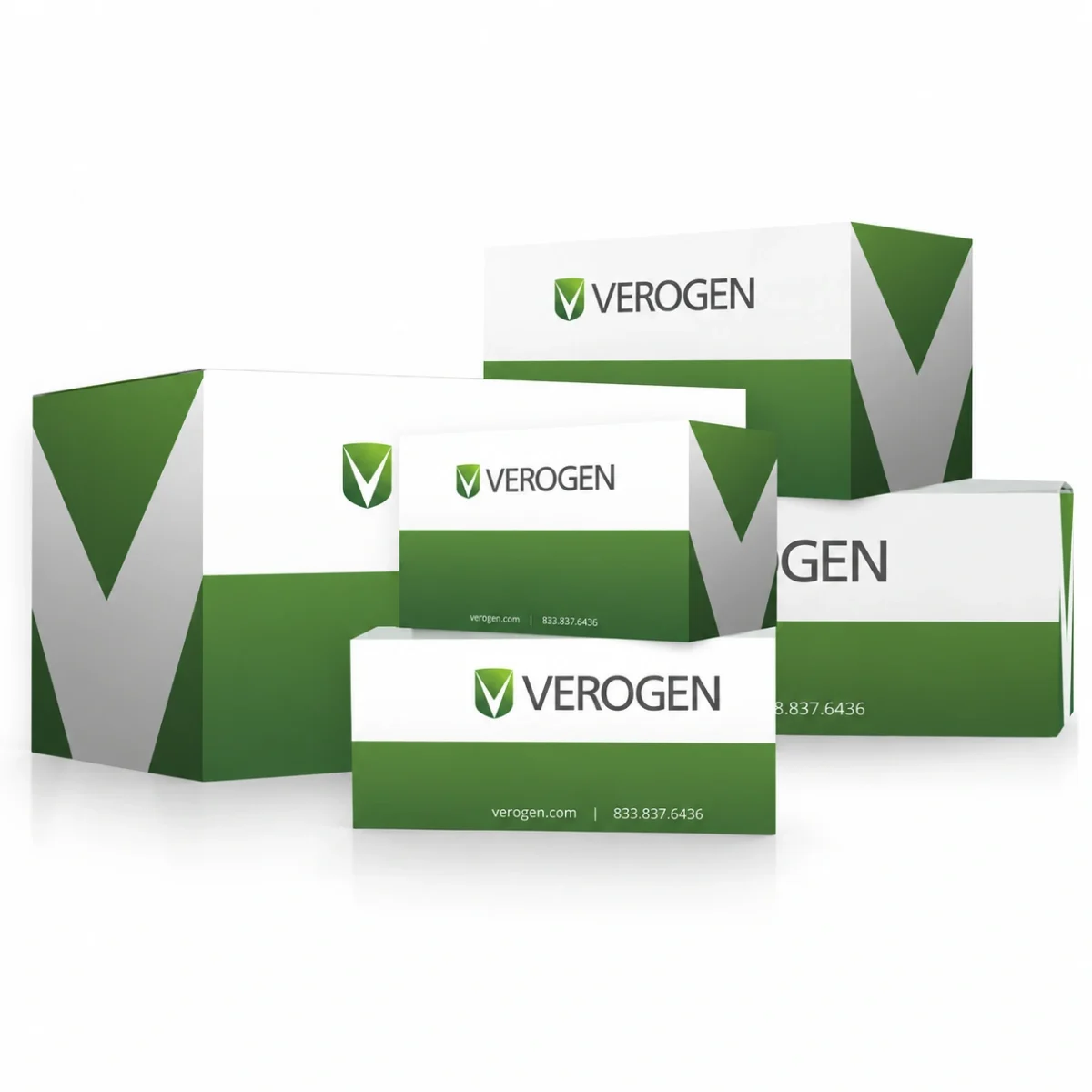
Amp Mix A (red insert): 1 x 36 µl. Oligonucleotide mix for amplification of the HBV Reverse Transcriptase region.Amp Mix B (white insert): 1 x 36 µl. Oligonucleotide mix for amplification of the HBV preCore region.Target Mix (orange cap): 1 x 720 µl. Solution with the enzyme mix for Target PCR.Tag Mix (black insert): 1 x 33 µl. Solution with the enzyme mix for viral DNA digestion.2X Reaction Buffer (purple insert): 1 x 300 µl. Buffer for the digestion reaction.STB (blue cap): 1 x 1000 µl. Buffer for the digestion reaction.Enzyme Mix 6 (yellow cap): 1 x 360 µl. Solution with the enzyme mix for Index PCR.iPLATE_i97_i128_HBV: 1 x 32 indices for indexing.
Required Material Not Included
Viral DNA extraction kit, AMPure XP, compatible Illumina sequencing kit, PhiX Control v3, molecular biology grade water, ethanol, and specific laboratory equipment, including thermal cycler and compatible Illumina sequencer.