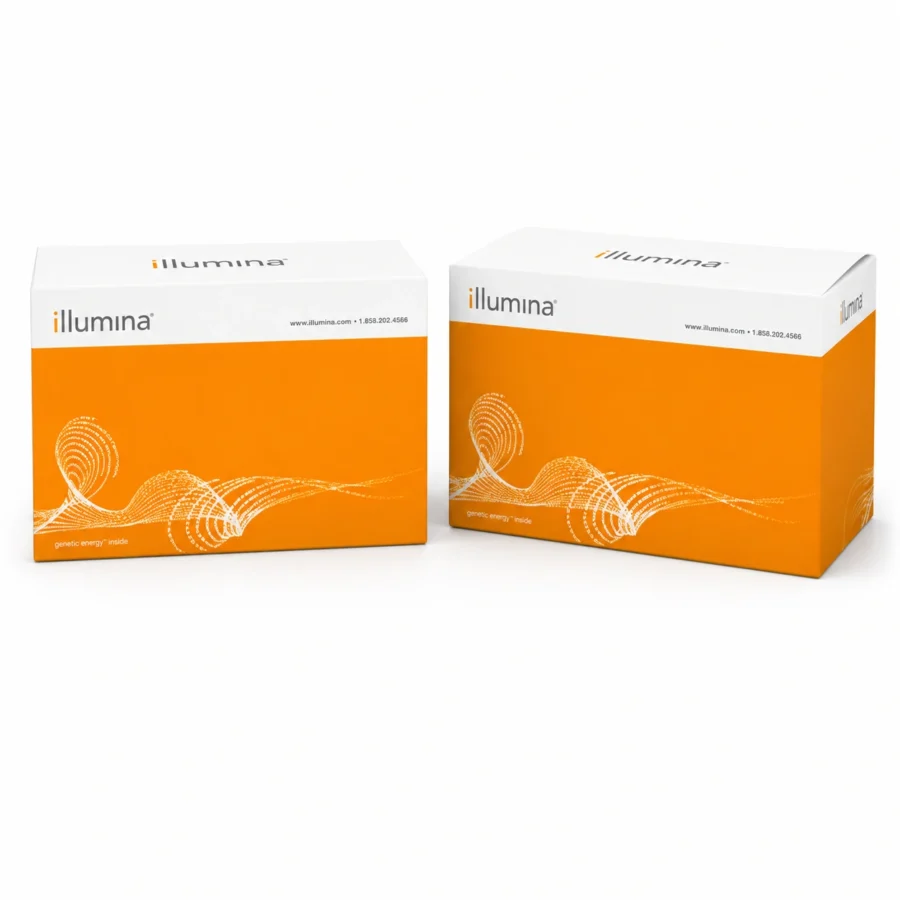
Amplicon-based NGS library preparation solution aimed at public health surveillance and microbiological research. Accepts DNA or RNA, as well as user-designed or commercial primers, with compatibility with multiple sample types and with almost all Illumina sequencing systems.
Detailed Description
Principle of operation
Amplicon-based library preparation kit built on the same chemistry as COVIDSeq. The workflow integrates, depending on the sample type, cDNA conversion for RNA targets, multiplex PCR amplification, tagmentation, library amplification, bead clean‑up, and indexing. After sequencing, data can be analyzed with DRAGEN Targeted Microbial on BaseSpace Sequence Hub for alignment, variant calling, and consensus sequence generation.
Applications
The documentation places it in genomic surveillance of infectious diseases, public health, and microbiological research. Its use is mentioned for viral whole‑genome sequencing, antimicrobial resistance marker analysis, bacterial and fungal identification, variant detection, lineage/strain classification, and pathogen tracking over time and across different geographic areas.
Benefits
It offers a fast and optimized workflow, with a total assay time < 9 hours and a hands‑on time of approximately 3 hours for 48 samples. It supports scalable preparation from 1 to 48 samples, RNA or DNA inputs, and compatibility with automation using liquid handling robots.
Key results or indicators
In the application note for viral surveillance, Illumina summarizes comprehensive genomic coverage in the evaluated viruses, defined as > 90% of the viral genome covered at ≥ 10×. For arboviruses, median coverage at ≥ 10× of 80% and 96% are reported for chikungunya, 94% and 98.5% for dengue 1, and 97.2% and 98.5% for zika, with 500 and 5000 input copies, respectively. In mpox, robust coverage was observed with 1 million paired‑end reads, although low‑titer samples showed lower coverage; in hRSV A/B, both primer designs amplified the genomes, but the longer amplicon (~4300 bp) exhibited lower coverage depth.
Technology used
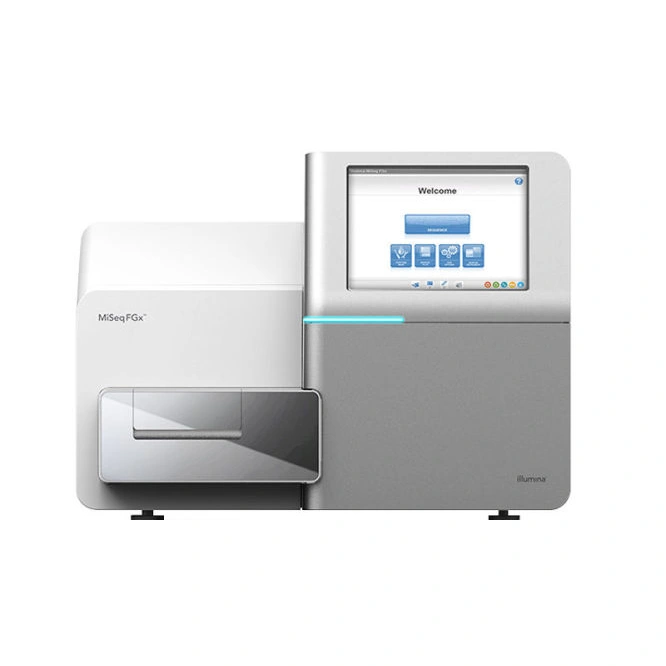
It employs multiplex PCR‑based amplicon sequencing and NGS, with secondary analysis using DRAGEN Targeted Microbial. It is compatible with published, commercial, or laboratory‑designed primers; the documentation recommends 400 bp amplicons as a starting point, although longer amplicons may be used depending on the target. Libraries can be sequenced on multiple Illumina platforms; the data sheet recommends read lengths of 2 × 101 bp and 2 × 151 bp.
Input and sample requirements
Compatible with DNA or RNA extracted from microbial cultures, nasopharyngeal, skin or nasal swabs, wastewater, and other sources. Input amount varies depending on sample origin. The protocol provides purity guidelines: A260/280 of 2.0–2.2 for RNA and 1.8–2.0 for DNA, and A260/230 of 2.0–2.2 for both. For inputs consisting solely of purified RNA, Illumina recommends DNase treatment during purification.
Intended user / audience
Aimed at public health, microbiology, and infectious disease laboratories and researchers requiring targeted sequencing of microorganisms for surveillance and genomic characterization. The documentation classifies it as for research use only and not suitable for diagnostic procedures.
Considerations or limitations
Target‑specific primers are not included and must be purchased separately; their design directly influences assay performance. Illumina recommends working with high‑quality nucleic acids and notes that substitutions at primer binding sites may reduce coverage or cause amplicon dropout. It also indicates that low‑titer samples may not achieve complete coverage and that some targets may require adjustments to the protocol, primer design, or PCR conditions. Customer‑provided protocols on the website are offered for informational purposes only and do not imply validation or support by Illumina.
Key Features
Amplicon‑based library preparation for microbiological surveillance and public health.
Compatible with DNA and RNA and with a wide variety of sample types.
Accepts user‑designed, published, or commercial primers.
Fast workflow: < 9 h assay and ~3 h hands‑on for 48 samples.
Scalable preparation from 1 to 48 indexed libraries.
Integration with DRAGEN Targeted Microbial for alignment, variants, and consensus genome.
Proven performance on RNA and DNA viruses, with broad coverage in the evaluated examples.
Presentation Details
Format
Kit for 48 samples. The documentation describes up to 48 uniquely indexed targeted libraries.
Functional kit contents
Reagents for cDNA conversion, amplification, tagmentation, library clean‑up/purification, and indexing. Primer oligonucleotides are purchased separately.
Content breakdown according to the protocol
Box 1: Illumina Purification Beads (IPB) and Stop Tagment Buffer 2 (ST2).
Box 2: Enrichment BLT (EBLTS) and Tagmentation Wash Buffer (TWB).
Box 3: Elution Prime Fragment 3HC Mix (EPH3), Enhanced PCR Mix (EPM), First Strand Mix (FSM), Illumina PCR Mix (PM), Resuspension Buffer (RSB), Reverse Transcriptase (RVT) and Tagmentation Buffer 1 (TB1).
Box 4: Illumina Unique Dual Indexes, LT.
Commercial reference
| Illumina Microbial Amplicon Prep (48 samples) | Cat. 20097857 |
| Illumina Unique Dual Indexes, LT | Cat. 20098166 |
×
 2")