3.- Detailed Description
Operating principle
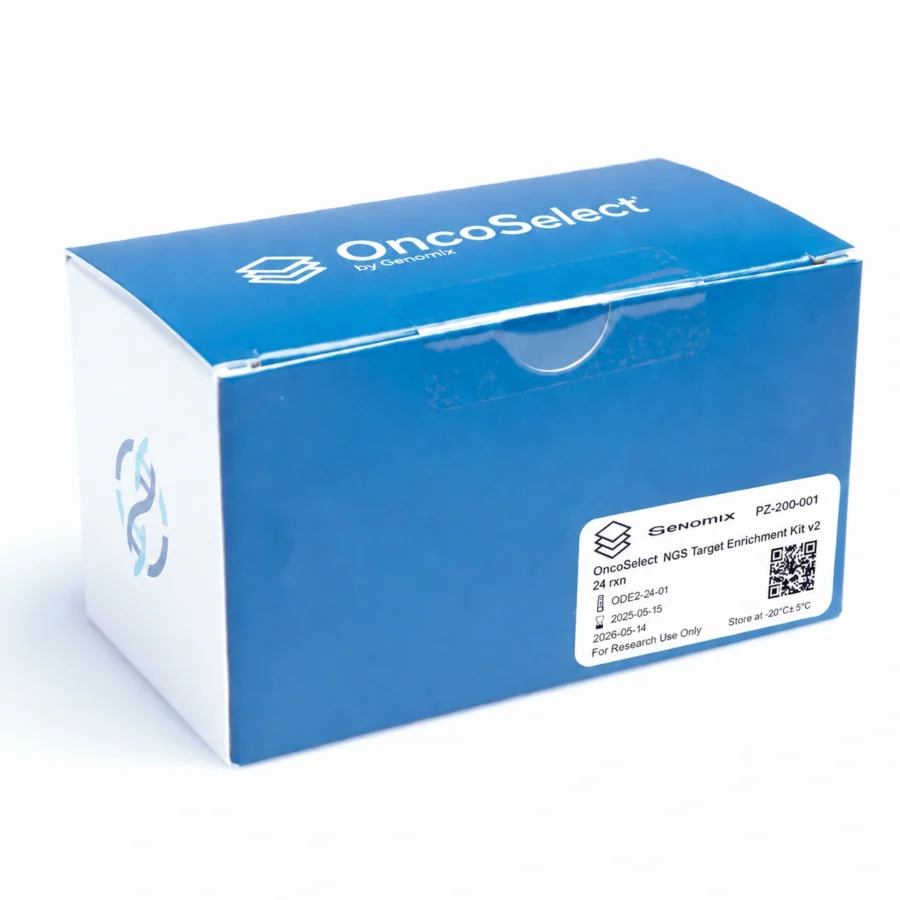
OncoSELECT® is an advanced liquid biopsy panel based on circulating cell-free DNA (cfDNA) that enables the precise and simultaneous detection of the most relevant genomic alterations in oncology.
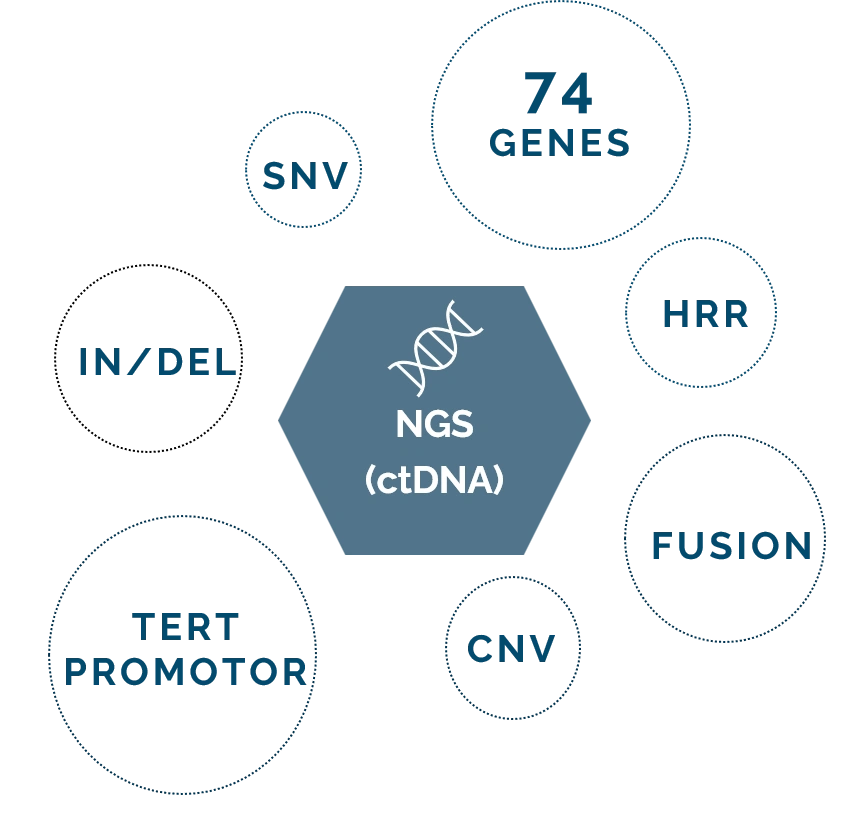
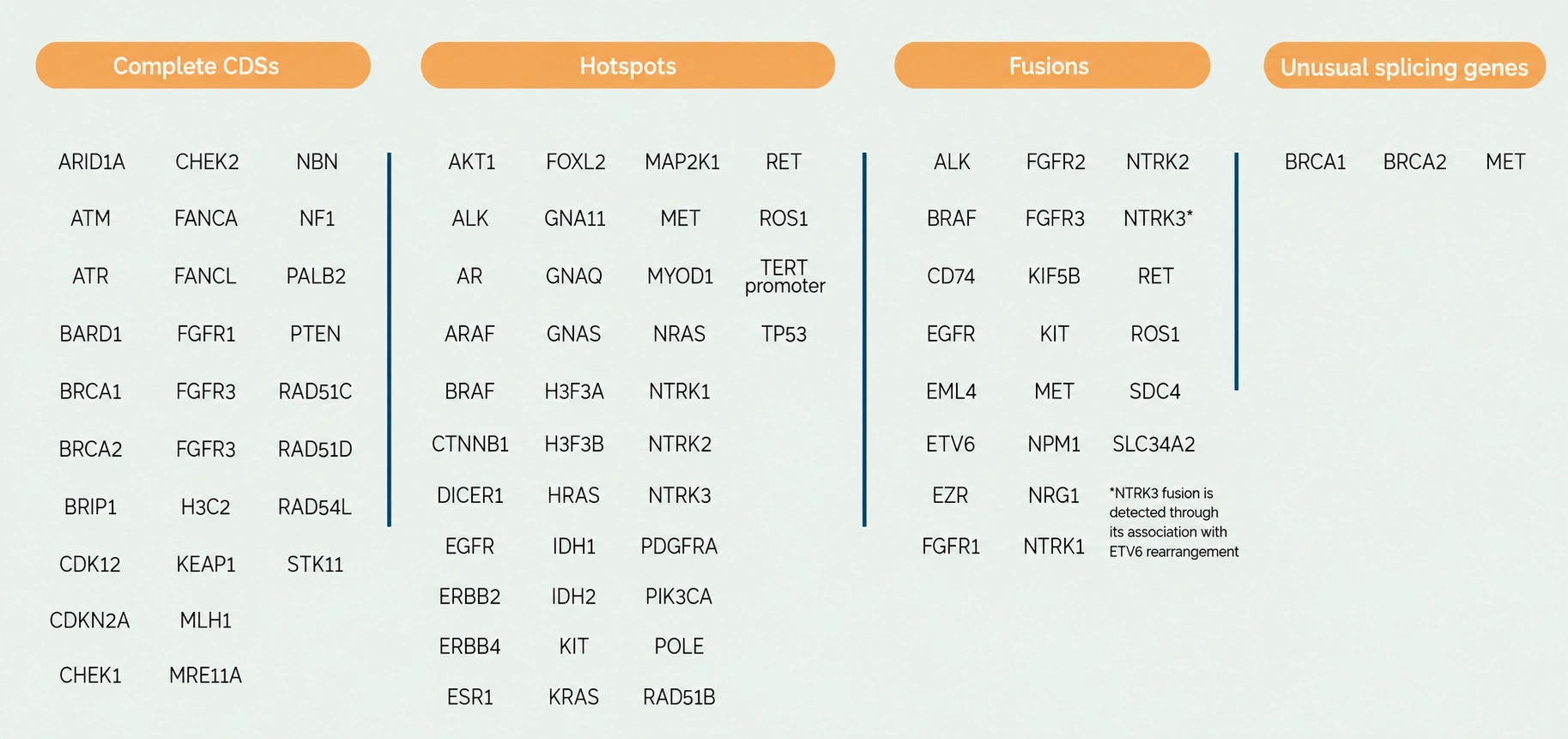
The assay identifies single nucleotide variants (SNVs), insertions and deletions (Indels), variants in the TERT promoter, copy number variations (CNVs), alterations in the homologous recombination repair (HRR) pathway, gene fusions and unusual splicing events.
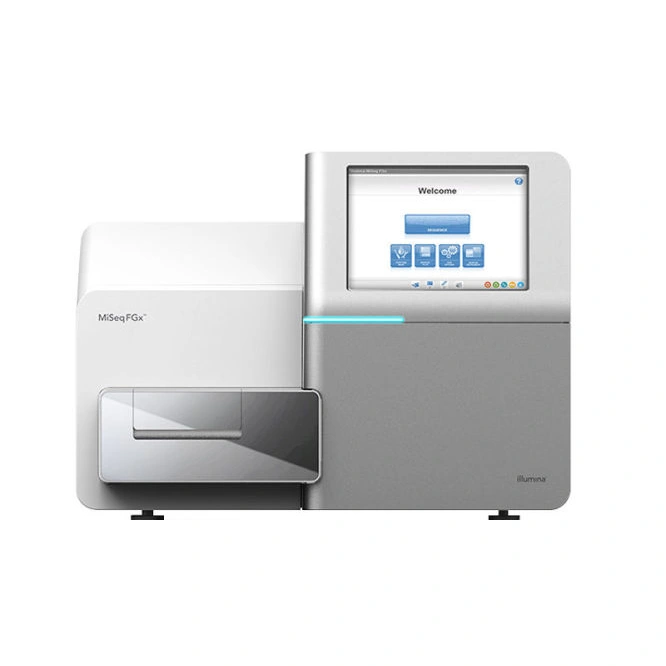
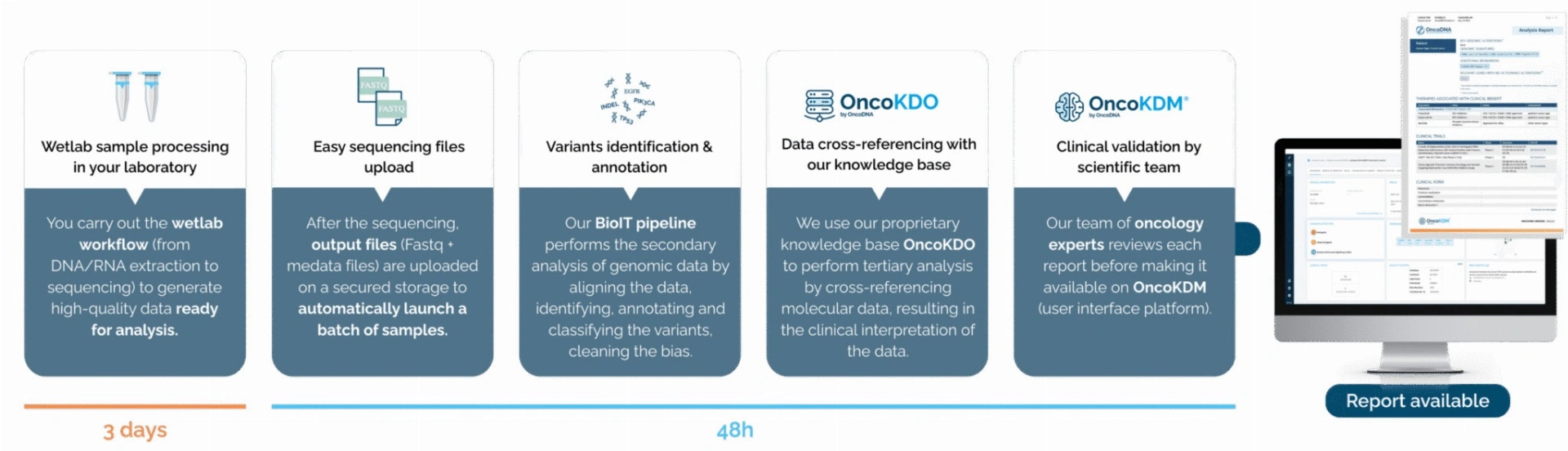
The analytical workflow comprises end repair and dA addition to cfDNA, followed by the ligation of universal adapters equipped with unique molecular identifiers (UMIs) for error correction. Following PCR amplification and hybrid capture enrichment, the libraries are sequenced on Illumina platforms. Finally, the raw data are processed through the OncoSELECT® bioinformatics pipeline (secondary and tertiary analysis), culminating in personalised therapeutic interpretation through the OncoKDM® platform.
Clinical applications
Genomic tool designed for the non-invasive molecular assessment of solid tumours. In a single test, it enables the detection of actionable molecular markers, the identification of potential therapeutic options (targeted therapies) and the assessment of the spatial and temporal heterogeneity of the oncological disease.
Benefits
Intended audience/user
Molecular diagnostic laboratories, pathology departments and centres specialising in oncology seeking to implement liquid biopsy analysis in their own facilities.
Technology used
The assay is based on NGS hybrid capture enrichment technology, using unique molecular identifiers (UMIs) to ensure maximum sensitivity and specificity in the detection of low allele frequency variants (typical of cfDNA). It is compatible with Illumina sequencing platforms. The clinical interpretation of molecular findings is automatically supported by OncoKDM®, a proprietary expert-reviewed knowledge base.
4.- Key Aspects
5.- Presentation Details
The kit is presented in a format that allows the analysis of 32 samples (up to 4 hybridisations, with 8 samples per hybridisation).