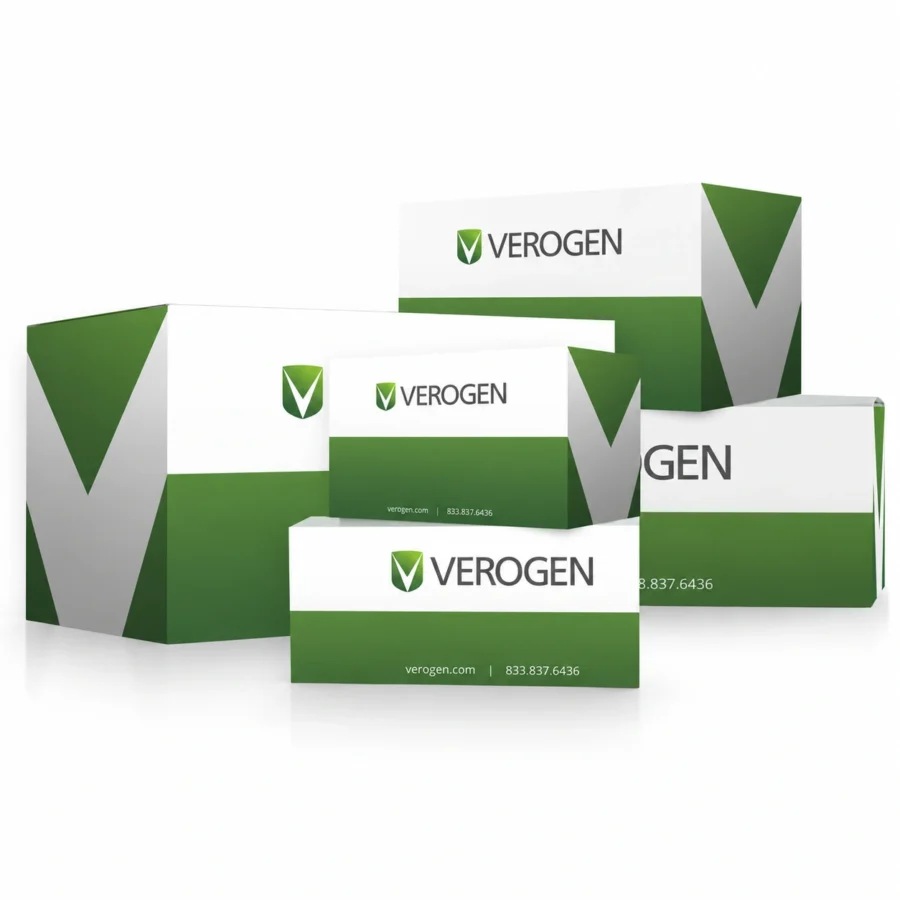
Amplicon-based library preparation kit covering 10,230 SNPs for the identification of individuals and human remains through kinship analysis. Its workflow combines library preparation from forensic samples, sequencing on MiSeq FGx and analysis in ForenSeq® Universal Analysis Software (UAS), which incorporates a local database for comparing genetic profiles. It also enables forensic investigative genetic genealogy (FIGG) studies through a report adapted for uploading profiles to the professional GEDmatch PRO database.
Detailed description
Operating principle
ForenSeq® Kintelligence HT Kit generates SNP profiles from ante-mortem (AM) and post-mortem (PM) samples. The amplicons, with an average size of less than 150 bp, support the analysis of degraded DNA samples. The kit incorporates a PCR formulation optimised for bone samples and unique dual indexes for library preparation.
Following sequencing on MiSeq FGx, the Kintelligence HT module in UAS processes the data and allows the quality of each profile to be reviewed through general metrics as well as marker-by-marker metrics. The result obtained can be used through two analysis pathways:
Kinship analysis in the local database
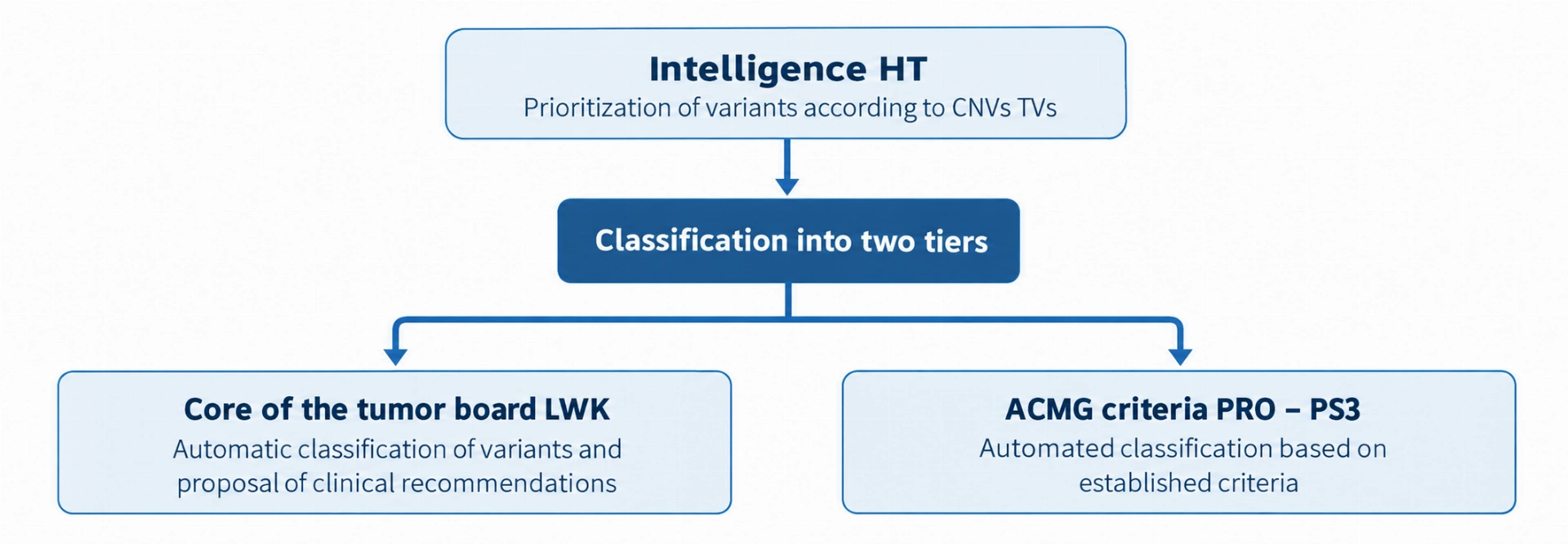
UAS maintains a private profile database on the local server. The user selects unknown and reference samples, runs kinship queries and reviews potential genetic relationships. After assigning a relationship hypothesis, the software represents the pedigree and calculates the likelihood ratio for the proposed kinship. It also generates reports of the queries performed.
Forensic investigative genetic genealogy (FIGG) with GEDmatch PRO
The UAS module generates a GEDmatch PRO-compatible report in .txt format for each selected sample. The file contains the SNP calls required to upload the profile directly to the database. Once uploaded by a user with authorised access, it can be used in direct identification searches or searches for biological relatives within a FIGG investigation. Uploading and searching are performed in GEDmatch PRO; UAS prepares and downloads the file.
Applications
- Identification of human remains and missing persons. Comparison of PM samples with family references available in the laboratory.
- Large-scale kinship studies. Queries involving numerous unknown and reference samples in the local database.
- Forensic investigative genetic genealogy. Generation of GEDmatch PRO-compatible profiles to search for potential biological relatives and/or open new lines of investigation.
Benefits
- Two pathways from the same profile. Local kinship comparison and generation of a specific file for FIGG.
- High throughput. Up to 12 PM samples or 36 AM samples per run under the multiplexing conditions described by the manufacturer.
- Complex samples. Short amplicons and chemistry optimised for sample types commonly used in human identification, including bones and teeth.
- Analysis and review in UAS. Quality control, profile management, sample comparison and reporting on a dedicated server.
Key results and indicators
Library preparation requires approximately 10 hours, with less than 3 hours of hands-on time, and sequencing time is approximately 28 hours. When sequencing capacity is fully optimised (12 PM samples or 36 AM samples), relationships up to the third degree can be reliably detected. With lower multiplexing, the possibility of investigating relationships extends to the fifth degree.
Technology used
The workflow integrates ForenSeq® Kintelligence HT Kit, MiSeq FGx and the Kintelligence HT module of ForenSeq® UAS. The GEDmatch PRO report generated by UAS is a .txt file based on GRCh37/hg19, with rsID identifiers, chromosomal position and alleles reported in the forward orientation.
Intended users
Forensic genetics laboratories and human identification centres that need to investigate kinship using their own references and have access to a FIGG analysis pathway through GEDmatch PRO.
Considerations
The number of SNPs recovered and the kinship range depend on the quantity and quality of DNA, coverage and multiplexing. Local queries in UAS and external searches in GEDmatch PRO are separate processes. The use of GEDmatch PRO requires access to the platform and is subject to its terms of use.
Key aspects
Presentation details
| Product | Presentation | Reference |
|---|---|---|
| ForenSeq Kintelligence HT Kit | 96 reactions | V16000190 |
Workflow components: MiSeq FGx Sequencing System, MiSeq FGx Reagent Kit and ForenSeq Universal Analysis Software are purchased separately according to the installation.
References
- QIAGEN. ForenSeq Kintelligence HT Kit, Technical Information,
- QIAGEN. Universal Analysis Software User Guide for Kintelligence HT Module,
- QIAGEN. ForenSeq Kintelligence HT Kit User Guide