Opens in a new tab

Short description

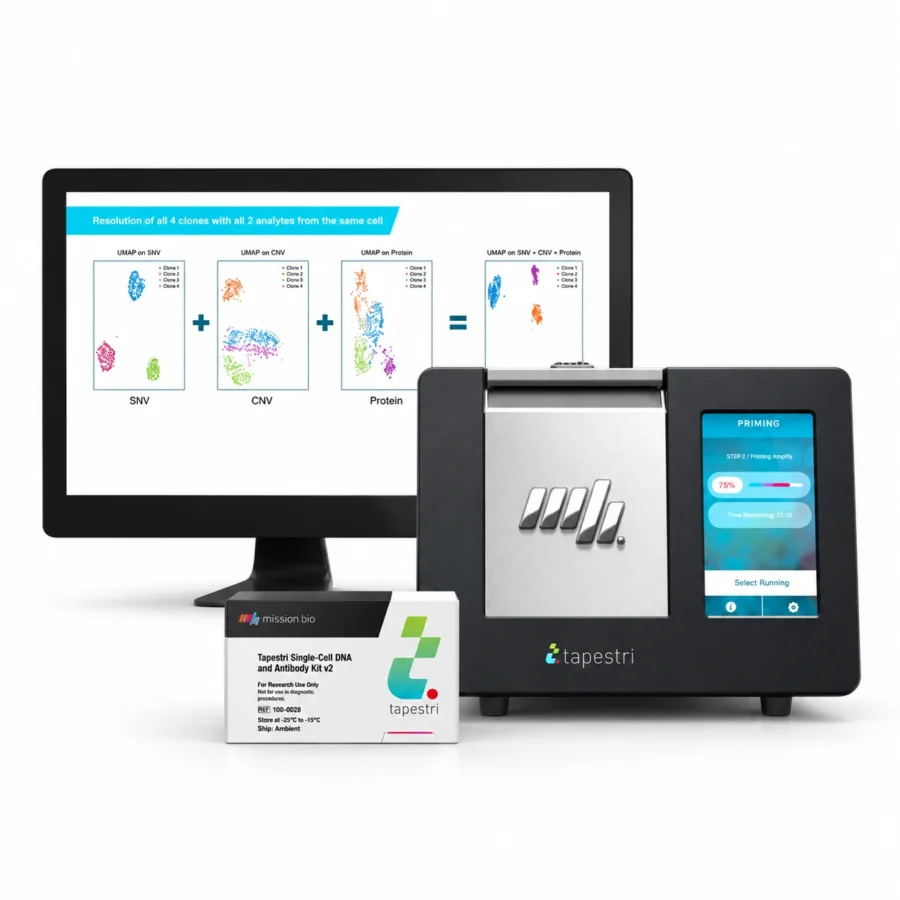
The Tapestri® platform enables the simultaneous integration of three biological dimensions from the same individual cell: DNA, RNA and surface proteins. This unprecedented multi-omics capability provides a direct and functional view of how specific genetic alterations (genotype) shape transcriptional expression and protein behaviour (phenotype), without the need to reconcile data from separate platforms.

Conventional high-throughput sequencing technologies (Bulk NGS) provide an averaged view of cell populations. However, in complex diseases such as cancer, clonal evolution does not occur on average. Rare subclonal variations that drive therapeutic resistance, persistence and relapse are often masked by background noise.
Mission Bio Tapestri platform

The Mission Bio Tapestri® platform is the first and only solution on the market capable of performing large-scale targeted multi-omics at the single-cell level. By combining precision microfluidic instrumentation, advanced reagents and state-of-the-art bioinformatics tools, Tapestri® transforms complex samples of individual cells into high-resolution sequencing data, revealing cellular heterogeneity, clonal architecture and direct genotype-phenotype relationships without the need for bioinformatics inference.

Key Features

True single-cell multi-omics analysis: Unique capability to simultaneously study DNA (mutations, CNVs, SNVs), RNA (selected transcripts) and surface proteins at the individual-cell level in a single assay, avoiding the loss of resolution that occurs in averaged analyses (Bulk).
Direct integration with NGS: The complete workflow integrates naturally with the leading next-generation sequencers on the market, providing a comprehensive turnkey solution comprising instrumentation, reagents, panels and bioinformatics.
Maximum panel flexibility: Full compatibility with predesigned catalogue panels (Oncology, Haematology, Immunotherapy, etc.), panels published by research consortia, virtual panels and the design of 100% customised DNA and antibody panels through Tapestri Designer.
High-impact clinical and scientific applications: An essential tool for studying tumour heterogeneity, the ultra-sensitive characterisation of measurable residual disease (scMRD), the reconstruction of clonal architecture, and the validation of zygosity and off-target effects in CRISPR gene editing.
Optimised bioinformatics ecosystem: Access to the advanced Tapestri Pipeline and Tapestri Insights tools, specifically designed to process, normalise, correlate and visualise complex multi-analyte data in a visual and intuitive way, without requiring dedicated programmers.

How does it work?

TapestriTM integrates into a next-generation sequencing (NGS) workflow, providing a complete solution from individual cells to sequencing data and its analysis. It covers everything from panel design or the selection of predesigned panels to bioinformatics analysis on the Tapestri Pipeline and Tapestri Insights platforms.

The solution incorporates Tapestri Pipeline and Tapestri Insights, bioinformatics tools optimised for the analysis of DNA and proteins at the single-cell level.
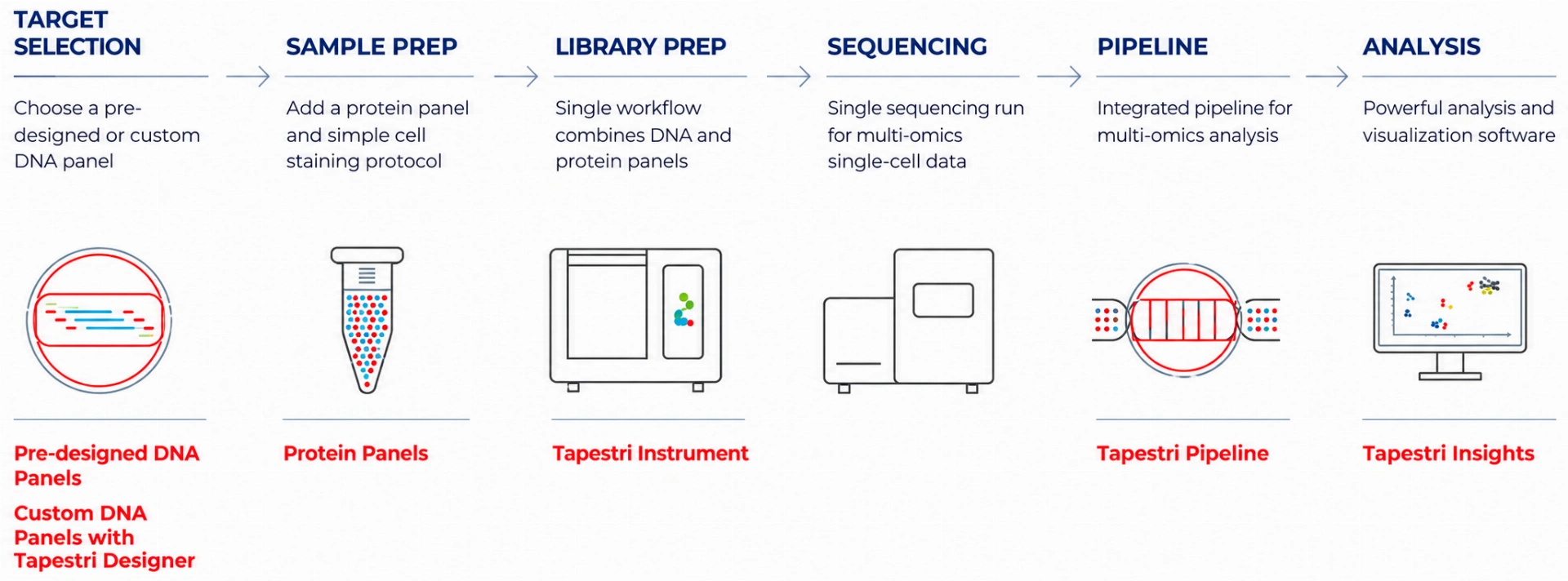
They allow sequences to be imported and the data to be analysed and visualised. They include report-generation solutions for multiple myeloma, AML and genome editing. They provide interactive charts and visualisations to facilitate the interpretation of multi-analyte data.
Tapestri platform workflow

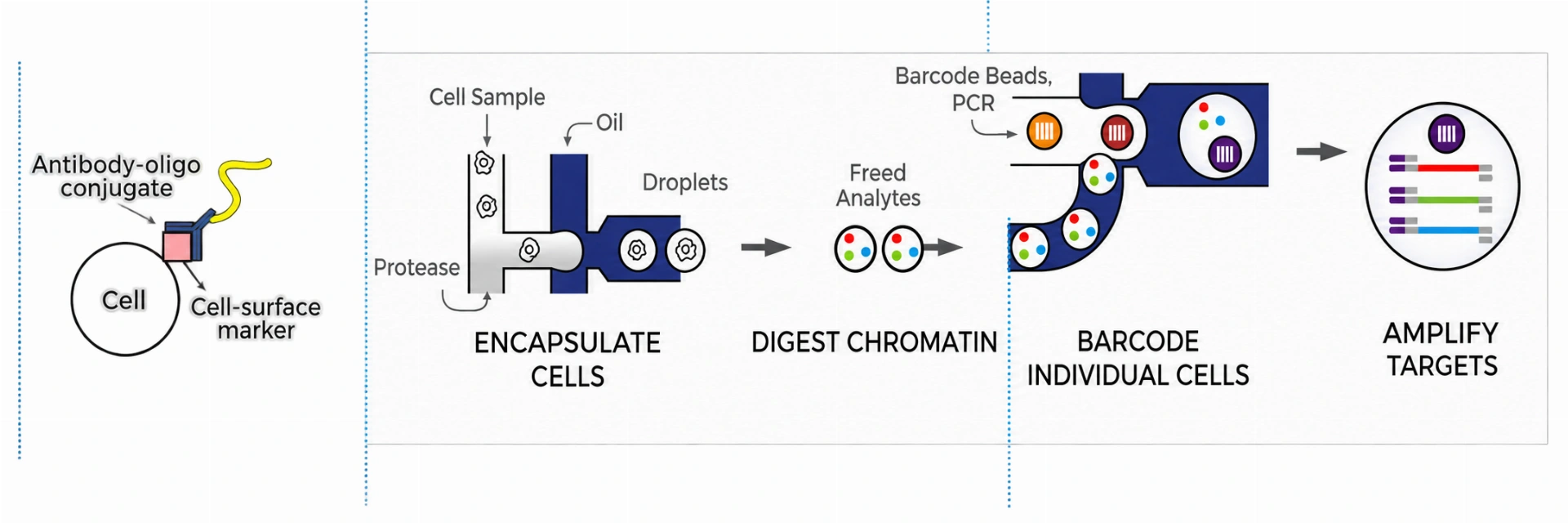
Unlike traditional one-step microfluidic systems, which limit the types of reagents that can interact with the cell, Tapestri® uses an exclusive two-step workflow that independently optimises each chemical reaction:
Step 0
Antibody incubation (AOCs): Individual cells are incubated with oligonucleotide-conjugated antibodies (antibody tags) to capture membrane proteins.
Step 1
Cell lysis and access to DNA. Individual antibody-bound cells are encapsulated in microdroplets together with a thermal lysis buffer and protease. This digests the protein matrix of the chromatin and makes the genomic DNA fully accessible for amplification, while the cellular RNA remains available for conversion into complementary DNA (cDNA) through reverse transcription.
Step 2
Barcoding and multiplex PCR. Beads with unique molecular barcodes and specific primers are added to perform targeted multiplex PCR amplification. Each DNA amplicon, RNA transcript and antibody tag therefore receives the same specific barcode, enabling the cellular origin of all analysed molecules to be unequivocally identified.
Barcoding and multiplex PCR on the Tapestri platform

Available panels

The Tapestri® platform offers unprecedented versatility through its targeted panel architecture. Panels can be selected, combined and customised according to the needs and biological scope of the project, and are divided into three key analytes: DNA, surface proteins and RNA.

A. Single-Cell DNA Panels (SNVs and CNVs)

DNA panels are designed to interrogate single-nucleotide variants (SNVs) and copy-number variations (CNVs) with exceptional coverage and uniformity, typically using between 20 and 500 amplicons.

B. Surface Protein Panels (Immunophenotyping)

They enable the simultaneous quantification of cell membrane proteins using oligonucleotide-conjugated antibodies, providing unprecedented phenotypic resolution at the single-cell level.

C. Targeted RNA Panels (Single-Cell Targeted RNA)

This new analyte on the Tapestri® platform makes it possible to evaluate the functional gene-expression signature to complement single-cell DNA genotyping information.

D. Custom panels

Unlimited flexibility for precision medicine. Combine mutation markers (DNA) and surface proteins specifically designed for your clinical cohort, accelerating the discovery of rare clones and resistance mechanisms.

Area:

Omics, Single cell
Consult our experts

Google reCaptcha: Invalid site key.

Related products

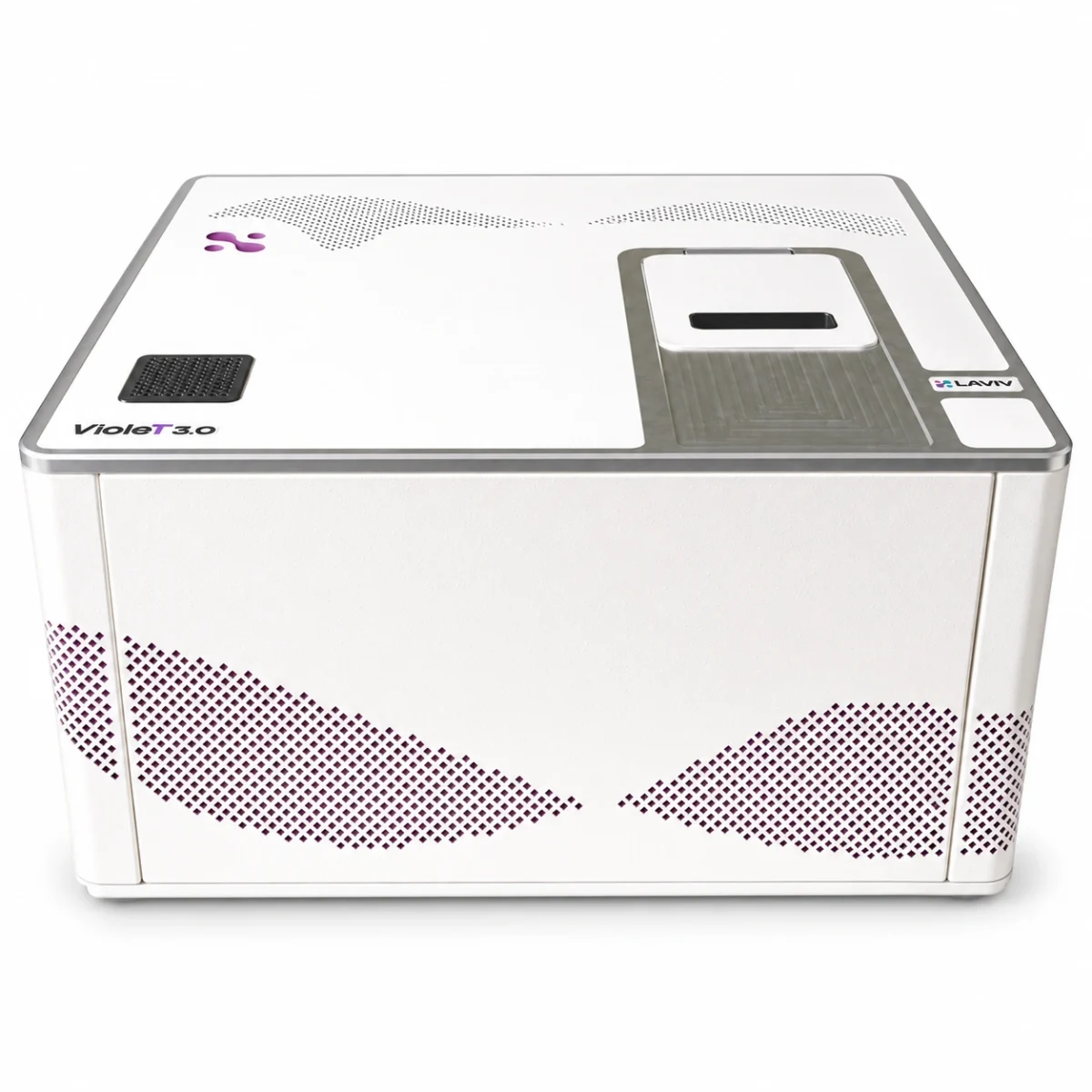
Violet 3.0 & QF-Pro® Technology

Conventional spatial biology reveals where proteins are; Violet 3.0 and QF-Pro® technology reveal what they are doing. Most current proteomic assays are limited to measuring molecular expression levels, overlooking whether proteins are actually activated or interacting with one another. In critical fields such as immuno-oncology, neurobiology and drug development, the relationship between expression and the…
Hawk Biosystem
Functional Assay

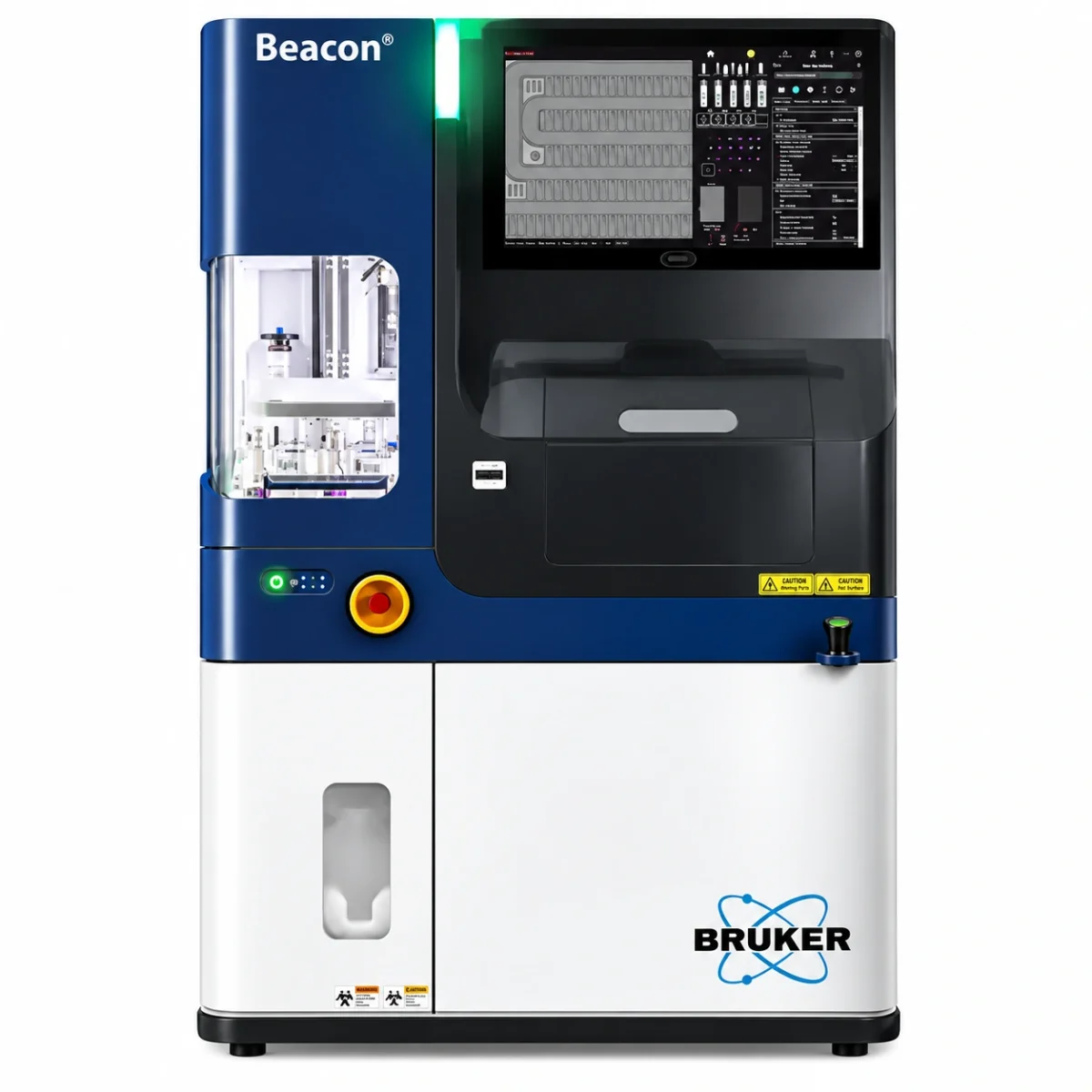
Beacon® Optofluidic Suite

The Beacon® Optofluidic Suite represents an absolute revolution in cell biology and biotherapeutic development. By synergistically integrating advanced microfluidics, precision optics, optoelectronics and artificial intelligence, this platform enables the isolation, culture, characterization and recovery of thousands of individual cells in a fully automated manner and in real time. Unlike traditional static or destructive methodologies, Bruker’s…
Bruker
Functional Assay

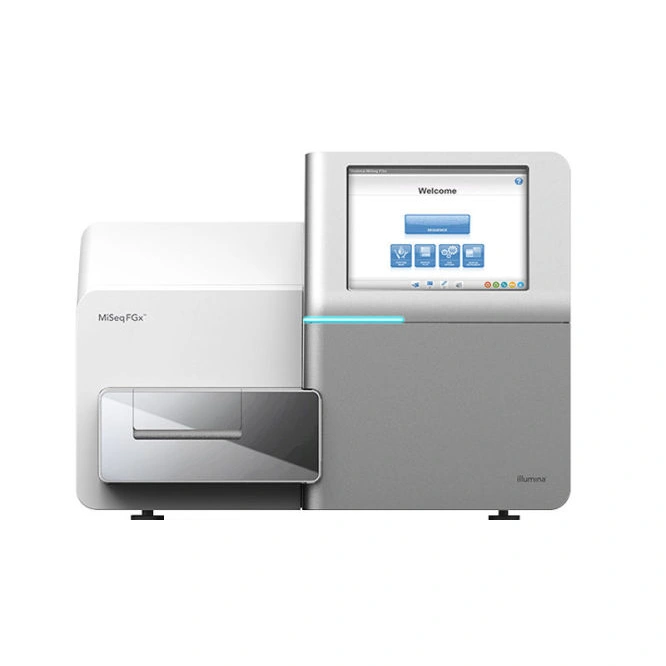
MiSeq FGx® Sequencing System and server with Universal Analysis Software (UAS)

MiSeq FGx is a benchtop sequencer designed for forensic genetics applications. Together with the dedicated server incorporating ForenSeq Universal Analysis Software (UAS), it enables users to configure runs, sequence libraries, analyse profiles and generate reports through a workflow adapted to forensic genetics applications. The application and type of report depend on the kit and the…
Qiagen
Next Generation Sequencing (NGS)

ForenSeq® DNA Signature PLUS Kit

ForenSeq® DNA Signature Plus Kit is a DNA library preparation kit using next-generation sequencing (Next-Generation Sequencing, NGS) for forensic genetics. It enables the analysis, in a single reaction, of STR and SNP markers intended for human identification, forensic case analysis, generation of profiles for databases and kinship testing. It includes two primer mixes to adapt…
Qiagen
Next Generation Sequencing (NGS)