Qualitative Research Use Only (RUO) kit for RT-PCR amplification of the complete HIV-1 genome from HIV-1 positive plasma or serum samples. Following amplification, Next Generation Sequencing (NGS) allows for viral genotyping and evaluation of mutations present in the viral genome.
Detailed Description
Principle of operation
The AD4SEQ HIV-1 Whole Genome kit is based on RT-PCR amplification of the complete HIV-1 viral RNA obtained from human plasma or serum samples. The amplified product is subsequently processed for NGS sequencing, allowing viral genotyping and identification of mutations present in the viral genome, including those located in reference target regions.
The described analytical procedure includes a workflow consisting of: RNA handling and extraction, One Step RT-PCR Target, purification of RT-PCR products, PCR TAG, PCR TAG purification, PCR Index, PCR Index purification, sample pool normalization and preparation, sequencing on Illumina® platforms, and data analysis.
Clinical applications / intended research use
The product is indicated for Research Use Only (R.U.O.) and can be used on HIV-1 positive plasma or serum samples. Its purpose is to investigate the complete scenario of viral mutations present in HIV-1 positive samples by viral genotyping and evaluation of mutations in the viral genome.
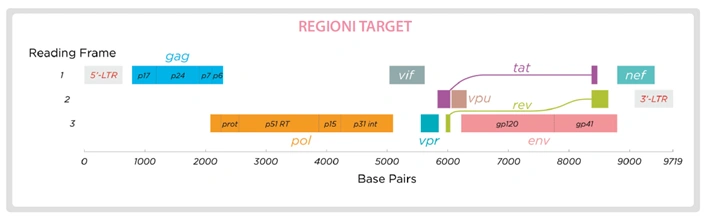
The documentation highlights the relevance of evaluating HIV-1 genome mutations for the success of antiretroviral treatments. In addition to classic regions such as protease, reverse transcriptase, integrase, and V3Loop, the kit allows investigation of additional viral regions such as gag, vif, nef, and regions adjacent to integrase.
Benefits
Allows complete HIV-1 genome analysis using an RT-PCR and NGS-based strategy.Facilitates viral genotyping and identification of mutations present in regions of interest within the genome.Expands research beyond protease, reverse transcriptase, integrase, and V3Loop, including regions like gag, vif, nef, and integrase-adjacent regions.The product’s technical brochure indicates performance features such as sequencing library preparation in 8 hours, recommended input ≥1000 cp/ml, genotyping of HIV-1 group M subtypes including recombinants, drug resistance detection, HIV-1 tropism analysis in gp120, and analysis using dedicated software.
Results or key indicators
It is possible to identify mutations down to 1% with 3000x coverage.To obtain good coverage of all amplified viral regions, approximately 120,000 reads per sample are recommended.Data analysis is performed from fastq files obtained after NGS sequencing. The use of SmartVir software, produced by SmartSeq s.r.l., or similar programs capable of complete HIV-1 genome genotyping and mutated codon identification is recommended.The result of the suggested analysis methods is expressed as a relative abundance value of the mutations present in the sample.SmartVir establishes a minimum coverage threshold per codon of 100 reads; codons with lower coverage can also be evaluated, down to a configurable minimum of 30 reads, considering mutations with a minimum coverage of 30 reads as reliable.
Technology used
The kit combines viral RNA amplification by One Step RT-PCR, subsequent preparation via PCR TAG and PCR Index, purification with AMPure® XP magnetic beads, library normalization and pooling, and sequencing using Illumina® platforms.
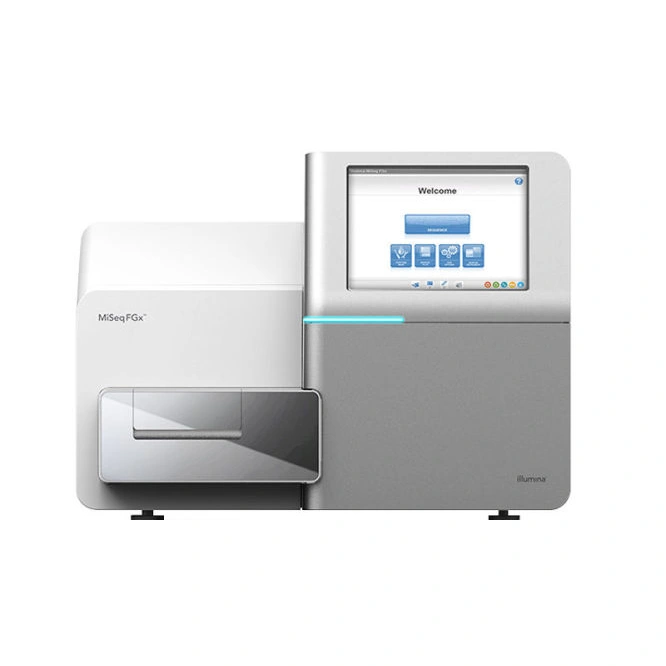
The Illumina® platforms indicated in the documentation are MiSeq™, MiniSeq™, iSeq™ 100, and MiSeq™ i100, with different reagent kits, maximum number of samples, and sequencing times depending on the platform.
Intended audience/user
The R.U.O. kit must be used by qualified and properly trained personnel to avoid inadequate performance resulting from errors in sample or reagent dispensing, or incorrect sequencer configuration.
Considerations or limitations
Product for Research Use Only (R.U.O.).The kit can be used on HIV-1 positive plasma or serum samples.It is recommended to work with samples having a viral load ≥1000 cp/ml; for lower viral loads, the documentation refers to specific instructions and consultation with the local specialist.The kit does not contain reagents for viral genomic RNA extraction; extraction must be performed using methods recommended or validated by the user.The presence of EDTA at concentrations greater than 2 mM may inhibit the subsequent amplification reaction.Reliability of results may be influenced by sample collection, transport, storage, and processing.The kit is intended exclusively for manual use; any automation must be validated by the user.
Key Aspects
Qualitative kit for complete HIV-1 genome analysis.
Based on RT-PCR followed by NGS sequencing.
Allows viral genotyping and evaluation of HIV-1 genome mutations.
Applicable to HIV-1 positive plasma or serum samples.
Investigation of relevant viral regions such as gag, vif, nef, and integrase-adjacent regions.
Compatible with Illumina® MiSeq™, MiniSeq™, iSeq™ 100, and MiSeq™ i100 platforms.
Possibility to identify mutations down to 1% with 3000x coverage.
Recommendation of approximately 120,000 reads per sample for good coverage.
Data analysis recommended using SmartVir or equivalent software.
R.U.O. product, intended exclusively for research.
Presentation Details
Format and reference
Product
HIV-1 Whole Genome
Line
AD4SEQ
Reference
AD-012.030
Presentation
30 reactions
Use
R.U.O. / Research Use Only
Kit contents
WG Px Mix 1: 40 µl, oligonucleotide mix for viral genome amplification.WG Px Mix 2: 40 µl, oligonucleotide mix for viral genome amplification.WG Px Mix 3: 40 µl, oligonucleotide mix for viral genome amplification.WG Px Mix 4: 40 µl, oligonucleotide mix for viral genome amplification.WG RT Mix: 80 µl, enzyme mix solution for One Step RT-PCR.WG 2X Master Mix: 1000 µl, buffer solution for One Step RT-PCR.TAG Mix: 33 µl, enzyme mix solution for PCR TAG.2X Reaction Buffer: 300 µl, buffer solution for PCR TAG.STB: 1000 µl, post PCR TAG buffer solution.Index Mix: 330 µl, enzyme mix solution for PCR Index.iPLATE_i193_i224_WGS: 32 indexes, oligonucleotide mix for indexing PCR amplified samples.
Storage and stability
Store all reagents between -25 °C and -15 °C.Components are ready to use and stable until the indicated expiration date if stored according to recommendations.Reagents can undergo a maximum of 4 freeze/thaw cycles without compromising their functionality.During use, reagents must be kept on ice or in refrigerated racks between +2 °C and +8 °C.Reagents are not reusable, and intermediate mixture residues should not be stored.