In vitro diagnostic kit based on PCR and Next-Generation Sequencing (NGS) for the qualitative evaluation of the microbiome through the analysis of hypervariable regions of the bacterial 16S rDNA gene. It is designed for human gut microbiota and other biological samples, and can be used as a diagnostic aid in the clinical context of fecal microbiota transplantation, both in patient monitoring and donor screening.
Detailed Description
Operating Principle
The system is based on PCR amplification of the hypervariable regions of the bacterial 16S rDNA gene using degenerate primers, followed by NGS sequencing, allowing the identification of bacterial populations present in the sample without the need for culture.
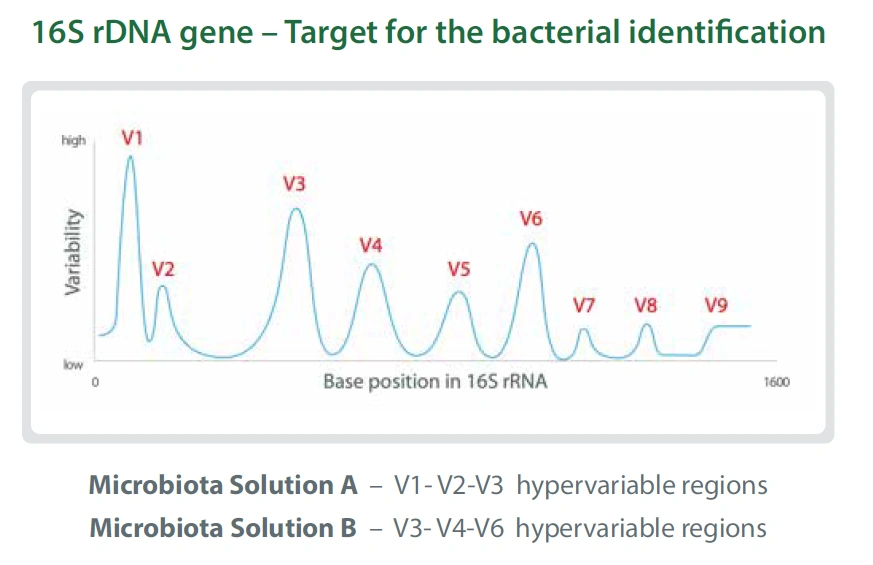
The analyzed region depends on the kit:
Microbiota Solution A (AD-001.024): V1-V2-V3 regions
Microbiota Solution B (AD-002.024): V3-V4-V6 regions
After sequencing, data can be automatically analyzed using software to identify the species present in an individual sample or in comparative samples selected by the user.
Clinical Applications
Qualitative evaluation of the human gut microbiota and other biological samples, including vaginal swab, endometrial catheter, sputum, skin swab, saliva, feces, and rectal swab.
It can be used as a diagnostic aid in the clinical context of fecal microbiota transplantation, both for post-treatment monitoring and donor screening.
Benefits
Allows the identification of bacterial populations avoiding the culture phase and, potentially, without the selective bias introduced by laboratory culture conditions.
Provides a standardized approach for the clinical analysis of the microbiota, useful for identifying bacterial profiles already associated with specific pathologies and for detecting new bacterial profiles.
Library preparation in 8 hours and a total workflow of up to 24 hours.
Results or Key Indicators
Analytical specificity: in 10 bacterial DNA extracts from 10 soil samples, none of the evaluated target species were detected; the document reports NPA (Negative Percent Agreement) = 100%.
Analytical sensitivity: ability to identify bacterial species present in the sample at a percentage ≥0.16%, under the coverage conditions indicated in the internal study.
Reproducibility: acceptance criteria were met with intra-run CV < 10%, inter-run CV < 15%, and inter-lot CV < 15%; the document concludes that the results are highly replicable.
Clinical performance: in a comparison with the standard Illumina procedure for human gut microbiota, 7 stool samples were analyzed in triplicate (total 21 samples), concluding that Microbiota Solution A and Microbiota Solution B are comparable to the data obtained with the protocol suggested by Illumina.
In the Target PCR quality control, amplicons of approximately 650 bp are expected for Solution A and 840 bp for Solution B.
For library normalization, the document uses average lengths of 640 bp as a reference for the kit with Amp Mix V1-V3 and 900 bp for the kit with Amp Mix V3-V6.
Technology Used
DNA amplification by PCR of hypervariable regions of the 16S rDNA and NGS sequencing.
The analytical protocol comprises 8 phases: DNA extraction and quantification, Target PCR, Target product purification, Index PCR, Index product purification, normalization and pool preparation, sequencing, and data analysis.
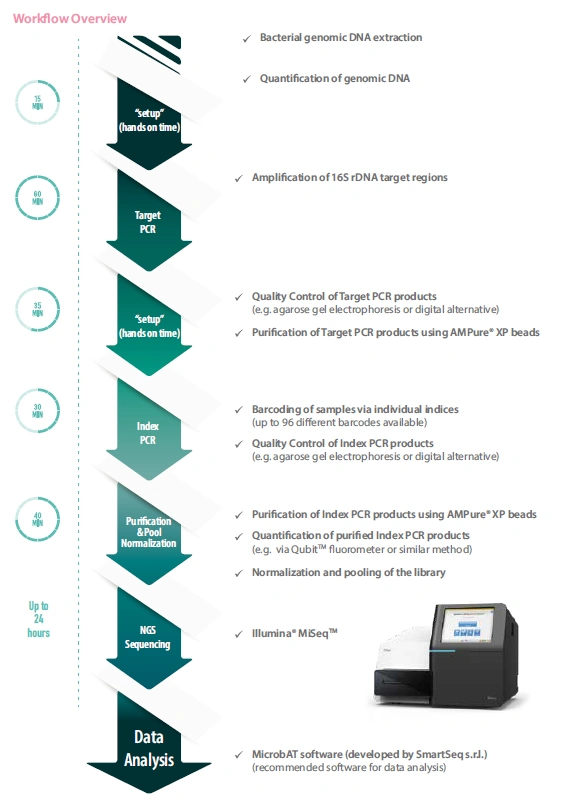
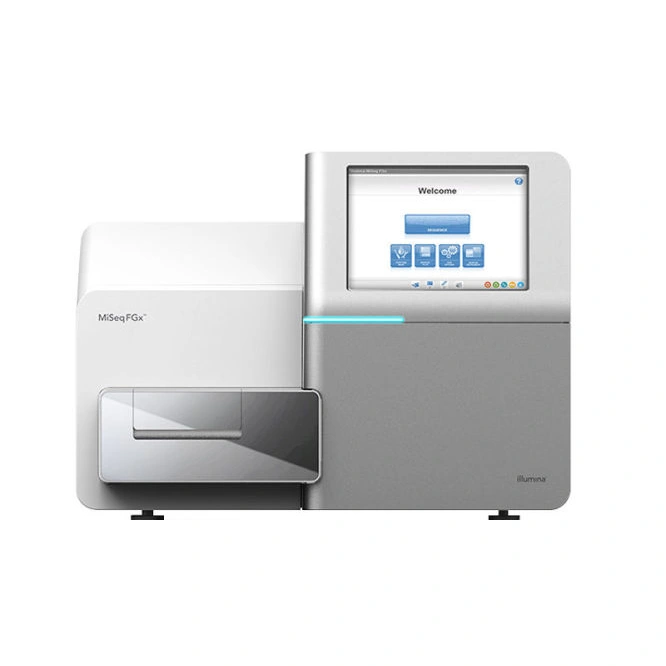
Sequencing is performed on the Illumina MiSeq® platform with the MiSeq Reagent Nano Kit v2 (500-cycles). For library loading, the document recommends 7 pM for the AD-001.024 kit and 5 pM for the AD-002.024 kit, also adjusting the sample with 10% PhiX Control v3.
Data analysis is recommended with MicrobAT software (SmartSeq s.r.l.) or similar software capable of assigning most reads up to the species taxonomic level and returning descriptive statistics such as rarefaction curve, alpha-diversity, dysbiosis index, and enterotype in fecal samples.
Target Audience/User
Product for professional use.
The document indicates that it must be used by qualified and properly trained personnel.
Considerations or Limitations
The kit is for manual use only; any automation must be validated by the user.
The globally recommended samples are: feces, rectal swab, vaginal swab, endometrial catheter, skin swab, sputum, and saliva. For correct identification down to the species level, the document recommends:
Solution A: skin sample, sputum, and saliva
Solution B: feces, rectal swab, vaginal swab, and endometrial catheter
If Microbiota Solution A is used with vaginal swab or endometrial catheter samples, it will not be possible to identify the Gardnerella spp. genus at the species level.
Microbiota analysis can potentially be performed on other types of biological samples, but in that case, both the use of the kit and the DNA extraction method must be validated by the user.
For subsequent reactions, 5 µl of a 1 ng/µl DNA solution is required. If the concentration is lower, the sample can be used as is, verifying that the DNA is eluted in molecular grade water or in an EDTA-free buffer, as concentrations above 2 mM can inhibit amplification.
The analysis results express the relative abundance of the detected species and cannot be interpreted as an absolute quantity. The document recommends always interpreting the microbial profile together with the clinical history and other available diagnostic data.
Key Aspects
Qualitative evaluation of the microbiome via 16S rDNA PCR and NGS sequencing.
Two configurations depending on the target region:
Solution A: V1-V2-V3
Solution B: V3-V4-V6
Indicated for gut microbiota and other recommended biological matrices.
Use as a diagnostic aid in fecal microbiota transplantation: monitoring and donor screening.
NPA = 100% in the analytical specificity evaluation described in the document.
Highly reproducible results under the CV criteria defined by the manufacturer.
Library preparation in 8 hours and workflow of up to 24 hours, according to the brochure.
Recommended bioinformatic analysis with MicrobAT.
Presentation Details
Format
| Kit | For 24 reactions. |
References
| AD-001.024 | Microbiota Solution A |
| AD-002.024 | Microbiota Solution B |
Kit contents
Enzyme Mix 1 (red cap): 1 x 340 µl. Enzyme mix for Target PCR.
Enzyme Mix 2 (blue cap): 1 x 340 µl. Enzyme mix for Index PCR.
Amp Mix V1-V3: 1 x 70 µl. Only for Microbiota Solution A; amplification of the V1-V2-V3 regions of the bacterial 16S rDNA gene.
Amp Mix V3-V6: 1 x 70 µl. Only for Microbiota Solution B; amplification of the V3-V4-V6 regions of the bacterial 16S rDNA gene.
Index Strip S1: 3 strips. Only for Microbiota Solution A; lyophilized oligonucleotide mix for indexing.
Index Strip S4: 3 strips. Only for Microbiota Solution B; lyophilized oligonucleotide mix for indexing.
Index Plate S12: 96-index plate, not supplied, but available upon request; lyophilized oligonucleotide mix for indexing amplified samples.
Required materials not included
Bacterial genomic DNA extraction kit, AMPure Beads XP, MiSeq Reagent Nano Kit v2 (500-cycles), PhiX Control v3, molecular grade water, ethanol, and specific laboratory equipment, including thermal cycler and Illumina MiSeq sequencer.
×