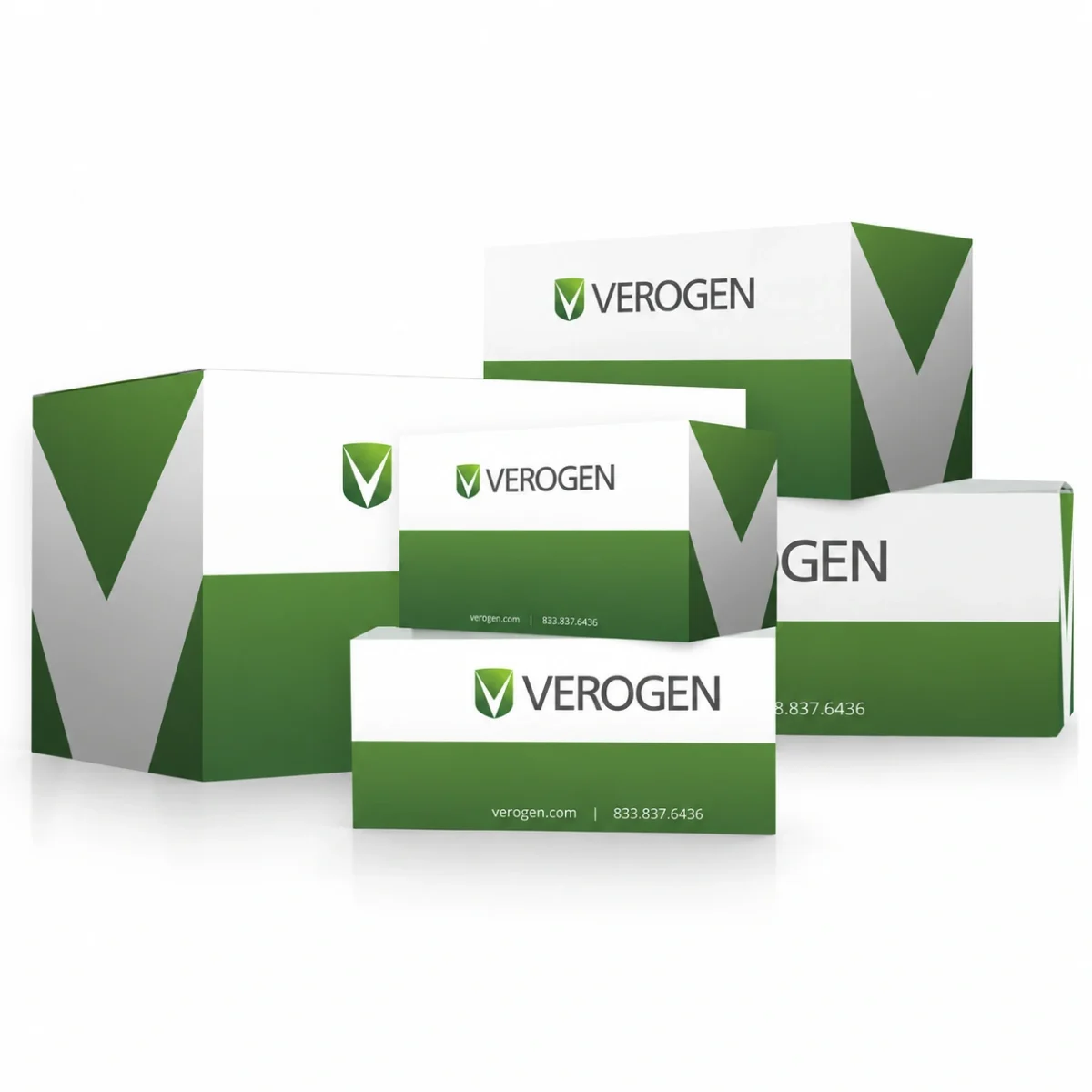
NGS library preparation kit designed for demanding WGS applications, featuring adjustable enzymatic fragmentation, high yield, and more uniform coverage even from low-input or degraded DNA. The documentation highlights its utility in complex samples, including severely degraded FFPE, and its strong performance in AT- and GC-rich regions.
Detailed Description
Operating Principle
This library preparation solution is designed to improve one of the most critical stages of the NGS workflow: generating robust, uniform, and high-yield libraries from challenging samples.The kit incorporates adjustable enzymatic fragmentation, allowing the insert size to be modulated based on the needs of the sequencing workflow.Additionally, an enhanced polymerase is used to enable more uniform amplification across the genome.
Clinical Applications
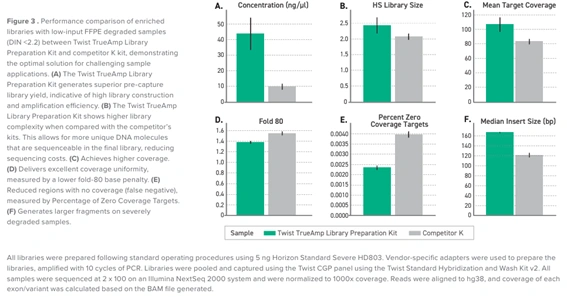
In the context of clinically relevant WGS, the kit is especially relevant for laboratories working with compromised quality samples or limited DNA amounts, where library preparation can significantly impact final data quality. The documentation specifically points out WGS applications and highlights its ability to generate libraries from just 5 ng of DNA derived from severely degraded FFPE samples (DIN < 2.2). This performance makes it an attractive option for workflows aiming to maximize genomic information recovery in complex samples and reduce the impact of technical bias on coverage.
Benefits
The workflow allows the PCR step to be eliminated in final library preparation, positioning it as a PCR-free option for WGS.Allows adjusting the insert size through “tunable” enzymatic fragmentation, consistently achieving higher yields and greater uniformity.A protocol geared towards reducing coverage loss in GC-rich or GC-poor regions, which is especially relevant in WGS when a more balanced genome representation and better variant recovery are required.
Intended Audience / User
Aimed at laboratories performing whole genome sequencing that need robust library preparation for scarce, degraded, or variable-quality DNA, with a special focus on optimizing coverage uniformity, library yield, and the recovery of useful data from complex samples.
Key Features
Library preparation for WGS and other NGS applications with adjustable enzymatic fragmentation.
Strong performance with low inputs and degraded DNA, including severely degraded FFPE samples.
High fidelity in AT- and GC-rich regions, with improved coverage uniformity.
Relevant for WGS workflows requiring a more balanced genome representation and improved variant detection.