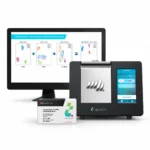
SureSelect Cancer CGP Assay

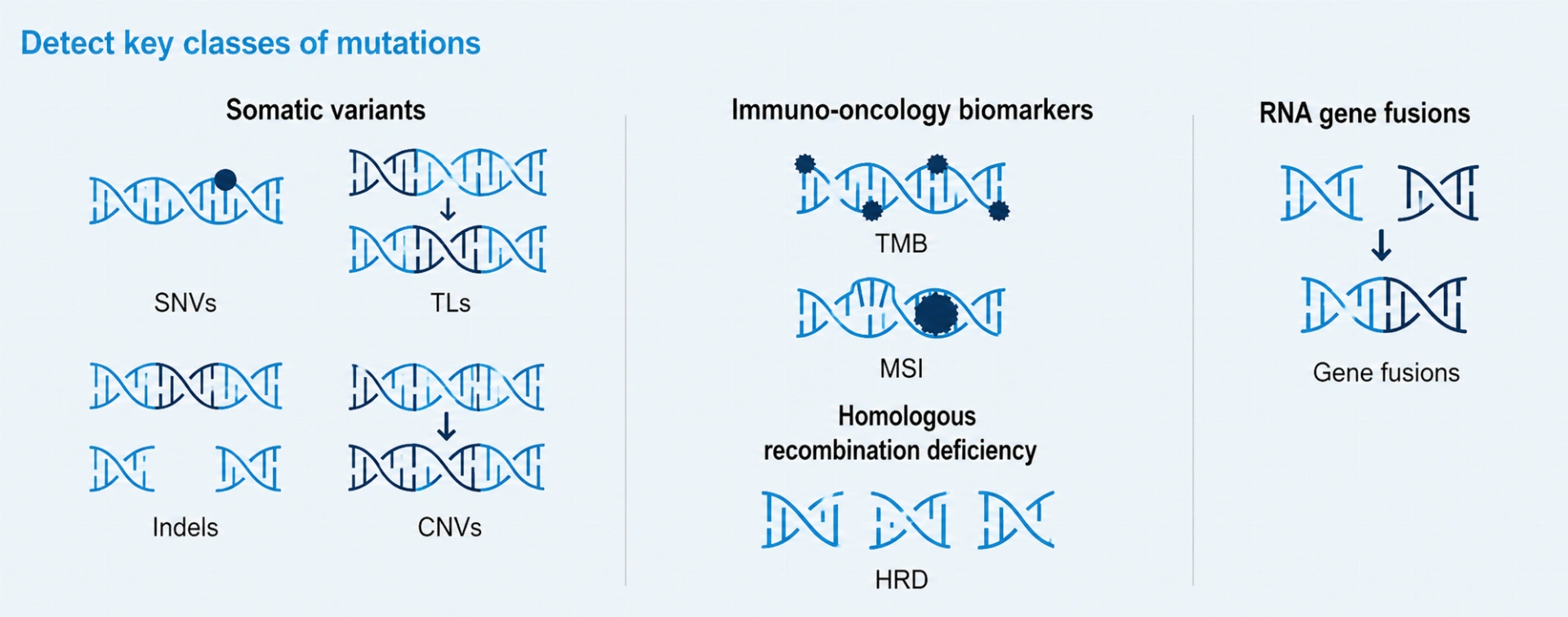
Targeted-enrichment NGS pan-cancer panel for comprehensive genomic profiling (CGP) of solid tumours. Designed to detect somatic variants at DNA level (SNVs, indels, CNVs, translocations) and RNA level (gene fusions), as well as to assess complex immuno-oncology biomarkers such as tumour mutational burden (TMB), microsatellite instability (MSI) and homologous recombination deficiency (HRD).
Detailed Description

Operating principle

The SureSelect Cancer CGP assay uses SureSelect XT HS2 library preparation and target enrichment chemistry, based on hybridisation capture with probes. The system features a highly flexible modular architecture consisting of a 679-gene DNA module and an 80-gene RNA module. These can be processed separately or in parallel, allowing the libraries to be combined for joint sequencing in the same run.

Table 2. Gene content (DNA) in the SureSelect Cancer CGP assay, which are also available for use in designing SureSelect Cancer Custom panels.

SNVs/Indels
ABL1BRAFCRBNEPHB2FLI1HNF1AKRASMYH9PIAS3RAB35SIN3ATFE3
ABL2BRCA1CREBBPEPHB4FLT1HNRNPKLAMP1MYOD1PIAS4RAC1SLC34A2TFEB
ABRBRCA2CRKLERBB2FLT3HOXB13LATS1NAB2PIK3C2BRAD21SLIT2TFRC
ACVR1BRD4CRLF2ERBB3FLT4HOXC6LATS2NBNPIK3C2GRAD50SLX4TGFBR1
ACVR1BBRIP1CSADERBB4FOXA1HRASLMO1NCOA2PIK3C3RAD51SMAD2TGFBR2
ACVR2ABTG1CSF1RERCC1FOXA2HSD3B1LRP1BNCOA3PIK3CARAD51BSMAD3TIPARP
ADGRA2BTG2CSF3RERCC2FOXL2HSP90AA1LTKNCOR1PIK3CBRAD51CSMAD4TLR4
AJUBABTKCSNK1A1ERCC3FOXO1ICOSLGLYNNCOR2PIK3CDRAD51DSMARCA4TMEM127
AKAP9C11ORF30CTCFERCC4FOXP1ID3LZTR1NEGR1PIK3CGRAD52SMARCB1TMPRSS2
AKT1CALRCTLA4ERCC5FRS2IDH1MAFNF1PIK3R1RAD54LSMARCD1TNFAIP3
AKT2CARD11CTNNA1ERGFUBP1IDH2MAGEC3NF2PIK3R2RAF1SMARCE1TNFRSF14
AKT3CASP8CTNNB1ERRFI1FYNIDO1MAGI2NFE2L2PIK3R3RANBP2SMC1ATOP1
ALKCASRCTRCESR1GABRA6IDO2MALT1NFKB2PIM1RARASMC3TOP2A
ALOX12BCBFBCUL3ESR2GATA1IFNGR1MAML2NFKBIAPIM2RASA1SMG1TP53
ALOX15BCBLCUL4AETS1GATA2IFNGR2MAP2K1NKX2-1PIM3RB1SMOTP53BP1
AMER1CBLBCUL4BETV1GATA3IGF1MAP2K2NKX3-1PLCG1RBM10SNCAIPTP63
ANKRD11CCND1CUX1ETV4GATA4IGF1RMAP2K4NLRC5PLCG2RECQL4SOCS1TP73
ANKRD26CCND2CXCR4ETV5GATA6IGF2MAP3K1NOTCH1PLK2RELSOS1TRAF2
APCCCND3CYLDETV6GEN1IKBKEMAP3K13NOTCH2PMAIP1RESTSOX10TRAF3
APLNRCCNE1CYP17A1EWSR1GID4IKZF1MAP3K14NOTCH3PMLRETSOX17TRAF7
ARCD22DAXXEZH2GLI1IKZF3MAP3K4NOTCH4PMS1RFWD2SOX2TSC1
ARAFCD274DCUN1D1EZRGNA11IL10MAP3K7NPM1PMS2RFX5SOX9TSC2
ARFRP1CD276DDR1FAM175AGNA13IL6RMAPK1NR3C1PNRC1RFXAPSPENTSHR
ARHGAP26CD38DDR2FAM46CGNAI2IL6STMAPK3NRASPOLD1RHEBSPINK1TYR
ARHGAP35CD44DDX3XFANCAGNAQIL7RMAXNRG1POLERHOASPOPTYRO3
ARID1ACD58DDX41FANCCGNASING1MC1RNSD1POLQRICTORSPTA1U2AF1
ARID1BCD70DDX5FANCD2GPC3INHAMCL1NT5C2POT1RIT1SRCUGT1A1
ARID2CD74DEFB134FANCEGPS2INHBAMDC1NTHL1PPARGRNASELSRSF2UVRAG
ARID5BCD79ADHX15FANCFGRB2INPP4AMDM2NTRK1PPM1DRNF43STAG1VEGFA
ASXL1CD79BDHX9FANCGGREM1INPP4BMDM4NTRK2PPP2R1AROS1STAG2VHL
ASXL2CDC73DICER1FANCIGRIN2AINSRMECOMNTRK3PPP2R2ARPL22STAT1VTCN1
ATMCDH1DIS3FANCLGRM3IRF1MED12NUP93PPP4R2RPL5STAT3WHSC1
ATRCDK12DIS3L2FANCMGSK3BIRF2MEF2BNUTM1PPP6CRPS6KA4STAT4WHSC1L1
ATRXCDK2DLX1FASH3F3AIRF4MEN1P2RY8PRAMERPS6KB1STAT5AWISP3
AURKACDK4DNAJB1FAT1H3F3BIRS1MERTKPAK1PRC1RPS6KB2STAT5BWRN
AURKBCDK6DNMT1FBXO11H3F3CIRS2METPAK3PRDM1RPTORSTAT6WT1
AURKCCDK7DNMT3AFBXW7HDAC1JAK1MGAPAK7PREX2RRM1STK11XBP1
AXIN1CDK8DNMT3BFGF1HGFJAK2MGMTPALB2PRKAR1ARSPO2STK40XIAP
AXIN2CDKN1ADOT1LFGF10HIF1AJAK3MITFPARK2PRKCIRUNX1SUFUXPO1
AXLCDKN1BDPYDFGF12HIST1H1CJUNMKNK1PARP1PRKDCRUNX1T1SUZ12XRCC2
B2MCDKN1CE2F3FGF14HIST1H2BDKAT6AMLH1PARP2PRSS1RXRASYKYAP1
BAP1CDKN2AEEDFGF19HIST1H3AKDM5AMLLT3PARP3PRSS8RYBPTAF1YES1
BARD1CDKN2BEGFL7FGF2HIST1H3BKDM5CMPLPAX3PSIP1SDC4TAF3ZBTB2
BBC3CDKN2CEGFRFGF23HIST1H3CKDM6AMRE11APAX5PSMA1SDHATAP1ZBTB7A
BCL10CEBPAEIF1AXFGF3HIST1H3DKDRMSH2PAX7PSMB5SDHAF2TAP2ZFHX3
BCL2CENPAEIF4A2FGF4HIST1H3EKEAP1MSH3PAX8PSMD1SDHBTAPBPZFP36L1
BCL2L1CFTREIF4EFGF5HIST1H3FKELMSH6PBRM1PSMG2SDHCTBL1XR1ZMYM2
BCL2L11CHD2ELAC2FGF6HIST1H3GKIAA1549MST1PCBP1PTCH1SDHDTBX3ZMYM3
BCL2L2CHD4ELF3FGF7HIST1H3HKIF5BMST1RPDCD1PTENSERPINB3TCEB1ZNF217
BCL6CHD8EML4FGF8HIST1H3IKITMTAPPDCD1LG2PTK2SERPINB4TCF12ZNF703
BCORCHEK1EP300FGF9HIST1H3JKLF2MTORPDGFRAPTPN11SETBP1TCF3ZNF750
BCORL1CHEK2EPCAMFGFR1HIST2H3CKLF4MUTYHPDGFRBPTPRDSETD2TCF7L2ZRSR2
BCRCICEPHA2FGFR2HIST2H3DKLHL6MYBPDK1PTPROSF3B1TEK
BIRC2CIITAEPHA3FGFR3HIST3H3KMT2AMYCPDPK1PTPRSSGK1TERC
BIRC3CKS1BEPHA5FGFR4HLA-AKMT2BMYCLPGRPTPRTSH2B3TERT
BLMCOL17A1EPHA7FHHLA-BKMT2CMYCNPHF6QKISH2D1ATET1
BMPR1ACPA1EPHB1FLCNHLA-CKMT2DMYD88PHOX2BQSER1SHQ1TET2
CNV
ALKARBARD1BRAFBRCA1BRCA2 BRIP1CCND1CCND2CCNE1CD274CDK4 CDK6CDKN2AEGFRERBB2FGFR1FGFR2 FGFR3KEAP1KRASMDM2METMYC MYCNPALB2PIK3CAPTENRAD51CRAD51D STK11TP53
Translocations
ALK: [18, 19] BRAF: [8, 9, 10] CIC: [18, 19] EGFR: [24, 25, 26] FGFR1: [3, 4, 5, 6, 7, 8, 9] FGFR2: [17] FGFR3: [17, 18] NTRK1: [8, 9, 10, 11] RAF1: [7, 8, 9] RET: [7, 10, 11] ROS1: [31, 33, 34, 35] TMPRSS2: [1, 2, 3, 4]

The workflow integrates unique and dual molecular identifiers (UMIs and UDIs) to maximise analytical reliability through sequencing error correction. It stands out for offering highly robust performance with minimal DNA input requirements, demonstrating excellent enrichment efficiency even in challenging genomic regions (high GC content).

The assay ensures the detection of SNVs, insertions, deletions and CNVs at variant allele frequencies (VAF) down to 5%, and is optionally compatible with enzymatic fragmentation methods.

Clinical / research applications

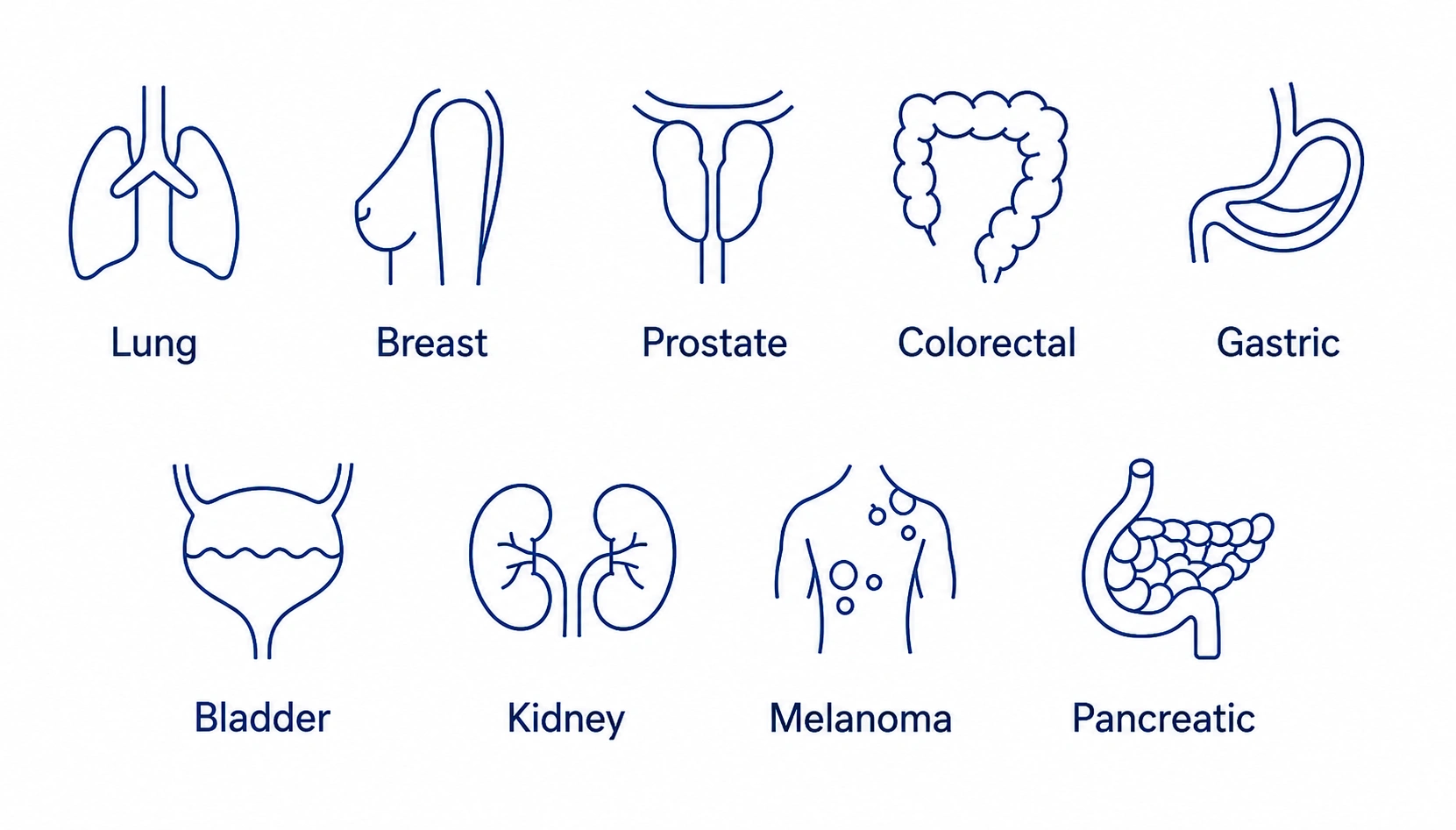
Intended for comprehensive genomic profiling of solid tumour oncology samples using a pan-cancer panel, facilitating the study of different tumour types such as lung, breast, prostate, colorectal, gastric, bladder, kidney, melanoma and pancreatic cancer.
Benefits

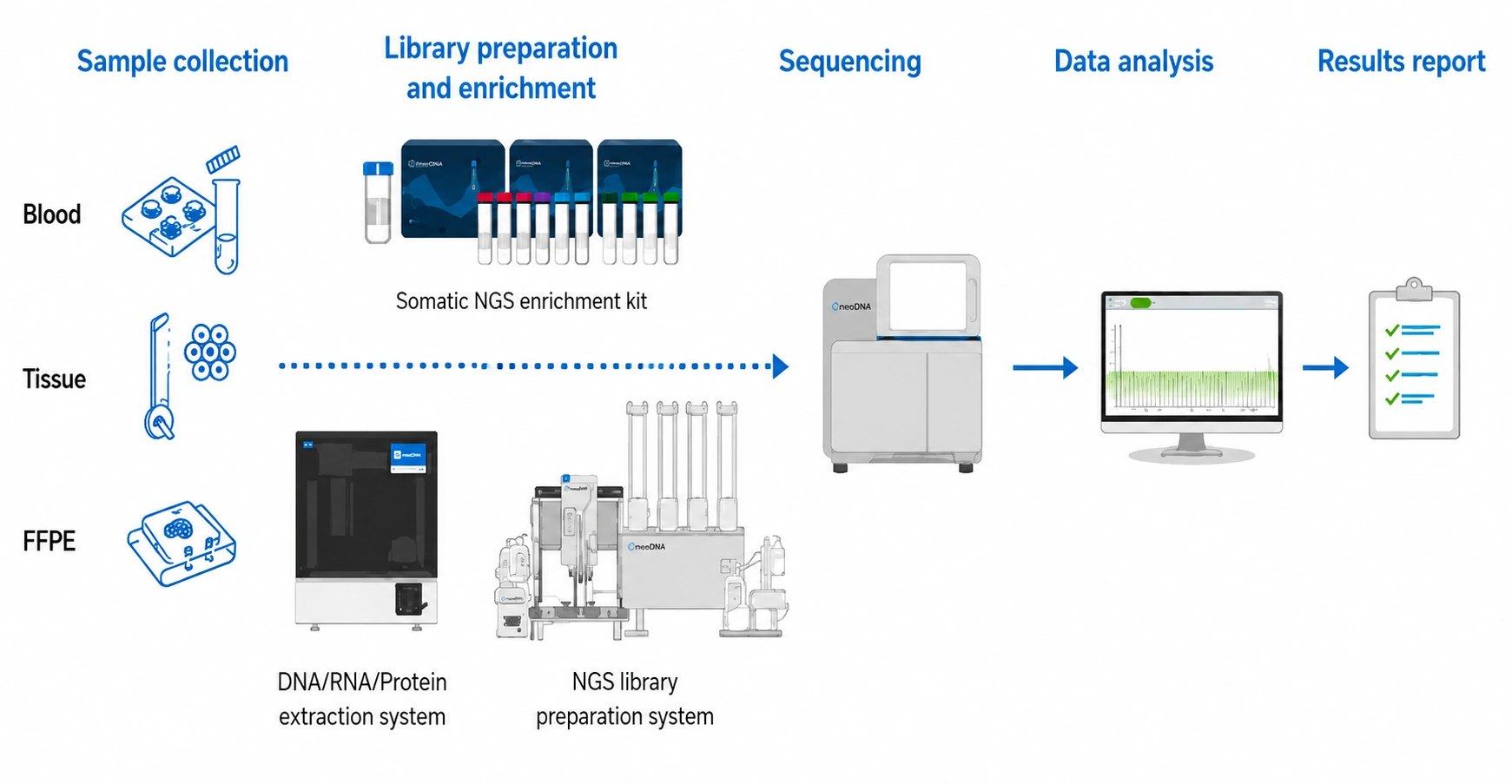
Globally curated gene content based on cancer databases and leading clinical oncology researchers. Modular DNA/RNA workflow, with the option to analyse the modules separately or together. Rapid assay execution: 90-minute hybridisation and generation of sequencing-ready libraries in one day. Automation options with the Magnis NGS Prep System and Bravo NGS Workstation to reduce hands-on time, increase productivity and improve reproducibility. Compatibility with Agilent data analysis solutions and with in-house or third-party software.

Intended audience / User

Molecular biology laboratories, pathology departments, clinical genetics services and translational oncology groups dedicated to genomic tumour profiling using NGS, requiring an optimised workflow from sample to final report.

Technology used

The NGS workflow is based on SureSelect XT HS2 for library preparation and target enrichment through hybridisation capture using SureSelect probes. It includes error-correcting molecular barcodes (UMIs and UDIs) and, optionally, an enzymatic fragmentation step.
Key Aspects

Robust pan-cancer design: Interrogates 679 genes at DNA level and 80 genes at RNA level.

Simultaneous and reproducible detection of conventional structural alterations (SNVs, indels, CNVs, translocations and fusions) and advanced immuno-oncology biomarkers (TMB, MSI and HRD).

Highly reliable detection of TMB and MSI, demonstrating excellent correlation with immunohistochemistry (IHC) staining patterns for MMR genes.

Limit of detection (LOD) established at 5% VAF for somatic variants.

High uniformity and deep on-target coverage, enabling accurate variant detection in both solid tissues and circulating cell-free DNA (cfDNA).

Consistent and comparable technical performance regardless of whether the workflow is manual or automated.

Presentation Details

View formats and ordering references

Commercial name: SureSelect Cancer CGP Assay

Product type: Enrichment and library preparation solution.

Sample type: Tissue (FFPE, fresh, frozen) and cfDNA.

Label: RUO (Research Use Only).

Complete Kit References
(Include SureSelect XT HS2 reagents; enzymatic fragmentation reagents are not included):

G9965A — SureSelect Cancer CGP Assay Starter Kit, 16 reactions. G9966A / G9966B — SureSelect Cancer CGP Assay DNA+RNA Kit, 96 reactions (Manual / Automation). G9967A / G9967B / G9967C — SureSelect Cancer CGP Assay DNA Kit (16 rxns / 96 rxns / 96 rxns Automation). G9968A / G9968B / G9968C — SureSelect Cancer CGP Assay RNA Kit (16 rxns / 96 rxns / 96 rxns Automation).

References exclusively for the automated Magnis NGS Prep System (Include enzymatic fragmentation reagents):

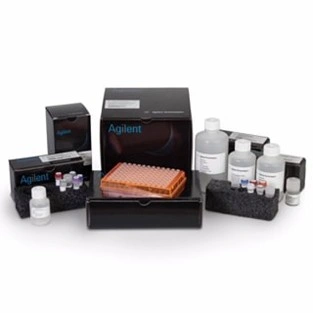
G9777A / G9777B — Magnis SureSelect Cancer CGP XT HS2 DNA Kit (32 reactions / 96 reactions). G9777C / G9777D — Magnis SureSelect Cancer CGP XT HS2 RNA Kit (32 reactions / 96 reactions).

Area:

HRD, Pan-Cancer, Solid tumor

Brand:

Consult our experts

Google reCaptcha: Invalid site key.

Related products

SeqOne HRD Solution con Agilent SureSelect CD HRR17 Panel

HRD analysis solution combining low-coverage whole-genome sequencing (shallow/low-pass WGS) and a targeted gene panel to detect genomic instability, BRCA1/2 alterations and other genes related to homologous recombination. It is designed for laboratories wishing to implement HRD testing in-house with an automated, efficient and clinically validated workflow. Detailed Description SeqOne’s HRD solution combines shallow WGS and…
Agilent
Next Generation Sequencing (NGS)

OncoSELECT®

Comprehensive targeted liquid biopsy assay designed to support decision-making in oncology through the analysis of 74 clinically relevant genes. The solution encompasses everything from library preparation reagents to bioinformatics analysis, clinical interpretation and the generation of detailed reports. 3.- Detailed Description Operating principle OncoSELECT® is an advanced liquid biopsy panel based on circulating cell-free DNA…
OncoDNA
Next Generation Sequencing (NGS)

Agilent SureSelect Human All Exon V8.

High-performance exome for the enrichment of human coding regions, with updated coverage of RefSeq, CCDS and GENCODE, including the TERT promoter and difficult-to-capture exons. 3.- Detailed Description Operating principle SureSelect Human All Exon V8 is based on NGS library preparation and capture enrichment of target regions of the human exome. The workflow is compatible with…
Agilent
Next Generation Sequencing (NGS)

Duplicα RealTime ApoE Genotyping Kit

In vitro diagnostic kit based on real-time PCR for the qualitative detection of the ApoE*E2, ApoE*E3 and ApoE*E4 alleles in human genomic DNA. Detailed Description Operating principle The kit is based on the specific amplification of target sequences by Real-Time PCR, using specific fluorescent probes. Allelic discrimination is performed using labelled probes: FAM (6-carboxyfluorescein) to…
Clonit
Real Time PCR (qPCR)