EndoPredict is a prognostic and predictive in vitro molecular test for patients with ER+/HER2- (estrogen receptor positive, human epidermal growth factor receptor 2 negative) primary breast cancer.

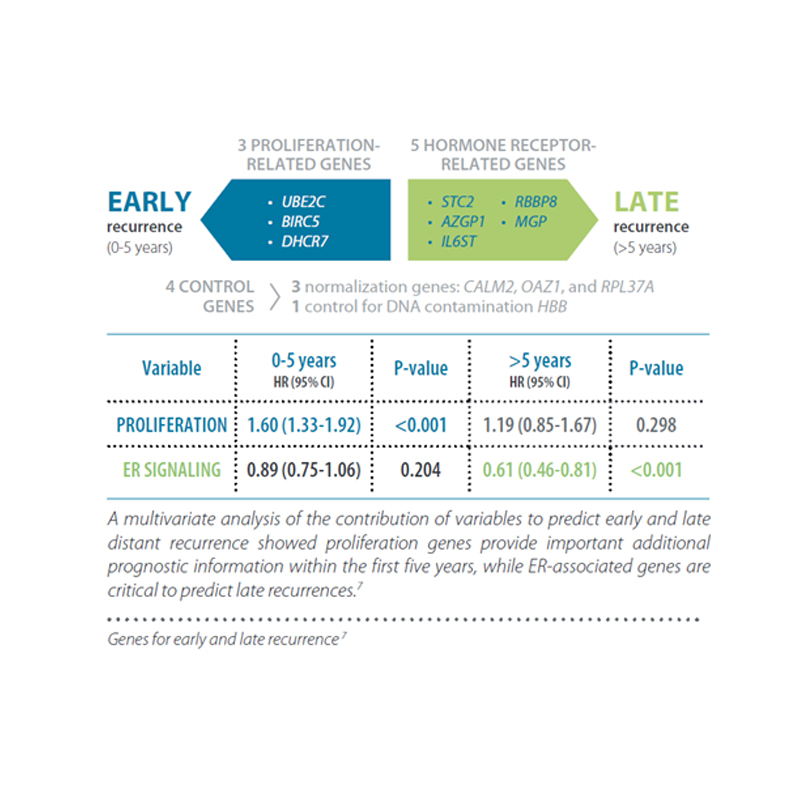
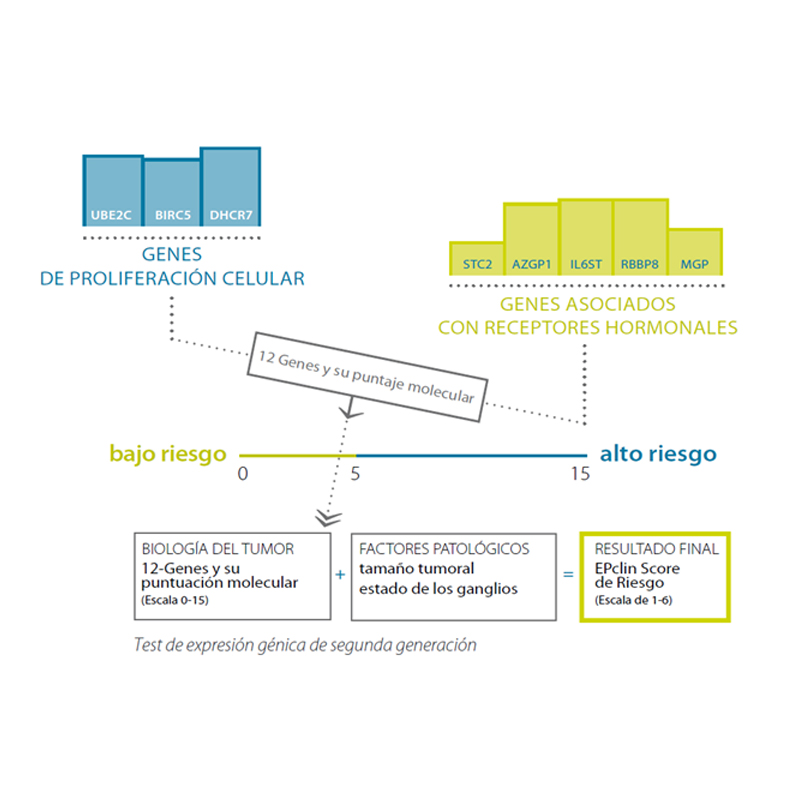
This second generation test combines a molecular score, obtained from the analysis of the expression of 12 genes (8 genes relevant to the course of the disease, 3 normalization genes and a control gene), with tumour size and nodal status (negative: N0, or positive: N+), resulting in the “EPclin Risk Score”. This score allows the establishment of a low-risk group or a high-risk group for recurrence.
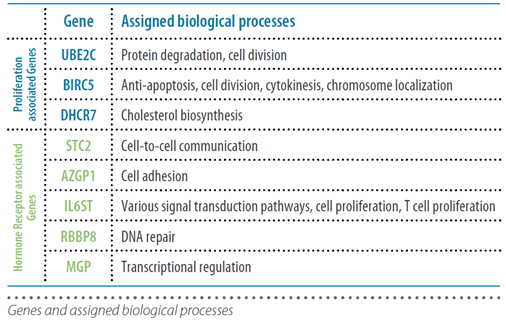
image 10

By combining the molecular score with clinical parameters (tumour size and nodal status), a prognostic accuracy superior to that of first generation tests is achieved, and it is possible to determine the risk of recurrence and the absolute benefit of chemotherapy over the next 15 and 10 years, respectively.
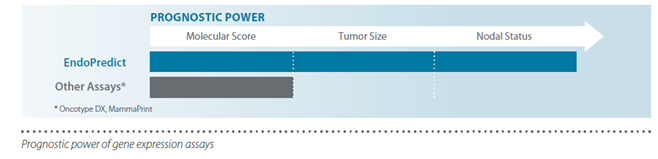
image 11

In this way, EndoPredict answers 3 important clinical questions:

  • Can chemotherapy be avoided? – 10-year risk
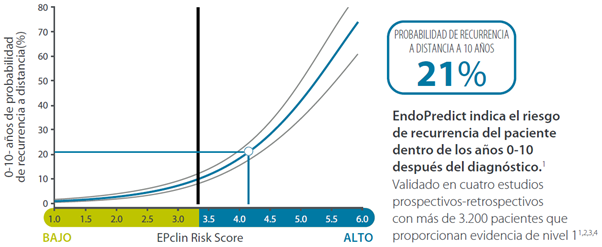
image 7
REFERENCES: 1. Filipits M. et al.: Clin. Cancer Res. 2011, 2. Martin M. et al.: BCR 2014, 3. Buus et al.: J Natl Cancer Inst. 2016, 4. Sestak I. et al.: JAMA Oncol. 2018
  • What is the absolute benefit from chemotherapy at 10 years?
image 8
REFERENCES: 5. Sestak I. et al.: Breast Cancer Res Treat. 2019
  • Can endocrine therapy be stopped after 5 years? – Risk after 5 years and up to 15 years
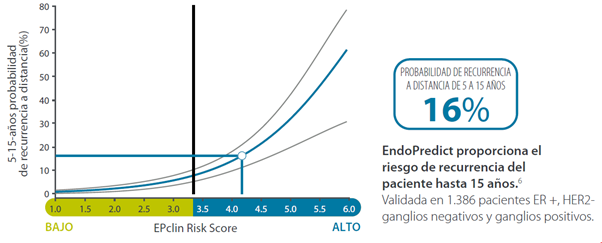
image 9
REFERENCES: 6. Filipits M. et al.: Clin Cancer Res. 2019

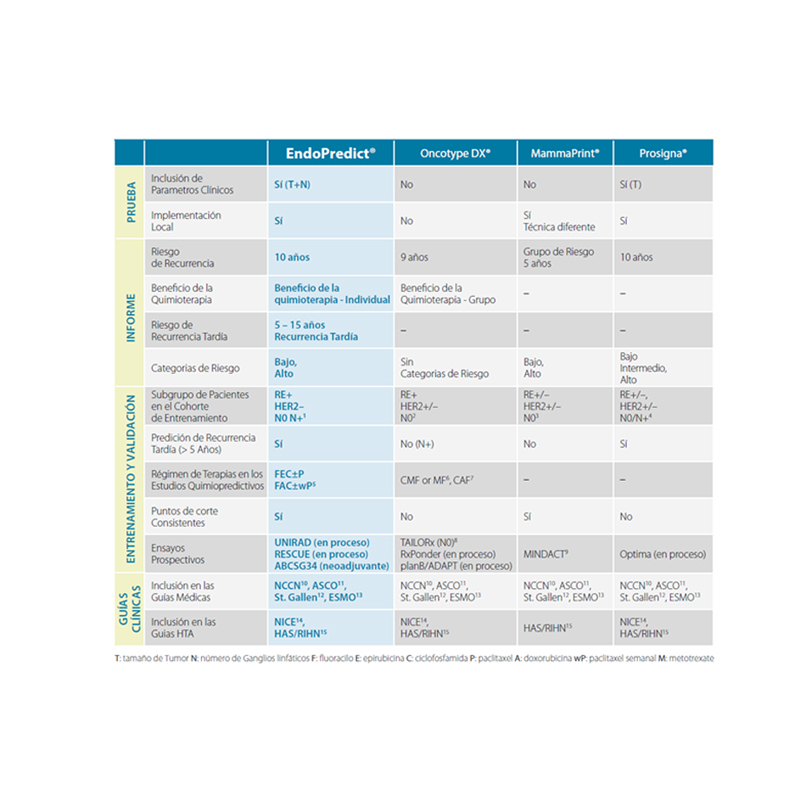
EndoPredict is recommended by international guidelines such as ASCO, ESMO, St. Gallen, EGMT, AJCC, AGO or NCCN, is being validated in four large clinical studies (with more than 3,200 patients) and used to guide treatment selection in more than 30,000 patients worldwide.

Key features:

• It is the only test that provides answers to these three questions: Can chemotherapy be avoided? What is the absolute benefit of chemotherapy? Can endocrine therapy be stopped after 5 years?
• It is the test that provides the largest group of “true” low-risk patients
• Second generation test, achieving superior prognostic accuracy
• Unique gene selection for accurate short- and long-term risk assessment
• Consistent study cohorts and constant cut-off point
• Clear low and high risk categories
• Fast results: within 2 days by local testing
Area:

Prognosis, Reproductive System, Solid tumor, Tumor Types

Documents:

Consult our experts

Google reCaptcha: Invalid site key.

Related products

MSK-ACCESS® powered with SOPHiA DDM™

In-house liquid biopsy solution based on hybrid-capture next-generation sequencing (NGS) technology for the ultrasensitive detection of somatic alterations in circulating cell-free DNA from plasma. Developed in collaboration with Memorial Sloan Kettering Cancer Center (MSK), it implements a robust matched tumor-normal sequencing approach (plasma cfDNA + white blood cell DNA) to filter germline variants and mutations…
SOPHIA Genetics
Next Generation Sequencing (NGS)

MSK-IMPACT® / MSK-IMPACT® FLEX

Decentralised, in-house comprehensive genomic profiling (CGP) solution for solid tumours, based on hybrid capture next-generation sequencing (NGS). Developed in collaboration with Memorial Sloan Kettering Cancer Center (MSK), it features a robust matched tumour-normal sequencing approach for filtering germline variants and clonal haematopoiesis. Detailed description Operating principle The decentralised MSK-IMPACT® powered with SOPHiA DDM™ solution enables…
SOPHIA Genetics
Next Generation Sequencing (NGS)

Homologous Recombination Solutions (HRS)

Portfolio of hybrid capture-based NGS solutions for the analysis of genes involved in homologous recombination repair (HRR) and the study of alterations associated with the homologous recombination pathway in different types of cancer. The range includes three scalable panels designed to meet different analytical needs: mini HRS, HRS and Extended HRS (ExtHRS). Detailed description Operating…
SOPHIA Genetics
Next Generation Sequencing (NGS)

Homologous Recombination Deficiency (HRD) Solution

Homologous Recombination Deficiency (HRD) Solution NGS- and low-pass whole-genome sequencing (low-pass WGS)-based solution for determining homologous recombination deficiency (HRD) status in ovarian cancer. Operating Principle This comprehensive solution, available as CE-IVD and for Research Use Only (RUO), is designed to support the determination of tumour HRD status in patients with ovarian cancer. It integrates two…
SOPHIA Genetics
Next Generation Sequencing (NGS)