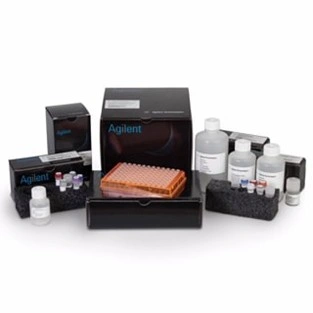
The FusionPlex® Lung v2 panel is a targeted Next-Generation Sequencing (NGS) research product that expands on the well-adopted FusionPlex® Lung panel to further drive discovery. The updated design covers newly published fusion breakpoints and isoforms of interest in key gene targets (including the NTRKs) and aligns with existing guidelines for non-small cell lung cancer research, including NCCN and ESMO (ESCAT).

FusionPlex® uses RNA instead of DNA as input material, which allows for more accurate and more cost-effective fusion detection than DNA-based hybrid capture techniques. FusionPlex® places gene-specific primers near known fusion breakpoints to identify RNA abnormalities with a single primer. Because FusionPlex® can identify known and novel alterations with a limited number of primers, it can detect fusions more efficiently and accurately than DNA-based approaches.

All gene content from the Lung v1 panel is covered in v2, including EGFR vIII and MET exon 14 skipping events along with prominent ALK, BRAF, FGFR, NRG1, NTRK, RET, and ROS1 fusions and select point mutations.

FusionPlex Lung v2 genes

The panel is powered by Anchored Multiplex PCR (AMP™) target enrichment chemistry to detect fusions in a single sequencing product, even without prior knowledge of fusion partners or breakpoints.

Archer Analysis software allows the analysis and interpretation of the data.

Comprehensive Fusion Detection

AMP™ chemistry utilizes open-ended targeted amplification to identify gene fusions whether or not the fusion partner is known.

Splice Variant

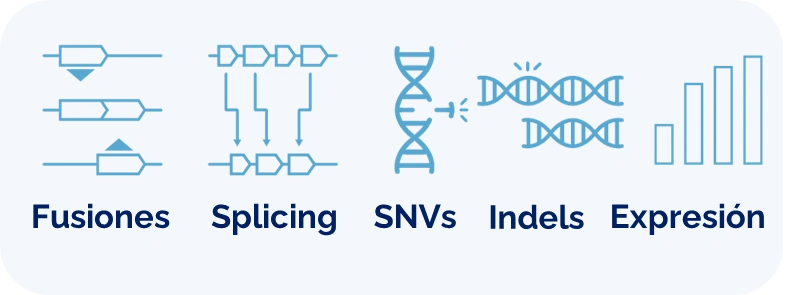
Detect cancer-associated isoforms and alternative splicing events.

Low Input

Purpose-built for wide sample type compatibility, including low-input and degraded samples such as FFPE tissue.

Simple Workflow, Lyophilized Reagents

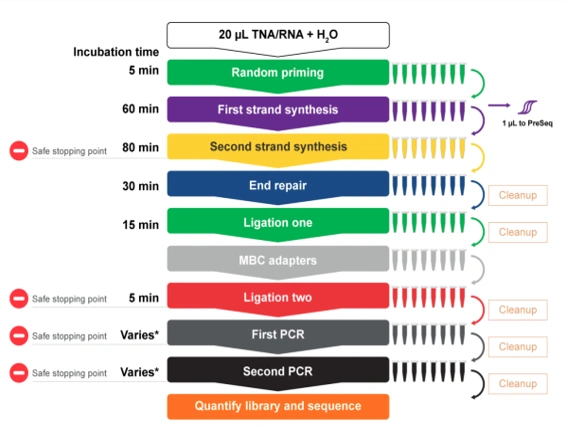
Easy-to-handle lyophilized reagents and a simple workflow to minimize errors and reduce turn-around time.

Gene Targets17
Input Nucleic Acid Required*≥10 ng
Unique Molecular On-Target %>96%
Sample TypesFresh, frozen and FFPE
Hands-On Time3.5 hours
Total Time1.5 days
PlatformIllumina® e Ion Torrent™
*Input mass requirements vary depending on type and quality. Unless the tumor cellularity and sample quality are high, 50ng of FFPE-derived nucleic acid should be considered the minimum recommendation. If input is not limiting, 200ng is recommended.

Area:

Fusions, Respiratory System, Solid tumor, Tumor Types

Brand:

Documents:

Consult our experts

Google reCaptcha: Invalid site key.

Related products

Hedera Profiling RNA Test Panel

In‑house targeted enrichment NGS panel for RNA profiling from tissue samples (FFPE). It analyzes 43 genes using a splice‑aware probe design anchored to exon boundaries. Detects fusions in a partner-agnostic manner, complex splicing variants, and gene expression profiles in a single workflow. Detailed Description Principle of operation End‑to‑end solution based on hybrid capture enrichment chemistry…
HederaDx
Next Generation Sequencing (NGS)

Hedera Profiling ctDNA 3

In‑house targeted enrichment NGS panel exclusively for liquid biopsy (cfDNA). It analyzes 43 genes with ESCAT I and II clinical evidence. Includes library preparation through an optimized workflow (DNA‑only) for plasma samples. Detects SNVs, Indels, CNVs, fusions and 36 microsatellite instability (MSI) markers. Detailed Description Principle of operation End‑to‑end solution based on hybridisation and capture…
HederaDx
Next Generation Sequencing (NGS)

Hedera Profiling 1 FFPE Test Panel (HP1)

In‑house targeted enrichment NGS panel for pan‑cancer solid tumor profiling. It analyzes 115 genes (79 with complete CDS) with ESCAT I, II and III clinical evidence. Includes library preparation through a flexible workflow that allows processing FFPE and cfDNA samples together or separately. Detects SNVs, Indels, CNVs, fusions, structural variants and MSI. Detailed Description PRINCIPLE…
HederaDx
Next Generation Sequencing (NGS)

Devyser BRCA NGS

Devyser BRCA NGS is a fast and robust NGS solution designed for the detection of genetic variants in the BRCA1 and BRCA2 genes. It offers comprehensive and uniform coverage of all coding exons and exon/intron junctions of both genes. In addition, it includes the detection of single nucleotide variants (SNVs), insertions/deletions (Indels), and copy number…
Devyser
Next Generation Sequencing (NGS)