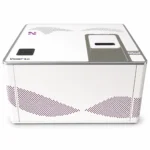
KMRtype® / KMRtrack®

Comprehensive solution for chimerism study by qPCR, combining pre-transplant genetic typing kits and post-transplant quantitative monitoring.

Detailed Description

KMRtype® and KMRtrack® are complementary systems developed by GenDx for the characterization and monitoring of chimerism in transplant patients, using qPCR-based assays. The system allows everything from the identification of unique informative markers between recipient and donor, to the precise quantification of reference DNA in post-transplant samples.
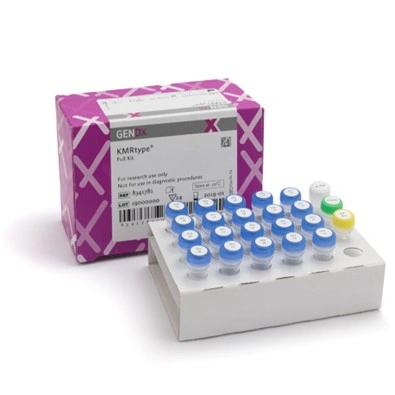
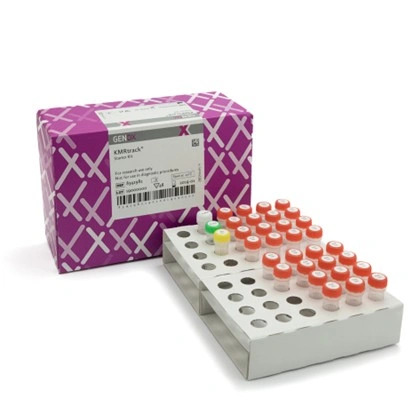
KMRtype and KMRtrack KMRtype and KMRtrack Analysis

KMRtype® is a genetic typing kit that allows the selection of informative markers between recipient and donor DNA. Each mix contains three multiplexed primers and is used in pre-transplant settings. The kits are available in Core (30 assays in 10 mixes) and Extended (15 assays in 5 additional mixes) versions, allowing coverage of up to 45 assays in total. This phase is essential to identify which specific markers can be used effectively for monitoring.
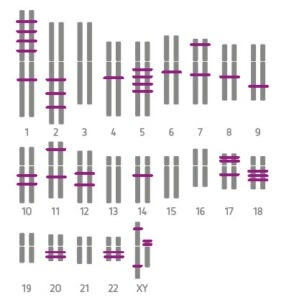
KMRtrack and KMRengine

KMRtrack® is used for post-transplant monitoring using singleplex qPCR assays. Each marker selected in the typing phase is used to quantify the proportion of reference DNA (either from the recipient or the donor) in the samples, allowing precise monitoring of the patient’s chimeric status over time. The achieved limit of detection is 0.05%, depending on the amount of DNA used.

Both kits are optimized for use alongside the KMRengine® software, which guides experimental setup, manages qPCR plates, analyzes results, and automatically reports the chimerism percentage. The platform allows registering multiple samples, designing customized experiments, and visualizing data graphically and chronologically.

Performance and Validation

Validation studies showed 100% accuracy in typing and high intra- and inter-batch reproducibility in monitoring. Specificity was confirmed for all markers. Detection tests indicated that the system maintains robust performance with variable amounts of DNA, making it ideal for both clinical and experimental samples.

Important Considerations

Use with non-human DNA or cfDNA is not recommended. The use of at least two informative markers is recommended to avoid false results. Reagents are light-sensitive and must be stored at -20 °C. Heparinized samples should not be used, as they interfere with PCR. It is necessary to physically separate pre- and post-PCR areas to avoid cross-contamination.

Clinical Applications

This system is indicated for chimerism studies in the context of hematopoietic stem cell transplantation, with special utility in graft monitoring and early detection of relapse. Its sensitivity allows the detection of minimal amounts of donor or recipient-derived DNA, facilitating early therapeutic decisions.


Key Features

Complete system for chimerism typing and monitoring using qPCR.
Identification of specific informative markers for each donor-recipient pair.
Chimerism detection with sensitivity down to 0.05%.
Optimized protocols for genomic DNA from blood.
Automated analysis with KMRengine® software.
High inter-batch reproducibility and accuracy.
Compatible with multiple validated qPCR systems.

Ordering Information

KMRtype® RUO & CE-IVD: Core Mixes (30 assays, 24 samples) – Ref. 8341161 / Extended Mixes (15 assays, 24 samples) – Ref. 8341561 KMRtrack® RUO & CE-IVD: Core and Extended Kits, 48 reactions per assay – Ref. 8344162 and 8344562 KMRassay: Reference Assay (REF901) and Buffer & Enzyme – 288 reactions – Ref. 8343264 and 8343263 Versions also available as CE-IVD (see specific references in the IFU) For use with KMRengine® software (included in the GenDx platform) Store at -20 °C, protected from light

Area:

Bone marrow (chimerism), Immunology, Post transplantation

Brand:

Consult our experts

Google reCaptcha: Invalid site key.

Related products

Devyser LynchFAP

Devyser LynchFAP is a targeted NGS solution for the analysis of germline variants associated with hereditary colorectal cancer syndromes. The assay enables the detection of SNVs, indels, and CNVs in genes related to Lynch syndrome, familial adenomatous polyposis (FAP), and MUTYH-associated polyposis (MAP), also incorporating a specific LR-PCR for the correct localization of variants in…
Devyser
Next Generation Sequencing (NGS)

Devyser HBOC NGS

Devyser HBOC NGS is a fast and robust NGS solution aimed at the detection of germline variants in 12 genes associated with an increased risk of hereditary breast and ovarian cancer: ATM, BARD1, BRIP1, CDH1, CHEK2, NBN, PALB2, PTEN, RAD51C, RAD51D, STK11, TP53. It offers comprehensive and uniform coverage of all coding exons and exon/intron…
Devyser
Next Generation Sequencing (NGS)

Devyser BRCA NGS

Devyser BRCA NGS is a fast and robust NGS solution designed for the detection of genetic variants in the BRCA1 and BRCA2 genes. It offers comprehensive and uniform coverage of all coding exons and exon/intron junctions of both genes. In addition, it includes the detection of single nucleotide variants (SNVs), insertions/deletions (Indels), and copy number…
Devyser
Next Generation Sequencing (NGS)

Devyser BRCA PALB2 NGS

Devyser BRCA PALB2 NGS is a fast and robust NGS solution designed for the detection of genetic variants in the BRCA1, BRCA2, and PALB2 genes. It offers comprehensive and uniform coverage of all coding exons and exon/intron junctions of both genes. In addition, it includes the detection of single nucleotide variants (SNVs), insertions/deletions (Indels), and…
Devyser
Next Generation Sequencing (NGS)